
Vandaag of morgen in huis

Kwaliteit gegarandeerd

Welkomstaanbiedingen ontgrendelen: GRATIS bezorging | Tot 80% korting | Gratis 30 dagen JoyPlus-proefperiode
Download de app
A flat battery rarely happens at a convenient time. With a car jump starter, you may be able to get a 12V car, motorbike, motorhome or boat started again yourself, without help from another driver. However, not every portable jump starter is suitable for every vehicle. A high amp rating on the packaging doesn’t tell you everything.
The most common buying mistakes come down to three simple oversights:
Always start by checking your vehicle’s handbook. Confirm that it has a 12V battery system, then compare its engine capacity with the jump starter’s maximum ratings:
For example, a model with a peak current of 2,000 A may be rated in its product specifications for petrol engines up to 8.0 litres and diesel engines up to 6.0 litres. A more powerful model rated at 4,000 A or above may offer extra headroom for larger engines, according to its stated specifications. These figures are product claims, not a guarantee that it will start every flat or damaged battery.
A car battery booster works with high current, so check whether the jump starter specifies protection against:
A display or status light can help you check that the clamps are connected correctly. However, you should still follow the instructions. Connect red to the positive terminal and black, in most cases, to the negative terminal or a suitable unpainted earth point. Don’t attempt to start the vehicle for longer than around 3 to 5 seconds at a time. Wait afterwards as instructed.
A jump starter with a compressor is useful for inflating a soft car or bicycle tyre, or a ball. Check the maximum pressure in psi, the airflow in litres per minute, the nozzles supplied and whether it switches off automatically. A stated maximum of 150 or 160 PSI is the pump’s maximum pressure; it doesn’t mean every tyre will inflate equally quickly.
A jump starter with a power bank can charge smartphones, tablets and other USB devices. Check the number of ports, the output power and whether USB-C fast charging is supported. If you only need jump-starting, a compact model without a compressor may suit you better than a larger device with features you rarely use.
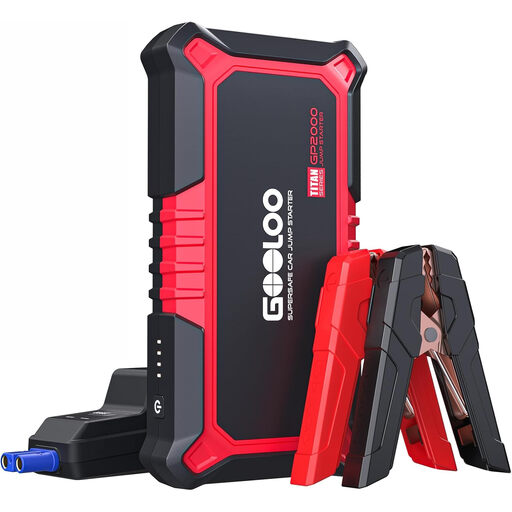
Why it suits this user: This compact model is designed for drivers who want to keep a simple emergency starter for a 12V vehicle in the glove compartment or boot.
The product specifications state a peak current of 2,000 A, support for petrol engines up to 8.0 litres and diesel engines up to 6.0 litres, plus ten safety protections. Be sure to check your car’s engine capacity first.
Around 545 grams, USB outputs, a 400-lumen LED torch and a stated standby time of up to 24 months.
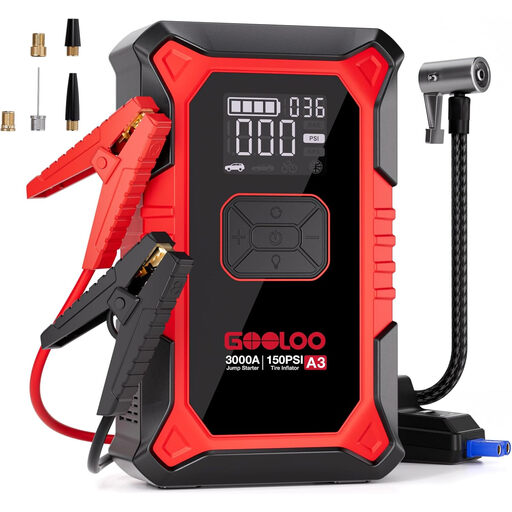
Why it suits this user: A good fit for drivers who want to check their tyre pressure and charge USB devices on the go, as well as jump-start their vehicle.
The specifications list ten safety protections, a digital display and automatic shut-off when inflating. The stated compatibility is 12V, not 24V.
3,000 A peak current, a compressor rated up to 150 PSI, five inflation modes and support for petrol engines up to 9.0 litres and diesel engines up to 6.5 litres, according to the product information.
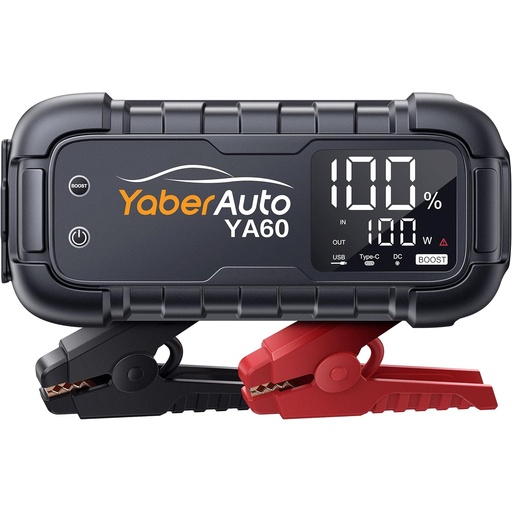
Why it suits this user: An option for owners of larger petrol or diesel vehicles, motorhomes and commercial vehicles with a 12V system who need plenty of charging power.
The stated specifications include 10 smart safety protections, 8 AWG cables and a BOOST function for very low battery voltage. Only use the BOOST function as directed in the instructions.
8,000 A peak current, 65W USB-C, a 150W DC output, a 26,800mAh battery and support for diesel engines up to 12.0 litres, according to the product description.
We’ve put together a full, up-to-date list of products that meet these strict selection criteria and the applicable European safety requirements.
Fully charge the jump starter before using it for the first time. Store it somewhere dry, away from fire and direct sunlight. Check the charge level every few months, even if you haven’t used the device. Some models recommend recharging after two to six months in storage.
Don’t use a lithium battery that is damaged, swollen or leaking. Don’t let the clamps touch each other, or connect them to a system the jump starter isn’t designed for. An alternative to jump leads will only work if the battery and vehicle are still in a suitable technical condition to start. If the battery is faulty, the cables are damaged or the battery keeps going flat, it’s best to have the vehicle checked by a garage.
No. Check the 12V voltage, fuel type and maximum engine capacity. A jump starter may have different limits for petrol and diesel engines. A 24V lorry or a vehicle with a completely failed battery may fall outside the stated applications.
That depends on storage conditions, temperature, charge level and the number of charge cycles. Recharge the device regularly as instructed and don’t leave it in a very hot car for long periods. Manufacturers’ stated charge cycles and standby times are product specifications; the actual lifespan may vary.
That depends on how you use it. A jump starter is a one-off purchase that needs periodic maintenance, while breakdown cover is often provided through a subscription or a one-off call-out. If you regularly drive long distances, use a motorhome or travel to remote areas, having your own emergency starter can be useful. Always check compatibility before you buy.
