
Vandaag of morgen in huis

Kwaliteit gegarandeerd

Welkomstaanbiedingen ontgrendelen: GRATIS bezorging | Tot 80% korting | Gratis 30 dagen JoyPlus-proefperiode
Download de app
A dead battery always happens at the worst possible time. Whether you're in a hurry for work, need to take the kids to school, or are stranded on the roadside in the middle of the night. Waiting for roadside assistance is often the only option, but that costs time and money. A car jump starter, also known as a jump box, is the perfect solution. With this compact device, you can start your car independently and be back on the road in minutes.
But the market is flooded with models that promise the world. As a Product Recommendation Officer at Joybuy, I see where consumers go wrong every day. Before you make a choice, it's crucial to see through the marketing hype.
Here are the 3 most common pitfalls:
portable car power bank feature. This figure is usually based on the internal 3.7V cells, not the car's 12V output voltage. This makes the capacity seem larger than it is in practice, leading to disappointment when you want to charge your laptop or phone.jump starter with an air compressor or a bright light seems handy, but not if corners have been cut on essential safety features. Without protection against reverse polarity, short circuits, or overheating, you risk damaging not only the jump starter but also your car's expensive electronics.To avoid a bad purchase, focus on the specifications that truly matter. These are the three non-negotiable points to check.
Look beyond the peak power and search for the recommended engine displacement (in litres). This is a much more reliable indicator.
12V jump starter with a cranking current of 400-600A is generally sufficient.car battery booster with 1000A or more.Always check if the manufacturer explicitly states the engine displacement the booster is suitable for (e.g., "suitable for 7.0L petrol / 5.5L diesel").
The capacity (mAh) is mainly relevant for the power bank function. A model with 12,000 to 18,000 mAh is a good middle ground for charging a phone or tablet. Want to charge a laptop as well? Look for a model with a USB-C Power Delivery (PD) port with a high wattage (e.g., 65W). This ensures fast and efficient charging of larger devices.
A good jump starter is foolproof. Essential protections include:
A clear indicator (often a green light or a notification on a display) that the connection is safe is a must-have for a worry-free dead battery start experience.
Not all jump starters are created equal. The right choice depends on your car, your budget, and how you plan to use it. Below are some popular choices, matched to different user profiles.
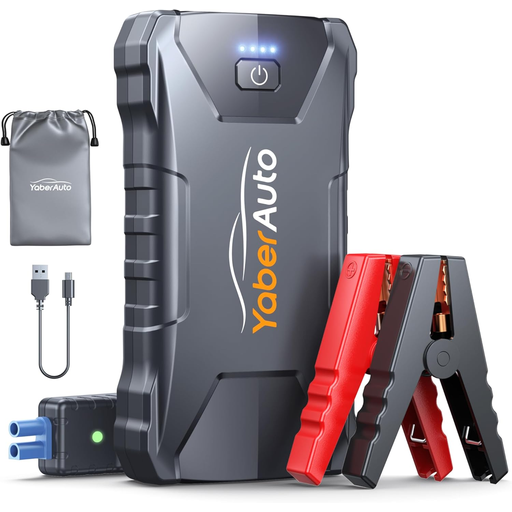
Why This Fits Their Persona: Perfect for those seeking a compact, no-nonsense solution. It's small enough for the glove compartment and powerful enough for most common passenger cars in the UK. Ideal for peace of mind during the daily commute.
This model focuses on the basics: reliable starting. It has no superfluous features that drive up the price, but it does include the essential 10-layer safety protection, including a clear indicator for incorrect connections.
Extremely compact and lightweight (0.34 kg): fits anywhere. Clear engine compatibility: suitable for petrol up to 7.0L and diesel up to 5.5L.
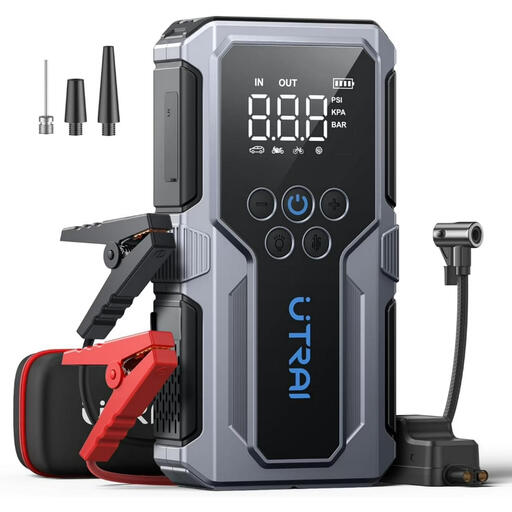
Why This Fits Their Persona: For those who want an all-in-one solution for the road, camping, or for a larger car or van. The built-in compressor is ideal for inflating tyres without needing to carry a separate device.
Instead of being a gimmick, the 150 PSI compressor is a functional addition. The device combines this with a powerful starting function (suitable for 8.5L petrol / 6.5L diesel) and all necessary safety protocols.
5-in-1 functionality: jump starter, compressor, power bank, LED light, and safety system. Digital display: shows battery status and tyre pressure.
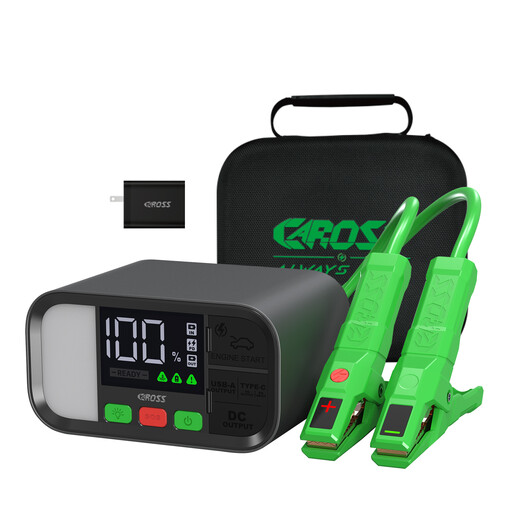
Why This Fits Their Persona: For the user who values ease of use, advanced technology, and a premium feel. The focus is on a flawless and safe user experience, plus the ability to quickly charge demanding devices like a laptop.
This model tackles the pitfall of safety and ease of use. According to the manufacturer, its Smart Connect technology with non-polarised clamps makes incorrect connection impossible. The focus is on reliable performance, not gimmicks.
65W PD fast charging: charges laptops and other devices at high speed. Premium build quality: aluminium housing and a large 3-inch screen.
We have compiled a complete, up-to-date list of products that fully meet these strict selection criteria and UK safety regulations.
Most manufacturers recommend fully charging the car jump starter every 3 to 6 months, even if you don't use it. This keeps the internal lithium-ion battery in good condition and ensures it's ready for use when you need it. Store it in the car, but try to keep it out of direct sunlight in the summer to maximise the battery's lifespan.
Yes, a modern jump starter is safe, provided you choose a model with the right protections. Look for specifications like reverse polarity protection, short-circuit protection, and over-voltage protection. These systems prevent damage to the onboard computer (ECU) and other sensitive electronics in your car. It is crucial to follow the manufacturer's instructions when connecting it.
No, that is not recommended. Diesel engines have a higher compression ratio and require significantly more power to start than petrol engines, especially in cold weather. You need a car battery booster with a higher cranking current. Always check the product's specifications, which often explicitly state whether it is suitable for diesel engines and up to what engine displacement (e.g., "suitable for diesel engines up to 6.0L").
