
Vandaag of morgen in huis

Kwaliteit gegarandeerd

Welkomstaanbiedingen ontgrendelen: GRATIS bezorging | Tot 80% korting | Gratis 30 dagen JoyPlus-proefperiode
Download de app
A dead battery always happens unexpectedly. Whether it's on a cold morning before an important meeting or in a deserted car park after a day out. Waiting for roadside assistance isn't always an option. A car jump starter is the solution: a compact device that lets you get your car running again on your own.
But the market is flooded with models that promise the world. Many drivers fall into marketing traps and end up with a device that fails when they need it most. Let's look at the three most common pitfalls so you can avoid making a bad purchase.
car jump starter and later realise that a built-in power bank for your phone or a compressor for a flat tyre would have been incredibly useful. Thinking ahead about your needs prevents you from having to buy a second device later on.To make a smart choice, ignore the marketing buzz and focus on the specs that actually matter. These are the three most important points to check.
The most important specification isn't the peak amps, but the type and size of the engine the jump starter is suitable for. This is usually expressed in litres (L) for gasoline and diesel engines.
diesel jump starter that can handle your engine's displacement. A booster for an 8.0L gasoline engine is often only suitable for a 6.0L diesel engine. Always double-check this.A good battery booster clearly states the maximum engine displacement for both gasoline and diesel.
Besides starting your car, most modern jump starters also function as a power bank with jumper cables. The capacity, expressed in milliampere-hours (mAh), determines how many times you can charge your phone or tablet. A capacity of around 16,000 mAh is a good sweet spot.
Also, look for extras that might be useful for you:
jump starter with a compressor is ideal for inflating your tyres without needing a separate device.A portable jump starter works with high currents, so safety is not a luxury. Look for models with "smart" jumper cables. These have a built-in module with multiple protections:
Sturdy, all-metal clamps and thick cables are a sign of quality and ensure a reliable connection.
To help you choose, we've matched some popular models to different user types.
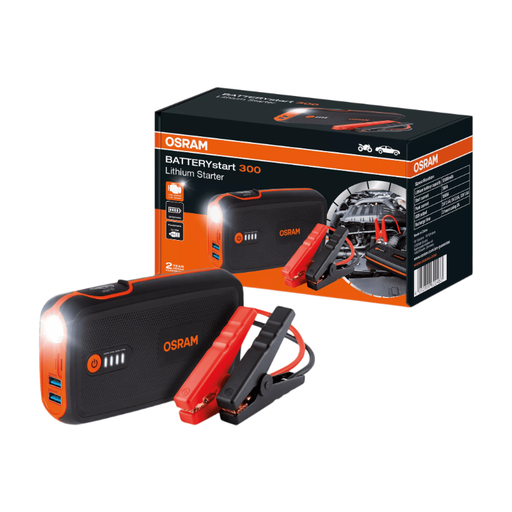
Why This Fits Their Persona: Ideal for those seeking a reliable, compact solution for a standard passenger car. OSRAM is a well-known brand, which inspires confidence. The device is small enough for the glove compartment and provides enough power for most gasoline and smaller diesel cars.
This model focuses on realistic performance (up to 6.0L gas/3.0L diesel) instead of inflated peak amp numbers. The build quality and safety features are solid, as you would expect from a brand like OSRAM.
Very compact and lightweight (approx. 700g). Functions as a power bank with a dual USB port and has a bright LED light.
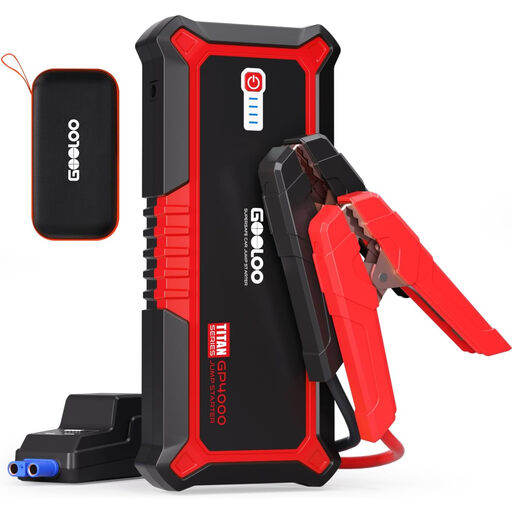
Why This Fits Their Persona: For owners of a large SUV, van, RV, or a heavy-duty diesel vehicle. This model delivers the power needed to reliably start even large engines (up to 10.0L diesel). This is the choice for those who want to take zero risks and need maximum power.
While many boosters exaggerate, the GP4000 backs up its claims with specs for engines up to 10.0L. The robust, all-metal clamps and thick cables are designed for the high currents required for heavy-duty engines.
Extreme starting power for virtually all consumer vehicles. Features a "BOOST" button for completely dead batteries and functions as a powerful power bank with a fast-charging port.

Why This Fits Their Persona: Perfect for those who want maximum functionality in a single device. Besides being a very powerful jump starter (4500A), this is also a 150 PSI air compressor. Ideal for families, campers, or anyone who wants to be prepared for both a dead battery and a flat tyre.
This model avoids the "forgotten features" pitfall by offering an all-in-one solution. It combines a powerful jump starter with a full-fledged compressor, so you don't have to buy and carry multiple separate devices.
5-in-1 functionality: jump starter, 150 PSI compressor, power bank, 500-lumen LED light, and a 10-layer safety system. The LCD screen clearly displays tyre pressure and battery status.
We've compiled a complete, up-to-date list of products that fully meet these strict selection criteria and safety regulations.
Most manufacturers recommend fully charging the jump starter every 2 to 3 months, even if you don't use it. Lithium batteries slowly lose their charge over time. Regular charging ensures the booster is ready when you need it and extends the battery's lifespan.
No, this is a common mistake. Diesel engines have a higher compression ratio and require significantly more starting power than gasoline engines of a similar size. Always check that the jump starter is explicitly rated for your diesel car's engine displacement. When in doubt, always choose a more powerful model.
Yes, a modern jump starter with smart cables is safe. These cables contain a circuit that protects against the most common user errors, such as connecting the clamps backwards (reverse polarity), short circuits, and over-voltage. This prevents damage to your car's sensitive electronics, like the ECU. Never use a booster without these built-in safety features.
