
Vandaag of morgen in huis

Kwaliteit gegarandeerd

Welkomstaanbiedingen ontgrendelen: GRATIS bezorging | Tot 80% korting | Gratis 30 dagen JoyPlus-proefperiode
Download de app
A flat car battery often happens at the worst possible time: on a cold morning, during a camping trip or just before setting off with a caravan. A car jump starter can get you moving again without having to find another motorist. However, these devices vary considerably in starting power, vehicle compatibility and additional features.
Pay particular attention to these three common pitfalls:
Most portable jump starters in this category are designed for 12V systems. First, check whether your vehicle uses a 12V battery. A jump starter is not intended for the high-voltage battery of an electric car and is generally not suitable for 24V lorries either.
Then look at two values:
Compare these figures with your vehicle’s engine capacity. A compact 12V jump starter for a small petrol car is not automatically suitable as a jump starter for a diesel car. Diesel engines often require more power when starting. For a van, SUV, motorhome, boat or tractor, it is wise to choose a model with a more generous compatibility margin.
Brands sometimes state that a device can start a vehicle dozens of times or operate in extreme temperatures. According to the relevant brand’s own research or its product description, these are brand claims; they are not a guarantee for every battery, temperature or usage situation.
Therefore, check the following in particular:
A display or green connection indicator makes operation easier to understand, but always follow the instructions. Connect red to the positive terminal and black to the negative terminal or a suitable unpainted metal earth point, if specified by the manufacturer.
A jump starter power bank can charge smartphones, navigation devices and cameras. When assessing one, pay attention to the number of USB ports, the charging protocol and the output power. If you are simply looking for an emergency car starter, you may not need a large number of connections.
A jump starter with compressor combines a car jump starter with a tyre inflator. Check the following:
A higher PSI rating does not mean that a car tyre will inflate more quickly. Airflow, the hose and battery capacity are also important.
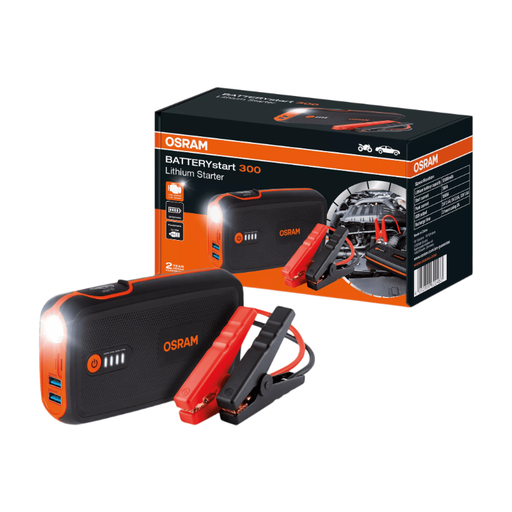
Why it suits this profile: This compact car jump starter is designed for everyday use with cars and motorbikes. According to the product information, it supports petrol engines up to 6 litres and diesel engines up to 3 litres.
The product specification states both 12V compatibility and the maximum engine capacity. This makes it easier to compare suitability than relying on a marketing term alone.
1500A peak current, 13.000mAh lithium battery, two USB outputs and integrated LED lighting; stated weight of approximately 706 grams.
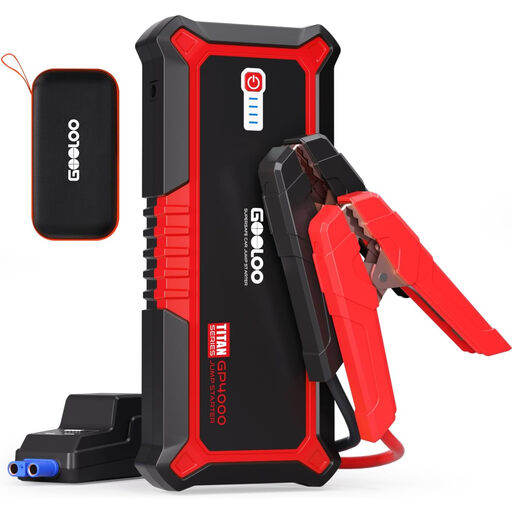
Why it suits this profile: Its stated compatibility with diesel engines up to 10 litres and all petrol engines makes this model a good option for larger vehicles, motorhomes, pick-ups and SUVs.
The specification states 4000A peak current, 12V compatibility and a specific diesel limit. It also lists several safety features and metal clamps.
4000A peak current, USB and USB-C connections, LED light and supplied storage case; suitable for various 12V vehicle types according to the product description.
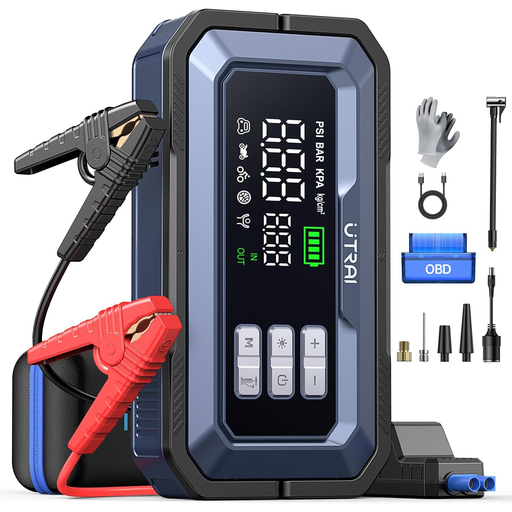
Why it suits this profile: This model is designed for users with an SUV, motorhome, boat, van or larger diesel vehicle who also want a compressor and 12V output.
The product information lists 12V compatibility, engine limits, a maximum compressor pressure of 150 PSI and an operating temperature range of -20°C to 60°C separately.
7000A peak current, compressor with automatic pressure setting, 160W DC output, 18W USB-C and LED lighting with several modes.
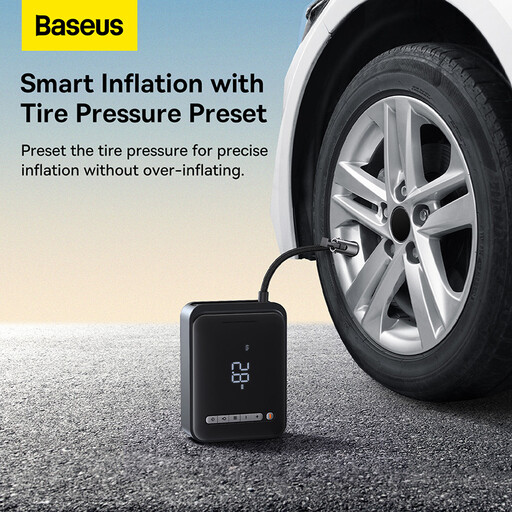
Why it suits this profile: Combining a car battery booster with a compressor, this model is ideal for motorists and motorcyclists who also want to inflate car tyres, bicycle tyres or inflatables while on the road.
The product specification distinguishes between 1000A peak current and 500A starting current. It also lists the pressure range, inflation time and recommended limit of 120 PSI.
8000mAh capacity, 54W compressor, pressure gauge with a range of 5–150 PSI and USB outputs for charging devices.
We have compiled a complete, up-to-date list of products that fully meet these strict selection criteria and the applicable European safety regulations.
A jump starter only works when its internal battery is sufficiently charged. Fully charge the device before using it for the first time and check the charge level before setting off on a journey. Depending on the manufacturer, charging every few months may be recommended.
Also bear the following points in mind:
This depends on the type of vehicle, the engine capacity and the condition of the battery. For a small petrol car, a model with a lower stated starting current may be sufficient. For a diesel, SUV, motorhome or van, it is sensible to choose a model whose product specification explicitly supports your engine capacity.
Yes, but only if the model is suitable for this purpose. Check the stated diesel limit and 12V compatibility. A jump starter for a diesel car must also be sufficiently charged. Do not use the device with a damaged, leaking or frozen battery.
Its lifespan depends on charging cycles, storage temperature, frequency of use and maintenance. Store the jump starter in a cool, dry place, charge it according to the instructions and check the charge level regularly. A model with a power bank or compressor function may be used more frequently, making regular maintenance even more important.
