
Vandaag of morgen in huis

Kwaliteit gegarandeerd

Welkomstaanbiedingen ontgrendelen: GRATIS bezorging | Tot 80% korting | Gratis 30 dagen JoyPlus-proefperiode
Download de app
A dead battery is always a hassle. Whether you're rushing to work, about to leave for vacation, or stranded in a deserted parking lot late at night. A jump starter seems like the perfect solution: a compact device that instantly brings your car back to life. But the market is flooded with models that promise the world and deliver little.
Before you invest in a portable jump starter, it's crucial to recognize the common pitfalls. Many buyers fall for marketing tricks and end up with a device that leaves them stranded when they need it most.
To avoid buyer's remorse, focus on the specifications that truly matter. A good car battery starter is more than just a power bank with jumper cables.
Don't be fooled by peak amps. A more reliable indicator is the engine compatibility specified by the manufacturer. Look for a clear statement like "suitable for up to 7.0L petrol engines and 5.5L diesel engines." This gives a more practical picture of the 12v battery booster's power. Diesel engines generally require a more powerful starting boost than petrol engines of a similar size.
The capacity, expressed in milliampere-hours (mAh) or watt-hours (Wh), determines how many times you can start a car or charge your phone. A jump starter with power bank functionality is convenient, but check the output ports. Look for USB-C with Power Delivery (PD) for fast-charging modern devices like laptops and smartphones. A capacity between 10,000 and 20,000 mAh is a realistic and practical choice for most users.
A reliable emergency car starter must be equipped with a smart jumper cable that offers multiple protections. Non-negotiable features include:
An indicator light on the jumper cable that shows whether the connection is correct and safe is a clear advantage.
We've selected several popular choices and matched them to specific user profiles, so you can find a model that fits your situation.
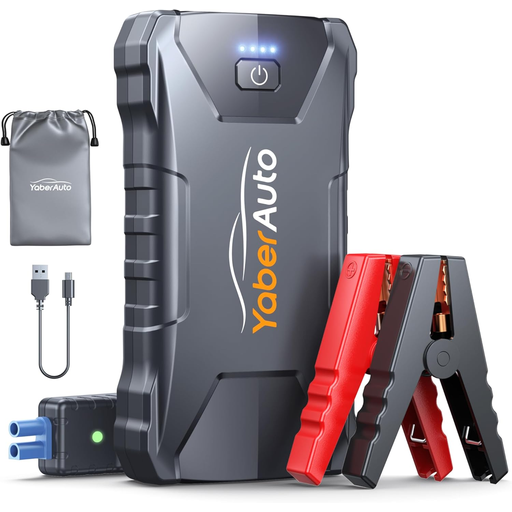
Why This Fits Their Persona: Ideal for drivers of standard passenger cars. This model is compact enough to fit in the glove compartment but powerful enough for most petrol and smaller diesel engines. A no-fuss solution for roadside emergencies.
Instead of just citing a high peak current, YaberAuto specifies engine compatibility (up to 7.0L petrol/5.5L diesel). This provides a much more realistic picture of its performance. The 13,800mAh capacity is an honest specification for this size.
Features 10 built-in safety functions and a bright LED flashlight with an SOS mode. Its highly compact and lightweight design (0.34 kg) makes it a practical companion for any drive.
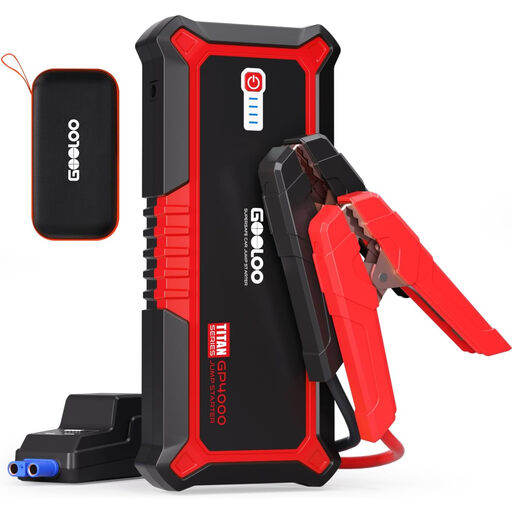
Why This Fits Their Persona: For owners of larger vehicles like SUVs, vans, RVs, or cars with heavy-duty diesel engines. This model delivers the raw power needed to start large, cold engines, ensuring you're never left without power.
The 4000A peak current is backed by a clear claim: starts all petrol engines and diesel engines up to 10.0L. This is a concrete performance promise that goes beyond an empty marketing number. The robust, all-metal clamps are built for repeated, heavy-duty use.
Features a "BOOST" button for starting deeply discharged batteries. It also functions as a powerful power bank with fast-charging ports (USB-A and USB-C).
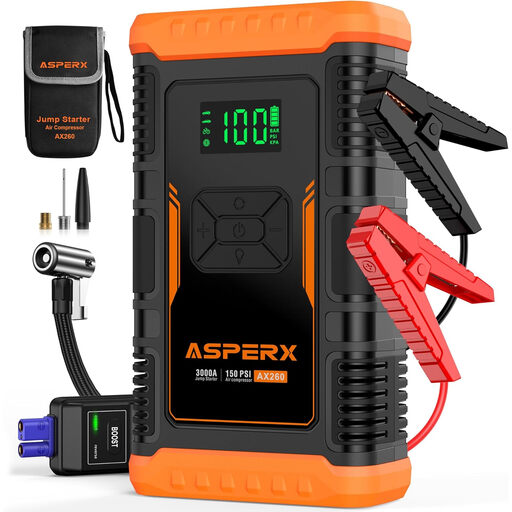
Why This Fits Their Persona: Perfect for campers, road-trippers, and anyone who wants to be prepared for more than just a dead battery. This device combines a powerful jump starter with an air compressor for inflating tyres, air mattresses, or balls.
Where many multi-function gadgets excel at one thing and fail at the rest, this model delivers on both fronts. The 3000A jump starter is powerful (up to 10L petrol/8.0L diesel), and the 150 PSI compressor with an auto-stop function is a fully-fledged tool, not a gimmick.
Combines five functions: jump starter, air compressor, power bank, flashlight, and emergency signal. The digital LCD screen clearly displays both battery status and tyre pressure.
We've compiled a complete, up-to-date list of products that meet these strict selection criteria and safety standards.
Even when not in use, a jump starter slowly loses its charge. It's good practice to fully charge the jump starter every 2 to 3 months. This ensures the internal battery remains in good condition and the device is ready for use when you need it. Always consult the manufacturer's manual for specific advice.
A modern car jump starter with the proper safety certifications is designed to be safe for your vehicle's electronics. The built-in protections, such as reverse polarity and short-circuit protection, prevent the most common user errors. The risk of damage is significantly higher when using cheap, uncertified models or by failing to follow the instructions correctly.
A jump starter and a battery charger serve different purposes. A jump starter (or portable jump starter) is designed to deliver a very high current in seconds to start an engine. It's an emergency solution for on the go. A battery charger, on the other hand, slowly and controllably charges a dead or weak battery over a period of several hours. A battery charger is intended for maintenance and restoring charge, not for an instant start.
