
Vandaag of morgen in huis

Kwaliteit gegarandeerd

Welkomstaanbiedingen ontgrendelen: GRATIS bezorging | Tot 80% korting | Gratis 30 dagen JoyPlus-proefperiode
Download de app
A flat battery often strikes at the worst possible time: in a dark car park, on a camping trip or just before you leave for work. A car jump starter can get you out of a tight spot, but not every model is suitable for every car, van or motorbike.
Marketing can make the choice harder. A high amp rating sounds impressive, while other important features get less attention. Read on to find out what to look for, which common pitfalls to avoid and which models suit different needs.
A rating such as 3000A or 6000A doesn’t tell you everything about real-world performance. Peak current is a short-term maximum. Check which engine type and engine size the device is designed for, too. A jump starter for a compact petrol car won’t necessarily be suitable for a large diesel SUV.
Also look out for the difference between:
A jump starter with a compressor is useful for topping up tyre pressure on the go. However, a 150 PSI rating doesn’t mean the pump will always work quickly. Airflow, measured in litres per minute, for example, also affects how quickly a car tyre inflates.
A digital pressure gauge, automatic shut-off and a suitable hose are useful features. Don’t run the pump for longer than the manual recommends, and let the device cool down afterwards. A portable compressor is designed for emergencies and small top-ups, not necessarily for frequent use with several large tyres.
A car jump starter contains a powerful lithium battery, so protection against reverse polarity, short circuits, overheating and overcharging is important. A CE mark means the manufacturer declares that the product meets the relevant European requirements; it is not an independent quality rating.
Check the storage instructions, too. A jump starter left unused in a hot car for months without being recharged may not be ready when you need it. Many manufacturers recommend recharging it periodically. Always follow the manual for your chosen model.
A 12V jump starter is designed for many cars, motorbikes, light vans and some boats. Before buying, check:
A jump starter won’t start the high-voltage battery in a fully electric car. For hybrid vehicles, check the specifications for both the vehicle and the jump starter.
A portable battery booster is often also sold as a power bank for your car. Don’t look at mAh alone; check the stated charging ports, charging time and nominal capacity, too. USB-A, USB-C and Power Delivery are useful for charging phones, tablets or a laptop.
An LED light with an SOS or flashing mode can come in handy if you break down in the dark. Extra features make a device more versatile, but can also add to its size and weight. Decide whether you’re looking for a compact emergency car starter or a multi-purpose device for travel and camping.
A jump starter gives a vehicle a temporary boost to start the engine. A car battery charger, by contrast, charges the battery in a controlled way using mains power. If you mainly want to maintain a vehicle over winter, an automatic charger may be a better choice. Check the voltage, charging current, battery capacity and compatibility with AGM, EFB, gel or lead-acid batteries.
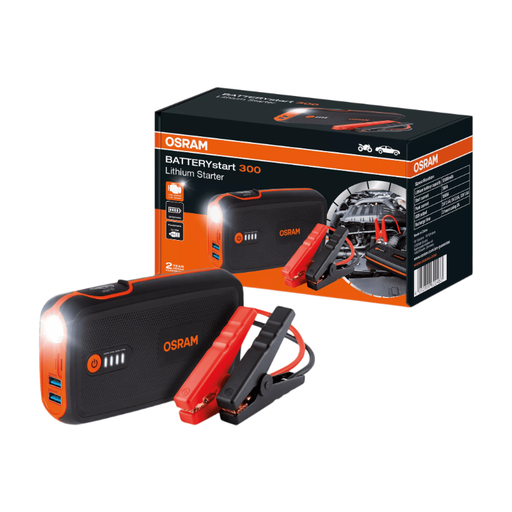
Why it suits this profile: This compact model is designed for everyday use with cars and motorbikes. According to the product description, it supports petrol engines up to 6 litres and diesel engines up to 3 litres.
The stated engine limits make it easier to choose than relying on a peak amp rating alone. Be sure to check these limits against your vehicle’s details.
1500A peak current, 12V system, two USB ports and an integrated LED light; stated weight: 706 grams.
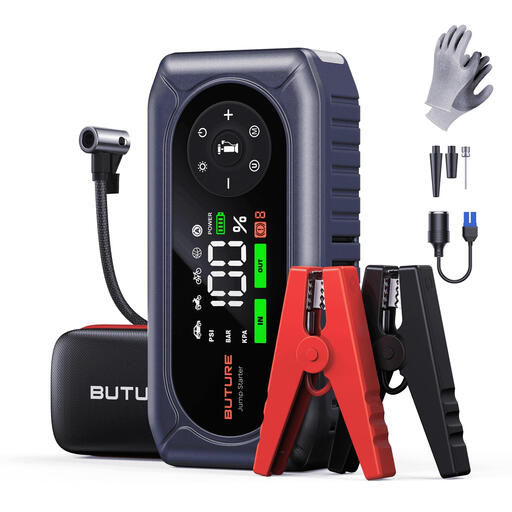
Why it suits this profile: According to the product description, this model combines 4500A peak current with a compressor, display, power bank and several safety features.
According to the specifications, the display shows information including the battery level and tyre pressure. The compressor switches off automatically when it reaches the set pressure.
Up to 150 PSI, five preset modes, suitable for petrol engines up to 9.0 litres and diesel engines up to 8.0 litres.
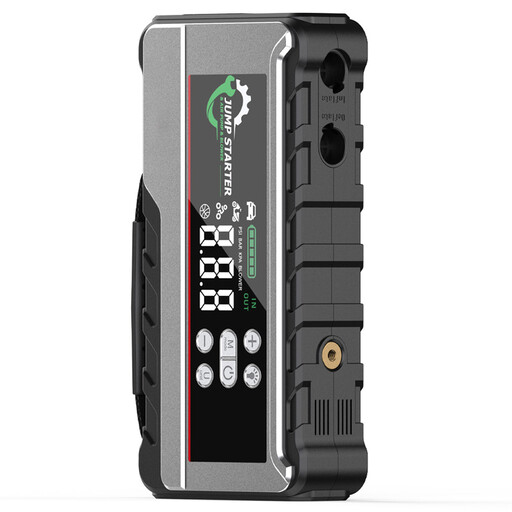
Why it suits this profile: This model is designed for travellers and campers who want to start vehicles and inflate tyres, as well as power devices and inflate larger items.
As well as a digital pressure function, the product description lists a separate air blower for inflating and deflating items such as air beds and kayaks.
3000A peak current, compressor up to 150 PSI, PD65W output and a stated battery capacity of 24800mAh.
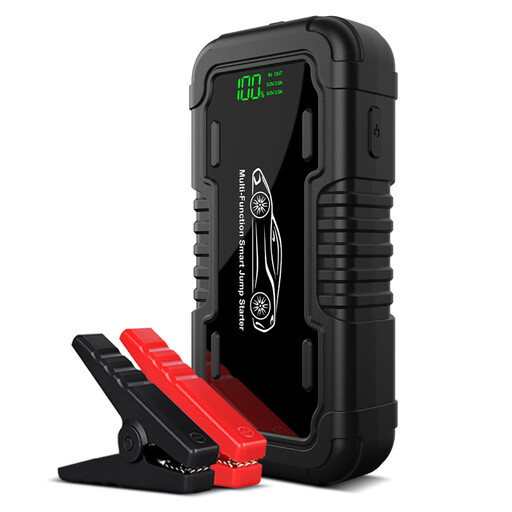
Why it suits this profile: Without a compressor, this model focuses more on jump-starting and charging. It could suit anyone looking for a motorbike jump starter or a compact emergency starter.
The product specifications list a starting current of 800A and a peak current of 2000A separately. This shows that the two figures don’t mean the same thing.
2000A peak current, 12V support, LCD display, USB charging and a stated weight of approximately 580 grams.
We’ve put together a full, up-to-date list of products that meet these strict selection criteria and the applicable European safety requirements.
Always follow the manual for your chosen model. In general:
Don’t use a jump starter with a damaged, leaking or frozen battery. If in doubt, roadside assistance or a garage is the safer option.
No. Check 12V compatibility, the fuel type and the maximum engine size. A 24V lorry system and the high-voltage battery in an electric car are generally outside the scope of these products.
Its lifespan depends on storage temperature, charging frequency and use. Recharge the device periodically as instructed in the manual, store it somewhere dry and avoid exposing it to heat for long periods. A stated number of charging cycles is a product specification, not a guarantee of a set lifespan in every situation.
Not necessarily. A combined device saves space in the car, but uses the same built-in battery for jump-starting, inflating and USB charging. If you use the compressor often, pay extra attention to charging time, run time, airflow and the recommended cool-down period.
