
Vandaag of morgen in huis

Kwaliteit gegarandeerd

Welkomstaanbiedingen ontgrendelen: GRATIS bezorging | Tot 80% korting | Gratis 30 dagen JoyPlus-proefperiode
Download de app
A flat battery often strikes at the worst possible moment: on a cold morning, on the way to a campsite or after the car has been parked for a few weeks. A car jump starter can be a practical alternative to jump leads. However, not every portable jump starter is suitable for every vehicle.
Many buyers focus mainly on the highest amp rating on the packaging. This can be misleading. Check the engine compatibility, connections, safety features and maintenance requirements too. That way, you can avoid buying a compact car battery booster that isn’t right for your car, campervan, boat or tractor.
A rating such as 2000A, 4000A or even 8000A sounds impressive, but it doesn’t tell you everything about how the device will perform in practice. Peak power is a brief maximum rating. What matters more is whether the manufacturer says the device is suitable for your 12V system, engine type and engine capacity.
A diesel engine generally needs more starting power than a comparable petrol engine. So always check the stated limit, such as “up to 6.0-litre diesel” or “up to 9.0-litre petrol”. These are product claims made by the brand and don’t guarantee that the device will start a flat or damaged battery.
Most portable jump starters are designed for vehicles with a 12V lead-acid battery. They are not automatically suitable for 24V lorries, electric vehicles with a high-voltage battery or vehicles with a non-standard electrical system.
A small van, SUV, motorbike, boat or lawnmower may fall within the stated category, but check your vehicle’s manual. A car jump starter is also no substitute for a repair if the battery is damaged, frozen or leaking.
A jump starter with a power bank, torch or compressor can be handy. But cable length, display readability and the carry case matter too. For example, a compressor with a high maximum pressure isn’t necessarily fast when inflating a car tyre. Also check the airflow rate, automatic shut-off and the valve adapters supplied.
Start by choosing a model that suits your vehicle:
A “BOOST” function may help with a very low battery voltage, according to the product description. However, the manufacturer’s information doesn’t guarantee that it will work with a battery that is completely faulty or below the permitted voltage.
Look for smart jump leads with features such as reverse-polarity protection, short-circuit protection, overheat protection and spark-free connections. Check whether the device has a clear status indicator. A green ready light or LCD screen makes it easier to connect the clamps correctly.
Always follow the instructions: red clamp to the positive terminal, black clamp to the negative terminal or a suitable unpainted earth point. Don’t crank the engine for longer than the few seconds specified, and allow the starter to cool down between attempts.
The stated capacity in mAh isn’t always directly comparable between brands. Also consider the Wh rating, weight and dimensions. A heavy portable jump starter may have more connections, but it might end up being left at home. A compact model is easier to fit in the glove compartment, but may be less suitable for a large diesel engine.
Fully charge your jump starter before using it for the first time. Check the charge level every few months and follow the manufacturer’s maintenance schedule. Store the device somewhere dry, out of direct sunlight and away from heat or flames. The temperature inside a closed car can rise significantly.
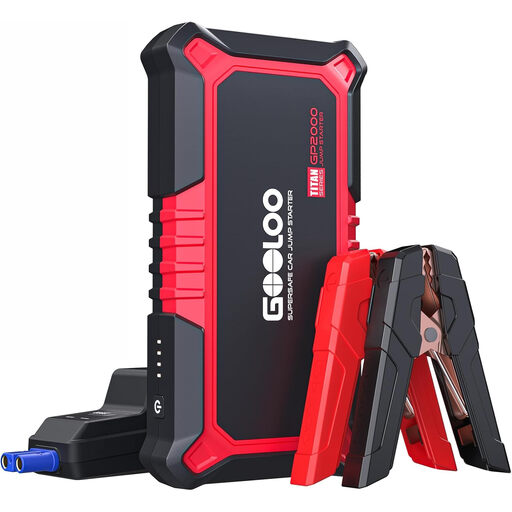
Why it suits this type of user: This model combines a 2000A peak current with a compact design weighing around 545 grams. According to the product information, it’s suitable for 12V vehicles with petrol engines up to 8.0 litres and diesel engines up to 6.0 litres.
The stated petrol and diesel limits make it easier to check compatibility. The smart cable also lists several safety features, including reverse-polarity and short-circuit protection.
400-lumen light with three modes, two USB outputs and a stated standby time of up to 24 months.
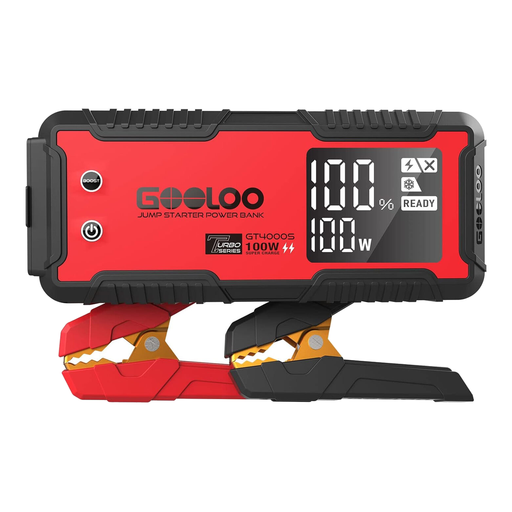
Why it suits this type of user: According to the product description, this model delivers 4000A peak current and supports petrol engines up to 12.0 litres and diesel engines up to 10.0 litres in 12V vehicles.
The engine limits are clearly stated. According to the manufacturer, the 3.2-inch screen displays the product status, so you don’t have to rely on the peak power rating on the packaging alone.
100W charging via USB-C, three USB ports, a 400-lumen light and a 15V/10A output for compatible accessories.
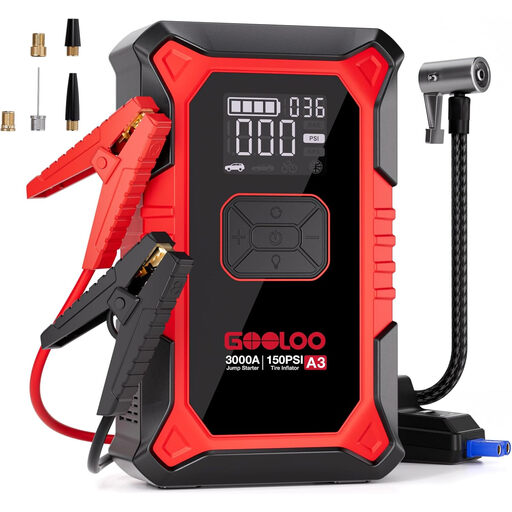
Why it suits this type of user: This is an option for drivers, campervan owners and outdoor enthusiasts who want to combine a jump starter with a compressor. According to the product information, it supports 12V vehicles, petrol engines up to 9.0 litres and diesel engines up to 6.5 litres.
The built-in pressure gauge and automatic shut-off help ensure you don’t focus solely on a high PSI rating. The five nozzles supplied are designed for different uses.
Compressor up to 150 PSI, airflow rate of 35 l/min, power bank function, LED lighting and a digital display.
A car jump starter is only an emergency solution. Stop the car somewhere safe, switch off all electrical equipment and check the battery first. Don’t use the device if the battery is leaking, damaged or frozen. Connect the clamps only as described in the manual, and remove them in the specified order once the engine has started.
If your battery keeps going flat, contact a garage. The problem could also be caused by the alternator, wiring or a battery that has reached the end of its life.
We’ve put together a complete, up-to-date list of products that meet these strict selection criteria and the applicable European safety regulations.
No. Check the engine type, engine capacity and battery type. A 12V rating tells you only the system voltage. A 24V lorry or the high-voltage battery in an electric car is generally outside its intended use.
It varies by model. Many manufacturers recommend charging the device after use and carrying out regular maintenance while it is in storage. Check the charge level every two to three months, unless the manual gives a different interval. Don’t leave the starter completely flat for long periods.
That depends on how you’ll use it. If you’re a driver who only needs emergency starting power, a compact model without a compressor may be enough. If you travel or camp often, or want to check your tyre pressure on the road, a jump starter with a compressor could be useful. Don’t compare maximum PSI alone: also look at the airflow rate, hose, nozzles and automatic shut-off.
