
Vandaag of morgen in huis

Kwaliteit gegarandeerd

Welkomstaanbiedingen ontgrendelen: GRATIS bezorging | Tot 80% korting | Gratis 30 dagen JoyPlus-proefperiode
Download de app
You turn the key, and... nothing. A click, maybe a faint hum, but the engine won't turn over. A dead battery is one of the most common causes of a breakdown and it always happens at the worst possible time. A modern jump starter, also known as a booster pack or battery booster, is a compact and effective solution. But the market is flooded with models that promise the world.
As a Joybuy Product Recommendation Officer, I'm here to help you see through the marketing hype. Before you invest in a car jump starter, it's crucial to understand the common pitfalls that lead to a bad purchase.
Many jump starters look impressive on paper but fall short in practice. Watch out for these three common deceptions:
To find a model that fits your car and your needs, focus on the specifications that truly matter.
The required starting power depends directly on your engine. A 12V jump starter is standard for passenger cars, but the amperage makes all the difference.
Always check the manufacturer's specifications for the recommended engine displacement (in litres). This is a more reliable indicator than peak power alone.
A portable jump starter is more than just an emergency tool. Its battery capacity determines how versatile the device is.
Modern lithium-ion jump starters are much safer than traditional jumper cables. Essential safety features include:
Below are some popular choices, matched to specific user profiles.
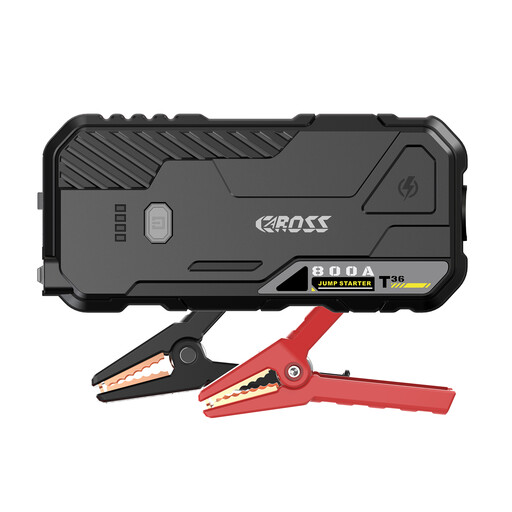
Why This Fits Their Persona: Ideal for drivers of standard petrol cars who need a reliable, compact, and no-fuss solution. It fits easily in the glove compartment and provides peace of mind for daily commutes.
This model focuses on the core function. Its 800A rating is realistic and more than enough for most passenger cars, without making you pay for inflated marketing numbers.
Compact size, essential safety features like a spark-proof design and reverse polarity protection, and a convenient 18W fast-charging function for devices.
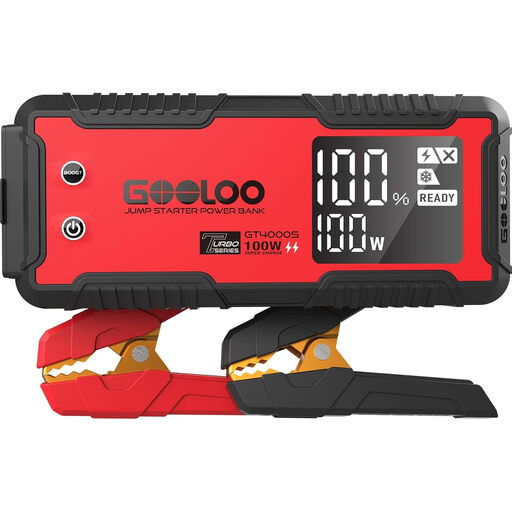
Why This Fits Their Persona: Suited for owners of SUVs, vans, RVs, or cars with large petrol or diesel engines. This user needs serious cranking power and reliability.
The high 4000A peak power is backed by compatibility with engines up to 10.0L diesel. The focus is on performance, with the bonus of extremely fast recharging.
According to GOOLOO, its 100W fast-charging feature can fully recharge the booster in 1.2 hours. The device also functions as a powerful power bank for laptops (via Type-C).
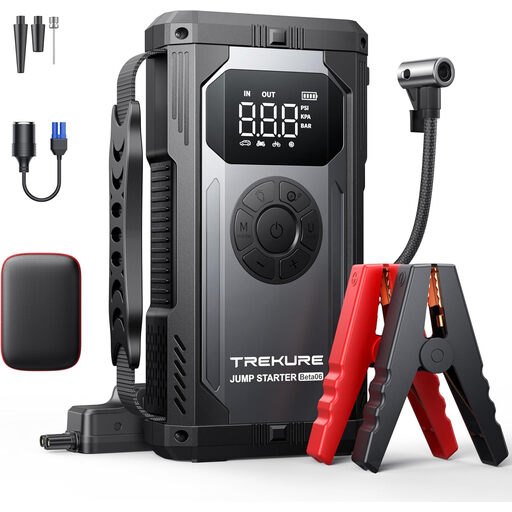
Why This Fits Their Persona: Perfect for campers, boat owners, and anyone who wants a multifunctional emergency device in their vehicle. It combines powerful jump-starting capabilities with a fully-fledged tyre inflator.
This is a 'jack-of-all-trades' that avoids the pitfall by offering strong specs for both core functions: a very high peak power and a compressor with solid pressure (150 PSI) and air flow.
The combination of a powerful 5500A starter and a 150 PSI compressor with auto-shutoff. Its LCD screen displays both battery status and tyre pressure.
We have compiled a complete, up-to-date list of products that meet these strict selection criteria and safety standards.
Most manufacturers recommend charging the jump starter every 3 to 6 months, even if you don't use it. Lithium-ion batteries slowly lose their charge over time. Periodically charging it ensures it's ready when you need it and extends the battery's lifespan.
No, not every jump starter is suitable for a diesel engine. Diesel engines have a higher compression ratio and require significantly more starting current than petrol engines. Choose a model specifically designated as a jump starter for diesel or one with a high peak amperage (usually 2500A or more) that is explicitly rated for your diesel engine's displacement.
Yes, a modern jump starter is generally safer. They are equipped with built-in protections against the most common user errors, such as connecting the clamps incorrectly (reverse polarity) and short-circuiting. This minimises the risk of sparks and damage to the car's electronics, which is a real danger when using traditional jumper cables.
