
Vandaag of morgen in huis

Kwaliteit gegarandeerd

Welkomstaanbiedingen ontgrendelen: GRATIS bezorging | Tot 80% korting | Gratis 30 dagen JoyPlus-proefperiode
Download de app
Picture this: it's a cold morning, you're in a hurry, you turn the key and... click. Silence. A dead battery is one of the most frustrating problems for any car owner. A car jump starter, also known as a booster pack or battery booster, is your lifesaver in this situation. It allows you to start the car yourself, without jumper cables or a second vehicle.
But the market is flooded with models that promise the world. As a Product Recommendation Officer at Joybuy, I see where consumers go wrong every day. Before you invest in a car battery starter, save yourself from these common pitfalls.
Many packages scream for attention with huge numbers like 3000A, 5000A, or even 8000A. This is the peak amperage, a theoretical maximum burst of energy the booster can deliver for a fraction of a second. What really matters is the starting current (cranking amps): the power needed to actually turn the engine over. This value is often less prominently displayed. A starting current that's too low means your diesel jump starter won't be able to start the engine, or even a larger gasoline one, no matter how high the peak amps are.
A jump starter with a compressor, power bank, and flashlight sounds like the perfect deal. Yet, many of these multi-functional devices are a compromise. The built-in compressor is sometimes too weak to inflate a car tyre efficiently, or the jump starter power bank feature charges your phone at a painfully slow pace. You end up with a device that does a little bit of everything, but excels at nothing.
You buy a portable jump starter for emergencies. You put it in the trunk and forget about it. Three months later, you're stuck with a dead battery, you grab the booster, and... it's dead too. The battery's self-discharge rate is a crucial, yet often ignored, factor. A low-quality model can lose a significant portion of its charge within a few months, making it useless at the moment of truth.
To avoid ending up with a useless device when your car won't start due to a dead battery, focus on these three key points.
Look beyond the peak amps and check the engine displacement (in litres) the jump starter is rated for. A diesel jump starter requires significantly more power than one for a small gasoline car.
The capacity, expressed in milliampere-hours (mAh), determines how many times you can start a car or charge your phone. A higher capacity is better, but also pay attention to the battery technology. Most models use Lithium-Ion. Check the manufacturer's recommendations on how often you should recharge the device (usually every 3-6 months) to keep the battery healthy.
A modern battery booster must be safe for everyone to use, even without technical knowledge. Look for built-in protections such as:
Below are some popular choices, matched to different user profiles. These aren't "winners," but practical suggestions based on their specifications.
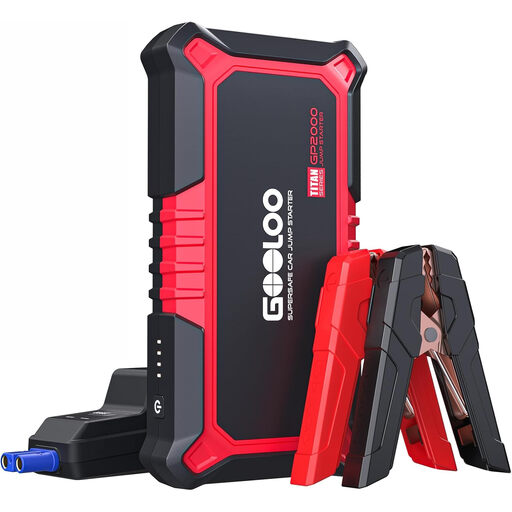
Why This Fits Their Persona: Ideal for the commuter with a standard gasoline or smaller diesel car. It's compact enough for the glove compartment and provides enough power for most common emergencies, without making you pay for features you won't use.
This model focuses on the core task: jump-starting. It avoids the 'jack-of-all-trades' trap by combining a reliable starting function with a simple power bank, without an underpowered compressor.
According to GOOLOO, it's suitable for 8.0L gasoline and 6.0L diesel engines. The metal clamps and 10 safety features provide peace of mind.
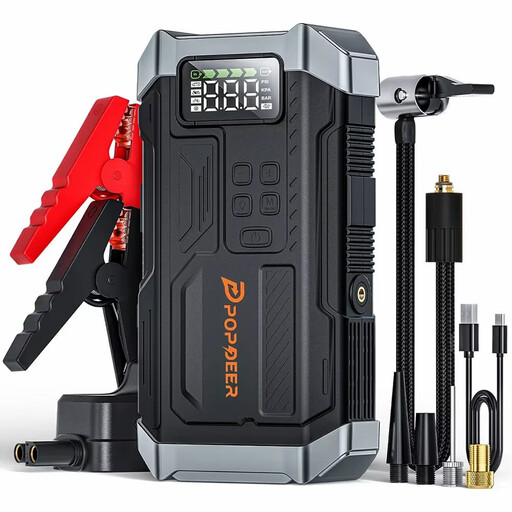
Why This Fits Their Persona: For those who drive a powerful SUV, van, or RV and want to be prepared for more than just a dead battery. The combination of a strong jump starter and a capable air compressor is perfect for road trips and outdoor activities.
While many combo models have a weak compressor, POPDEER specifies a maximum pressure of 150 PSI and an airflow of 35L/min, which is functional for car tyres.
Suitable for large engines (up to 10L gasoline/8L diesel). The compressor features 4 preset modes and an auto-stop function to prevent over-inflation.
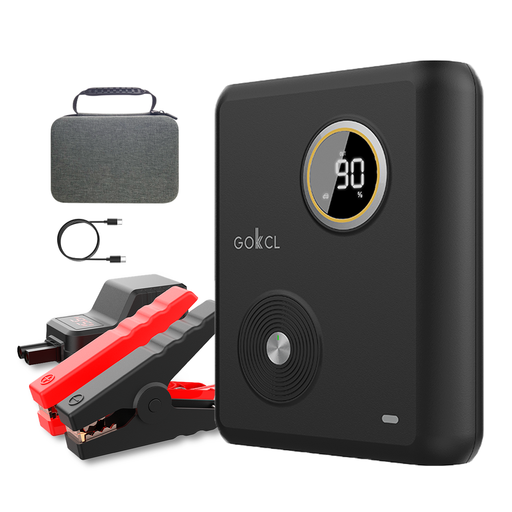
Why This Fits Their Persona: For the owner seeking maximum reliability and minimal maintenance. This is a 'set it and forget it' device that's ready when you need it, even after years in the car.
Tackles the 'forgotten shelf life' trap with sodium-ion technology. According to the manufacturer GOKKCL, this model has an extremely low self-discharge rate (~1% per month) and a standby time of up to 5 years.
The sodium-ion battery is, according to the manufacturer, more stable in extreme temperatures (-40°F to 176°F) and has a much longer lifespan (up to 6000 cycles) than traditional lithium-ion boosters.
We have compiled a complete, up-to-date list of products that meet these strict selection criteria and safety regulations.
Most manufacturers of lithium-ion models recommend fully charging the device every 3 to 6 months, even if you don't use it. This prevents the battery from deep-discharging and extends its lifespan. Models with other technologies, such as sodium-ion, claim a much longer standby time. Always consult the manual for your specific model for the correct maintenance advice.
No, definitely not. A diesel jump starter requires significantly more starting current than a gasoline model of a similar size, especially in cold weather. Always check that the jump starter's specifications match the engine displacement (in litres) of your diesel car. A booster that is too weak will not be able to start the engine.
The main advantage is convenience: you have two essential emergency tools in one compact device. This is ideal for on the road, where you might face both a dead battery and a flat tyre. When purchasing, pay close attention to the compressor's specifications, such as the maximum pressure (PSI) and airflow (L/min), to ensure it is powerful enough for your car tyres.
