
Vandaag of morgen in huis

Kwaliteit gegarandeerd

Welkomstaanbiedingen ontgrendelen: GRATIS bezorging | Tot 80% korting | Gratis 30 dagen JoyPlus-proefperiode
Download de app
A clicking sound instead of a roaring engine on a cold, wet morning. It's every driver's nightmare. A dead battery always strikes when you least expect it and at the worst possible time. A good car jump starter is not a luxury, but a necessity. It gives you the freedom to get back on the road immediately, without waiting for roadside assistance.
But the market for these devices is filled with marketing claims that create more confusion than clarity. Before you invest in a jump starter, it's crucial to recognise the common pitfalls.
jump starter with compressor, light, and power bank seems convenient. However, these extra features are sometimes of inferior quality. A compressor that takes ten minutes to inflate a tyre slightly is of little value in an emergency.To make a smart choice, ignore the marketing hype and focus on the specifications that truly matter. These are the three most important points to check.
The required starting power depends on your engine. A larger engine, and especially a diesel engine, needs more current to start.
12v jump starter with a peak power between 1500A and 2000A is generally sufficient for a reliable start.diesel jump starter needs a higher starting current, especially in cold weather.Always check if the manufacturer specifies the engine displacement (in litres) for which the car jump starter is suitable and use this as a guideline.
The capacity, expressed in milliampere-hours (mAh), primarily relates to the power bank function. A higher mAh value means you can charge your phone or tablet more often, not necessarily that the starting function is more powerful.
Most portable jump starters use a lithium-ion battery. These are compact and powerful. One point of attention is self-discharge; you need to recharge them every 2-3 months. Some newer models use other technologies, such as sodium-ion, which manufacturers claim offer benefits like a longer standby time and better performance in extreme temperatures.
This is a non-negotiable point. A good emergency starter must be equipped with essential safety features to prevent damage to your car's electronics and the device itself. Check for:
The quality of the jumper cables and clamps is also important. Sturdy, all-metal clamps with thick cables will last longer and ensure better current transfer than cheap plastic versions.
Based on these criteria, we have selected a few models that suit different user profiles.
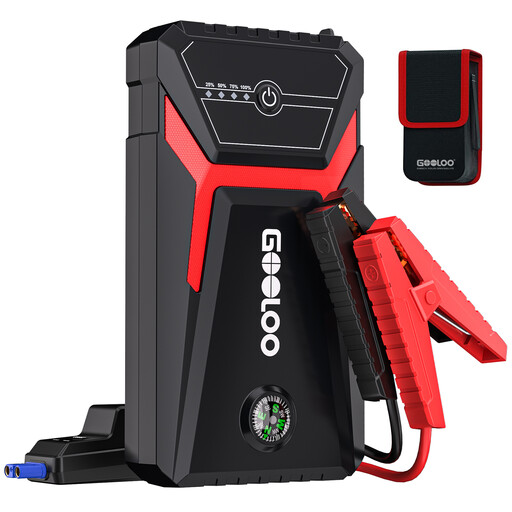
Why This Fits Their Persona: Perfect for those seeking a reliable, compact jump starter for a standard petrol car or small diesel. No unnecessary features, just a solid emergency device that fits easily in the glove compartment.
This model focuses on the core function: starting. It has a realistic peak power of 1500A, which is more than enough for the specified engines (6.0L petrol/4.0L diesel) without overstating its capabilities.
Compact and lightweight (0.88 kg). Features 10 safety functions, including reverse polarity and spark-proof protection. Includes an LED flashlight and USB ports.
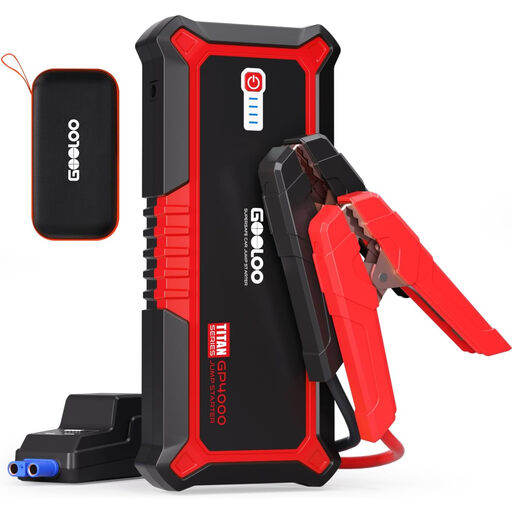
Why This Fits Their Persona: Ideal for owners of a large SUV, van, or diesel car. This model delivers the extra power needed to reliably start larger engines, especially during cold winter months.
Where smaller boosters fail with larger engines, this model's 4000A peak power delivers the necessary force. The "BOOST" function is specifically designed for deeply discharged batteries, bypassing the pitfall of unrealistic claims.
Suitable for all petrol engines and diesels up to 10.0L. Robust housing with metal clamps and comprehensive safety features. According to the manufacturer, it also works in extreme temperatures (-20°C to 60°C).
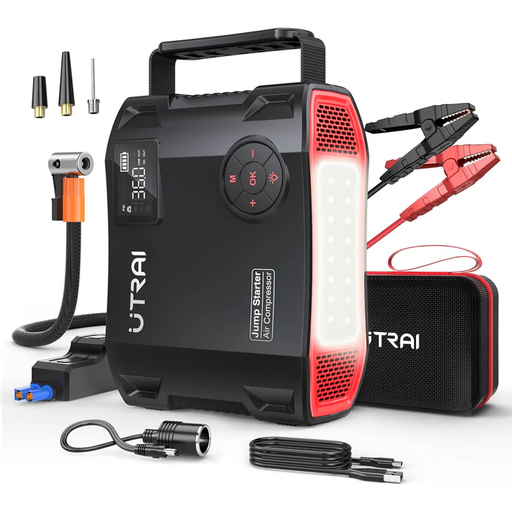
Why This Fits Their Persona: For those who want a complete emergency kit in one device. Ideal for campers, boat owners, or anyone who wants to be prepared for both a dead battery and a flat tyre, wherever you are.
This model avoids the 'all-in-one disappointment' by combining a powerful compressor (150 PSI, 45L/min) with a very high peak starting current (6000A). Both functions are serious performers, unlike cheaper gadgets.
Combines a powerful jump starter with a digital air compressor featuring auto-stop. It has a 160W DC output to power devices like a cool box or car vacuum cleaner.
We have compiled a complete, up-to-date list of products that fully meet these strict selection criteria and safety regulations.
Most manufacturers recommend fully charging a portable jump starter every 2 to 3 months, even if you don't use it. This maintains the health of the internal lithium battery and ensures it's ready for use when you need it.
Yes, if used correctly. Modern jump starters are equipped with multiple built-in safety features, such as protection against short circuits and reverse polarity. The procedure is simple: first, connect the red clamp to the positive (+) terminal of the battery. Then, connect the black clamp to an unpainted metal part of the chassis or engine block, away from the battery. Start the car and remove the clamps within 30 seconds.
No, not every jump starter is powerful enough for a diesel. A diesel jump starter requires significantly more starting current (cold cranking amps) than a petrol engine of a similar size. Always check the manufacturer's specifications and choose a model explicitly rated for your diesel engine's displacement to avoid disappointment.
