
Vandaag of morgen in huis

Kwaliteit gegarandeerd

Welkomstaanbiedingen ontgrendelen: GRATIS bezorging | Tot 80% korting | Gratis 30 dagen JoyPlus-proefperiode
Download de app
It's a classic scenario: a cold, wet morning, and your car won't start. A dead battery. In the past, this meant waiting for roadside assistance or a neighbour with jumper cables. Today, there's a compact solution: the jump starter. But the market is flooded with models making lofty promises. As a Product Recommendation Officer at Joybuy, I see where consumers go wrong every day. Avoid wasting your money and watch out for these common pitfalls.
So how do you choose the right car jump starter? By focusing on the specifications that truly matter.
Don't be dazzled by the peak current (A). This is the maximum power the booster can deliver for a very short time. More important is the cranking current, the continuous power needed to turn the engine over.
A simple rule of thumb:
battery booster with a high cranking power, often 1500A or higher.A jumpstarter that's too weak won't get your engine started, while a model with excessive power is unnecessarily expensive and heavy for a city car.
A jump starter often doubles as a power bank with jumper cables. The capacity, expressed in milliampere-hours (mAh), determines how many times you can charge a phone or tablet. Remember that the advertised capacity doesn't tell the whole story. A 20,000 mAh booster will provide fewer charge cycles in practice than you'd expect due to energy loss when converting from 3.7V to the 5V USB standard. Focus on the practical application: can it charge your phone 2-3 times in an emergency? Then it's usually sufficient.
Considering a jump starter with compressor? Check the maximum pressure (PSI) and the air flow rate (L/min). A model that can take a car tyre from 2.0 to 2.5 bar in a few minutes is a valuable addition. A weak compressor that takes 15 minutes is mainly a source of frustration.
You should be able to use a good emergency car starter with complete peace of mind. Modern jump starters have built-in safety features. Look for functions like:
These features are non-negotiable and make the difference between a reliable tool and a potential hazard.
To help you choose, we've matched a few popular models with typical user profiles.
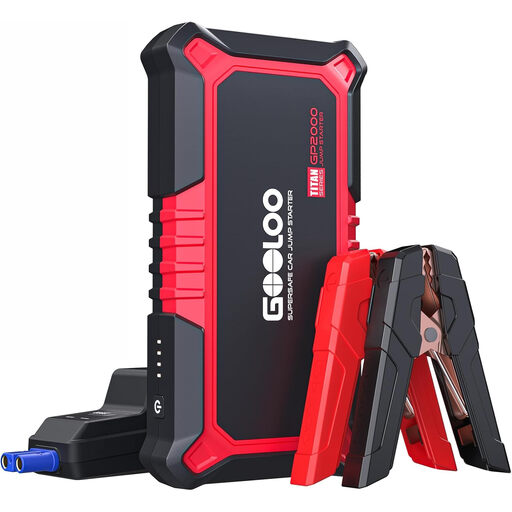
Why This Fits Their Persona: Ideal for those seeking a reliable, compact solution for a standard passenger car. It fits easily in the glove compartment and provides peace of mind for the daily commute, without unnecessary extras.
This model avoids the 'peak current myth.' The 2000A peak is more than enough for most petrol and smaller diesel engines, without making you pay for redundant power you'll never use.
Compact and lightweight (approx. 545 grams). Also functions as a power bank with two USB ports and has a built-in LED flashlight for emergencies.
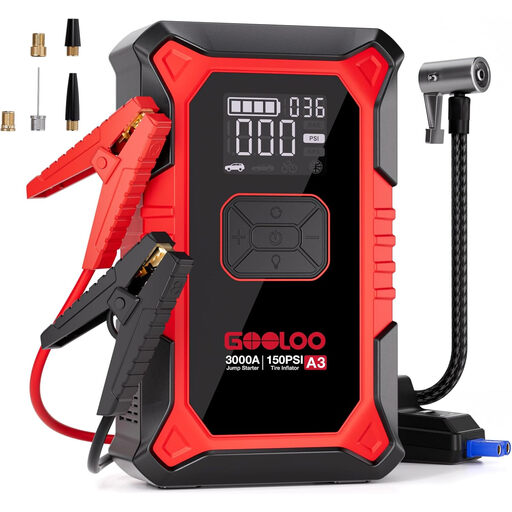
Why This Fits Their Persona: Perfect for the family SUV or station wagon. The built-in compressor is ideal for inflating car tyres, the kids' bike tyres, or an air mattress on a camping trip. A truly multifunctional tool for on the road and on holiday.
This device sidesteps the 'all-in-one disappointment.' The compressor has a decent air flow rate (35L/min) and a maximum pressure of 150 PSI, making it genuinely useful and not just a gimmick.
Powerful cranking power (3000A peak) for larger engines (up to 9.0L petrol/6.5L diesel). The smart LED screen displays tyre pressure and automatically stops at the preset value.
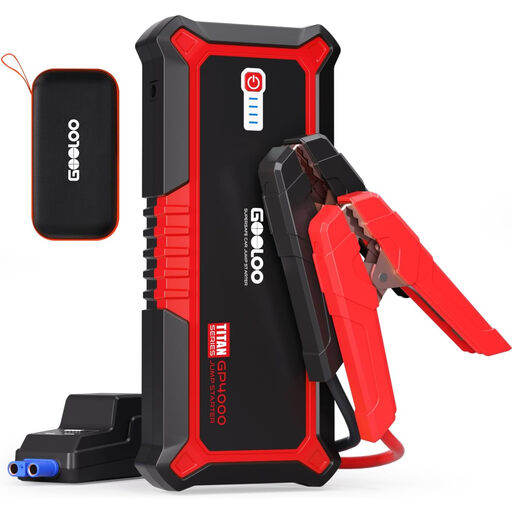
Why This Fits Their Persona: For owners of a camper, boat, tractor, or a large 4x4 diesel. This is a powerhouse designed for the toughest jobs. Its robust housing and high power provide security, even far from civilization.
This model is no empty promise. The 4000A peak current is genuinely aimed at starting large engines up to 10.0L diesel. The 'BOOST' button even helps with extremely low battery voltage, a feature often missing on lighter models.
Extremely powerful and reliable for all 12V vehicles. According to GOOLOO, it can start most vehicles over 60 times on a full charge. The metal clamps are designed for durability.
We have compiled a complete, up-to-date list of products that meet these strict selection criteria and safety regulations.
1. How often should I charge a jump starter? Even when not in use, the battery slowly drains. It's advisable to fully charge your jump starter every 2 to 3 months. This ensures it's ready for use when you need it. Modern models have low self-discharge, but preventative charging is always wise.
2. Can I leave a jump starter permanently in my car? Yes, most jump starters are designed to be stored in a car. They can generally handle temperature fluctuations well, from a cold winter night to a hot summer day in a parked car. However, always check the manufacturer's specifications for the recommended temperature range, which is usually between -20°C and 60°C (-4°F and 140°F).
3. Is a jump starter with a compressor worth the extra cost? That depends on your usage. For someone who regularly inflates tyres on their car, bikes, or sports equipment, it's a very handy feature that eliminates the need for a separate device. However, if you're only looking for an emergency solution for a dead battery, a more compact model without a compressor is often a more affordable and equally effective choice.
