
Vandaag of morgen in huis

Kwaliteit gegarandeerd

Welkomstaanbiedingen ontgrendelen: GRATIS bezorging | Tot 80% korting | Gratis 30 dagen JoyPlus-proefperiode
Download de app
A flat battery always seems to happen at the worst time: on a cold morning, after a weekend away or when you’re stranded somewhere without help. A car jump starter can be a practical emergency solution. You won’t need a second car or long jump leads, provided the booster is suitable for your vehicle and sufficiently charged.
However, not every portable jump starter is suitable for every vehicle. High amp ratings, large capacities and claims such as “for all vehicles” don’t tell the whole story. Read on to find out which specifications matter, which marketing pitfalls to avoid and what type of car battery booster is right for your needs.
A high peak current sounds appealing, but it doesn’t tell you everything about how useful a jump starter will be in practice. Check the stated starting current, voltage and maximum engine capacity too. A jump starter for a small petrol car has different requirements from one for a diesel motorhome or van.
Product specifications also vary by brand. Treat the stated amp rating as a point of comparison, not a guarantee that the jump starter will start every vehicle in all conditions.
A diesel engine generally needs more starting power than a comparable petrol engine. Check the figures for each fuel type separately, for example up to 6.0 litres for petrol and 4.0 litres for diesel. If you have an SUV, motorhome, tractor or boat, also check whether it uses a 12V system.
A jump starter is not automatically suitable for electric vehicles, hybrid systems or vehicles with a different battery voltage. If in doubt, consult your vehicle’s manual.
Lithium batteries lose charge over time, especially if stored for long periods or exposed to extreme temperatures. A device left unused in the car for months may not have enough charge when you need it.
Check the charge level regularly and follow the manufacturer’s care instructions. Many models recommend recharging every two to six months. Keep the booster somewhere dry and avoid leaving it in direct sunlight or a very hot car for long periods.
Check these three details:
For a typical car, a 12V jump starter that supports, for example, 6.0 litres for petrol and 4.0 litres for diesel may be sufficient. For larger engines, a model with a higher stated capacity and heavier-duty cables is a more sensible choice. Also check whether the manufacturer specifically lists motorbikes, motorhomes, boats, tractors or vans.
A battery jump starter should come with clear connection instructions. The red clamp goes on the positive terminal and the black clamp on the negative terminal or a suitable unpainted metal earth point, depending on the instructions.
Useful features include:
These features don’t replace careful use. Don’t attempt a jump start if the battery is visibly damaged, leaking or frozen. Let the jump starter cool between attempts and follow the maximum starting time stated in the manual.
Battery capacity is often stated in mAh, but the usable energy also depends on the battery voltage and design. So don’t compare 10,000 mAh with 20,000 mAh alone. Check the weight, dimensions and number of USB ports too.
A jump starter with a power bank can charge a phone, tablet, sat nav or camera while you’re out and about. A jump starter with an LED torch can also help when checking under the bonnet or make you more visible at the roadside. For camping or longer journeys, extra features such as USB-C fast charging or a 12V output can come in handy.

Why it suits this buyer: According to the product information, this is a compact 12V jump starter for petrol and diesel vehicles, weighing around 330 grams. That makes it a practical choice for a car, motorbike or emergency kit.
The product page lists both a peak current of 1200A and a starting current of 600A. This lets you compare both figures rather than relying on a single marketing number.
12,800 mAh battery according to the product specifications, LCD display, 10W USB output and three lighting modes.
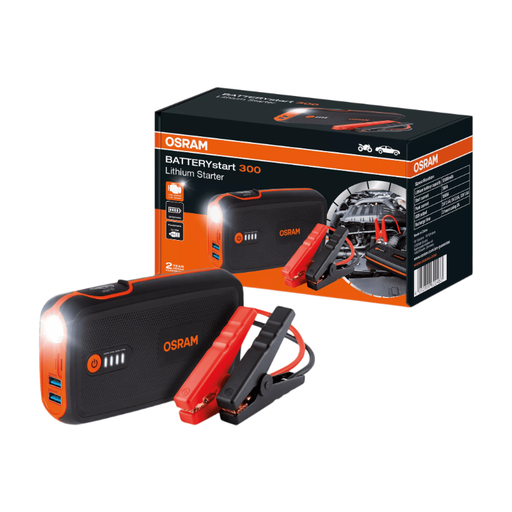
Why it suits this buyer: If you value a recognised brand, clear specifications and warranty information, this model is worth comparing with other 12V boosters. According to the product information, it supports petrol engines up to 6 litres and diesel engines up to 3 litres.
Its compatibility is clearly specified. Before ordering, check that the 3-litre diesel limit is suitable for your vehicle.
1500A peak output, 13,000 mAh battery, two USB outputs, integrated LED light and, according to the product information, a two-year manufacturer’s warranty.
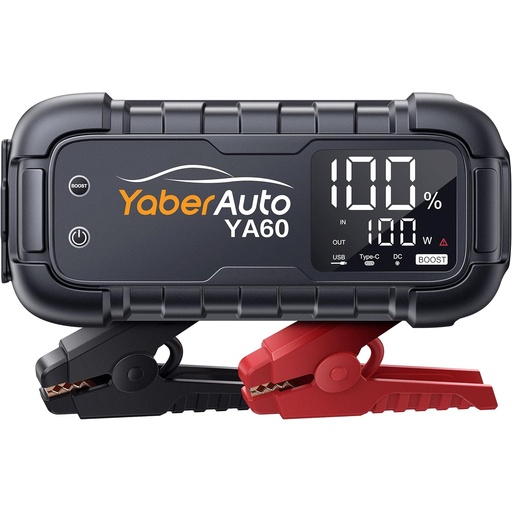
Why it suits this buyer: According to the product information, this powerful car jump starter is designed for 12V petrol engines and diesel engines up to 12 litres. Its extra outputs are well suited to motorhomes, work vans and outdoor equipment.
The product specifications list ten intelligent safety features and provide instructions for dealing with a flat battery, including using the boost button. Always check the manual for your vehicle.
8,000A peak current according to the product page, 26,800 mAh battery, 65W USB-C, 150W DC output and 600-lumen LED lighting.
We’ve put together a complete, up-to-date list of products that meet these strict selection criteria and the applicable European safety regulations.
Don’t use a portable battery charger or jump starter as a substitute for a faulty battery. If the car quickly stops running again after a successful start, the battery or charging system may need attention.
Yes, if the product information lists both engine types and the engine capacity is within the stated limits. Diesel engines often need more starting power, so check the maximum capacity for petrol and diesel separately rather than relying on the term “12V”.
It varies by model, storage temperature and use. Manufacturers sometimes state a standby period, but regular recharging is still recommended. Check the charge level every few months and recharge the device according to the supplied manual.
The main running costs are the electricity used to recharge it and any replacement needed when the internal battery wears out. A power bank function can make the device useful more often, but don’t wait until you break down to charge the booster. Regular maintenance reduces the risk of finding a flat emergency starter in your boot.
