
Vandaag of morgen in huis

Kwaliteit gegarandeerd

Welkomstaanbiedingen ontgrendelen: GRATIS bezorging | Tot 80% korting | Gratis 30 dagen JoyPlus-proefperiode
Download de app
A flat 12V battery often happens at the most inconvenient times: just before you leave for work, during a camping trip, or in a dark car park. With a car jump starter, you can start a vehicle yourself in certain situations without needing a second car and jump leads.
However, not every portable battery booster is suitable for every vehicle. A high amp rating doesn't tell the whole story. It's crucial to check the engine compatibility, safety features, and how you store the device. Below, you can read what to look out for and which models are best suited for different types of users.
Manufacturers often advertise a maximum peak current. This is not the same as the continuous starting current. Furthermore, the required capacity can vary between a small petrol engine, a diesel engine, an SUV, and a campervan.
A jump starter for a petrol engine typically needs less power than a jump starter for a larger diesel engine. Therefore, look for the specified maximum engine displacement, such as "up to 6.0-litre diesel" or "up to 8.0-litre petrol". This information comes from the brand's product details and is not a guarantee for every battery or weather condition.
A jump starter power bank with 20,000 mAh sounds powerful, but capacity and starting current are two different things. The capacity mainly determines how long the device can supply power to USB devices or how many start attempts are possible according to the product description. The starting current determines whether the booster can deliver enough power to the starter motor for a short burst.
So, pay attention to both values. Some models only mention a peak current, while others list both the starting current and the peak current.
A car battery booster often sits unused in the car for months. Heat, cold, and self-discharge can affect the available charge. A model that only works when it's fully charged might be less practical in an emergency.
Also, check if the smart cable offers protection against things like reverse polarity, short circuits, overcharging, overheating, and sparks. Always read the manual. A jump starter is not a replacement for a faulty battery and won't fix a problem with the alternator or the electrical system.
For a standard city car, a model with a lower specified peak current may be sufficient. For an SUV, van, campervan, or diesel engine, it's wise to have more of a margin. Compare the specifications with your engine size and check that your vehicle uses a 12V battery.
Also, note the difference between:
A good car jump starter comes with smart jump leads or a protected cable module. In general, you connect the red clamp to the positive terminal and the black clamp to a suitable, unpainted metal ground point, unless the vehicle or product manual instructs otherwise.
After connecting, wait for the status indicator. Only crank the engine for a short time and take a break between attempts. After a successful emergency start, remove the clamps in the order specified in the manual. Do not use damaged cables or a damaged casing.
A compact 12V jump starter fits more easily into a glove compartment, but a larger model may have more connections or a bigger battery. A jump starter with an LED light is practical for a check-up in the dark. Pay attention to the charging options: USB-A, USB-C, and possibly fast charging.
A display showing the remaining capacity saves you from guessing how much charge is left. For everyday use, USB outputs can also be handy for a smartphone, GPS, or tablet.
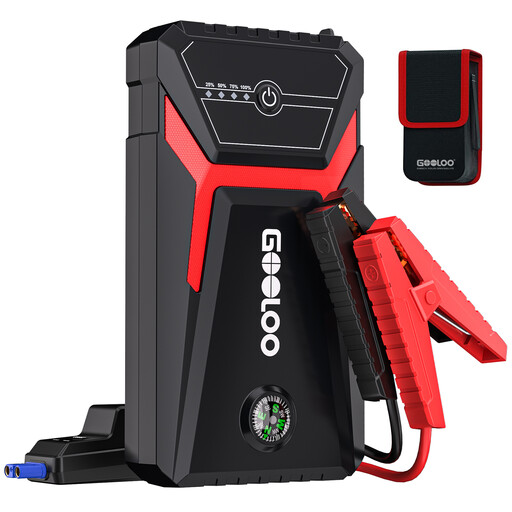
Why it's a good fit: The specified 1500 A peak current and compatibility with up to 6.0-litre petrol and 4.0-litre diesel engines are suitable for many passenger cars and motorbikes.
The product information lists ten protection features and specifies the range for petrol and diesel engines separately.
Two USB outputs, USB-C, a three-mode light, and a specified weight of approximately 0.878 kg.
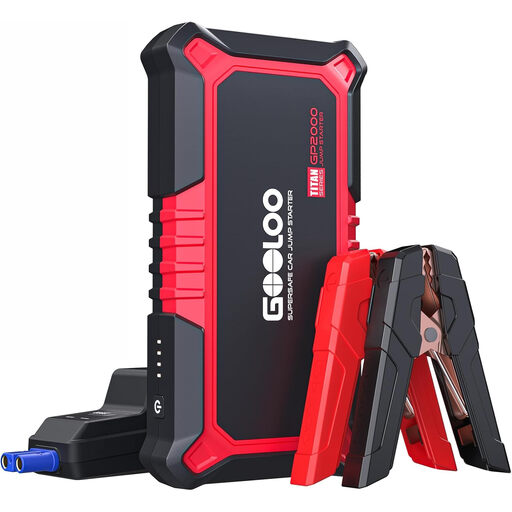
Why it's a good fit: This model combines a 2000 A peak current with a specified range of up to 8.0-litre petrol and 6.0-litre diesel, along with features for everyday use.
The included smart cable is stated to have protection against reverse polarity, overload, and short circuits, among other things.
USB outputs, a 400-lumen three-mode light, and a specified standby time of up to 24 months.
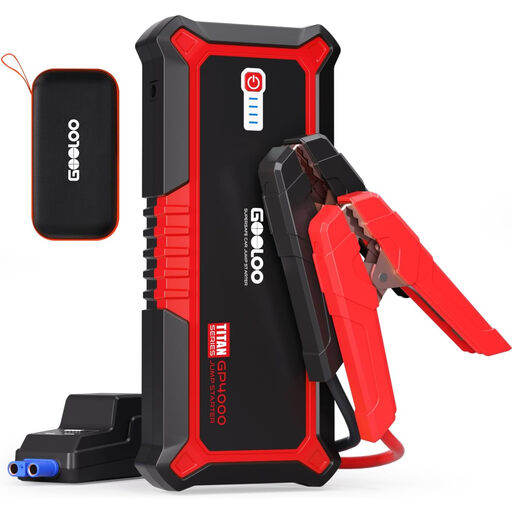
Why it's a good fit: According to the product description, the GP4000 is designed for 12V vehicles and engines up to 10.0-litre diesel. This makes it relevant for larger vehicles, campervans, and vans.
The manufacturer mentions ten types of built-in protection and metal clamps. Check the current manual for the exact operating procedure.
4000 A specified peak current, USB-A and USB-C ports, a cigarette lighter adapter, and a storage case.
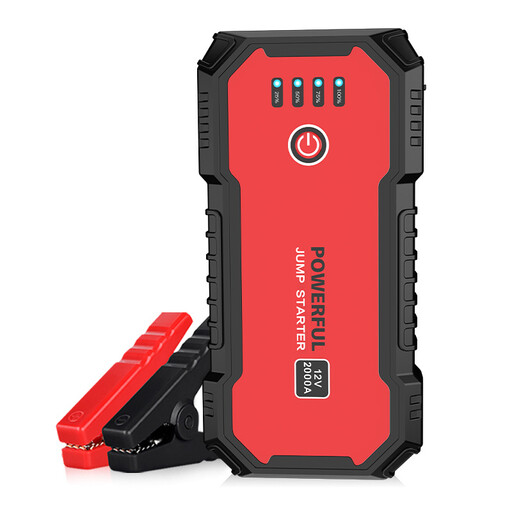
Why it's a good fit: Its specified dimensions and weight of approximately 430 grams make this model suitable for a car, backpack, or emergency kit.
The remaining charge doesn't rely on a vague status light: according to the product information, there is an LCD display for the battery status.
1500 A peak current, QC3.0 18W output, USB-C fast charging, and LED lighting with solid, strobe, and SOS modes.
We've put together a complete, up-to-date list of products that fully meet these strict selection criteria and comply with current European safety regulations.
A jump starter is intended for temporary emergency assistance. If a battery repeatedly goes flat, have the car's battery and charging system checked.
Turn off the car and all electrical devices. Connect the red clamp to the positive terminal of the 12V battery and the black clamp to the recommended ground point. Check the smart cable's indicator and then follow the manual. Crank the engine briefly. After a successful start, remove the clamps in the specified order.
The lifespan depends on charging cycles, storage temperature, and usage. Lithium models should be regularly checked and topped up. Some product descriptions mention a long standby time, but this value comes from the brand. Therefore, you should plan your own check every few months and replace the device if the casing, cable, or battery is damaged.
That depends on the model and the condition of the battery. According to the product information, some models have a boost function for very low voltage. However, a completely dead or damaged battery cannot be revived by every car jump starter. Check the manual and do not use the booster if the battery is leaking, bulging, or visibly damaged.
