
Vandaag of morgen in huis

Kwaliteit gegarandeerd

Welkomstaanbiedingen ontgrendelen: GRATIS bezorging | Tot 80% korting | Gratis 30 dagen JoyPlus-proefperiode
Download de app
A dead battery. It happens to everyone, usually at the worst possible moment: on a cold morning, in a rush to an appointment, or late at night in a deserted car park. Waiting for roadside assistance is an option, but being self-reliant is more practical. A portable jump starter, also known as a booster pack, is the solution.
However, the market is flooded with models that promise the world. Before you invest in a device that will leave you out in the cold, it's important to recognise the common pitfalls.
To avoid a bad purchase, it's essential to understand the specifications that really make a difference. Pay attention to the following three points before making a choice.
This is the most important factor. The peak current (Peak Amps) is the maximum current the battery booster can deliver for a very short time. The starting current (Cranking Amps) is the continuous current needed to turn the engine over.
jump starter with a peak current of 1000A to 1500A is usually sufficient.car battery starter with at least 3000A peak current. Diesel engines require significantly more power to start, especially in cold weather.Always check if the manufacturer specifies the engine displacement (in litres) for which the jump starter is suitable.
Although the capacity in mAh doesn't tell the whole story about starting power, it does determine how many times you can charge a phone or how long the built-in light can run. A capacity between 10,000 and 20,000 mAh is a good balance for a portable jump starter.
Just as important are the built-in safety features. A good model protects against:
These features protect not only the jump starter itself but also your car's sensitive electronics.
Some extras are more than worth their money.
Not every jump starter is right for every driver. We have highlighted a few models that suit different user profiles, based on their objective specifications.
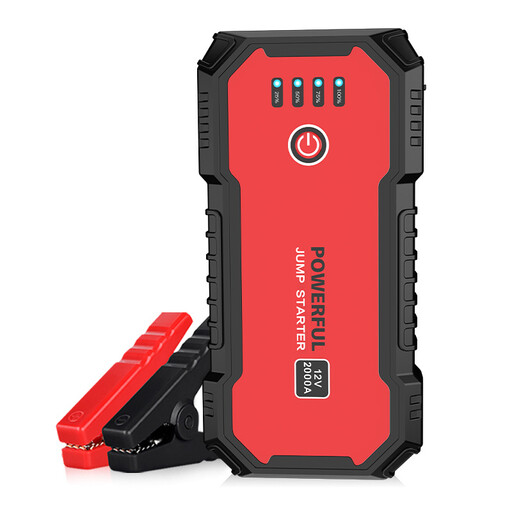
Why This Fits Their Persona: Ideal for drivers with a standard petrol or diesel car. This model is compact enough for the glove compartment and provides enough power for most common vehicles.
This model provides a realistic 1500A peak current, which is more than enough for most passenger cars, without over-advertising with unnecessarily high numbers.
Compact and lightweight (430g). The QC3.0 18W fast-charging port is a practical benefit for charging your phone.
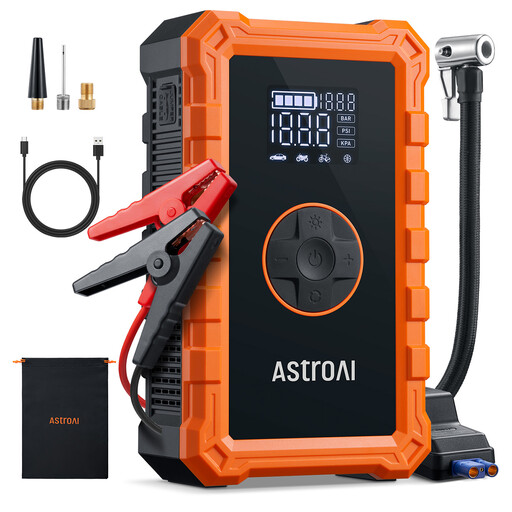
Why This Fits Their Persona: For those who want to be prepared for more than just a dead battery. The combination of a jump starter and compressor is perfect for camping trips, holidays, or just for extra peace of mind on the road.
This device focuses on two genuinely useful functions. The 150 PSI compressor is a proper tool, not a gimmick, and the auto-stop function prevents you from over-inflating a tyre.
2-in-1 functionality: a reliable `jump starter with compressor`. The large 2.4" screen is clearly readable, even in bright sunlight.
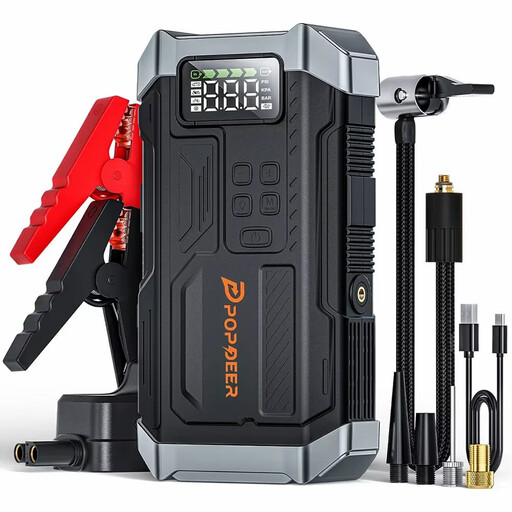
Why This Fits Their Persona: Designed for heavy-duty jobs. Drivers of large SUVs, vans, RVs, or boats with large diesel engines need the sheer power of this model to start reliably.
Where lighter models fail, this device delivers the necessary starting current. The "up to 8L diesel" specification is a clear and realistic indication of its capability, ensuring you don't get stuck with a model that's too weak.
Very high 5000A peak current. Suitable for engines up to 10L petrol or 8L diesel. Also includes a 150 PSI compressor for added versatility.
We have compiled a complete, up-to-date list of products that meet these strict selection criteria and safety regulations.
Even when not in use, a jump starter slowly loses its charge. It is advisable to fully charge the jump starter every 3 to 6 months. This ensures the battery remains in good condition and the device is ready for use when you need it.
Yes, modern jump starters are equipped with multiple protection systems. Features like reverse polarity protection, short-circuit protection, and over-voltage protection prevent damage to the battery, the jump starter, and your vehicle's electronics. It is much safer than using jumper cables with another car, which can cause a voltage spike.
No, this is a common mistake. Diesel engines have a higher compression ratio and require significantly more starting current than petrol engines, especially at low temperatures. Always check the manufacturer's specifications. Choose a model that is explicitly recommended for the engine size of your diesel vehicle. A jump starter that is too weak will simply not be able to start a heavy-duty diesel engine.
