
Vandaag of morgen in huis

Kwaliteit gegarandeerd

Welkomstaanbiedingen ontgrendelen: GRATIS bezorging | Tot 80% korting | Gratis 30 dagen JoyPlus-proefperiode
Download de app
A clicking sound instead of a roaring engine on a cold, wet morning. It's a situation every driver dreads. A dead battery always comes unexpectedly and can throw your entire day's schedule into disarray. A car jump starter or battery booster seems like the perfect solution, but the market is flooded with models that promise more than they can deliver. Before you invest in this emergency car starter, it's crucial to recognise the common pitfalls.
Many buyers fall into these traps:
To choose a reliable emergency car starter, it's essential to look beyond the marketing jargon. Focus on these three verifiable specifications.
Peak Amps is the maximum current a jump starter can deliver for a fraction of a second. This is a marketing number. More important are the Cranking Amps, the continuous current the booster can supply for several seconds to actually turn the engine over. A higher cranking amp rating is crucial, especially for larger engines or in low temperatures. A 2000A jump starter sounds powerful, but always check the specifications for the cranking amps if listed.
The capacity, expressed in milliampere-hours (mAh), determines how many times you can start a car or use its portable power bank function. A higher capacity is generally better, but pay attention to the battery's quality. Most modern jump starters use Lithium-Ion (Li-ion) batteries. These are compact, lightweight, and hold their charge for a long time. A model with 8000-10000 mAh is a solid starting point for most passenger cars.
Not every jump starter is suitable for every vehicle. Diesel engines have a higher compression ratio and require significantly more starting power than gasoline engines. Therefore, always check if the jump starter for gas and diesel is suitable for your engine type and displacement (expressed in liters, L). A model suitable for a 4.0L gas engine may not be powerful enough for a 2.0L diesel engine.
As your Product Recommendation Officer, I have selected several products based on their specifications and functionality, and matched them to different user profiles.
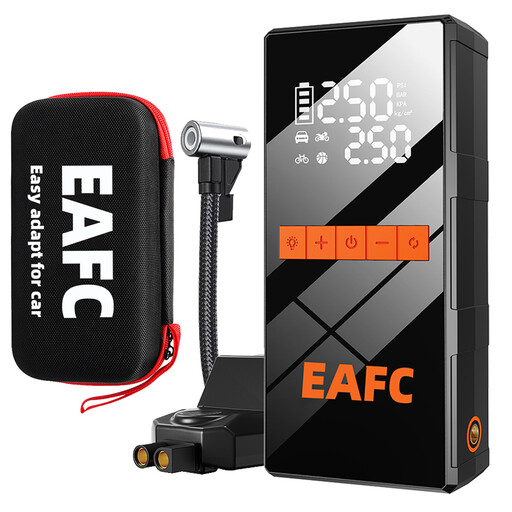
Why This Fits Their Persona: Ideal for those who want to be prepared for more than just a dead battery. Besides being a reliable jump starter, this model offers a built-in compressor to inflate a soft tire. Perfect for holidays, camping trips, or just for extra peace of mind on the road.
This model clearly specifies its engine compatibility (up to 4.0L gas / 2.0L diesel), so you don't have to guess based on a vague peak rating. The 4-in-1 functionality is practical, not just marketing fluff.
Combines a car jump starter with a 150 PSI air compressor, power bank, and LED flashlight.
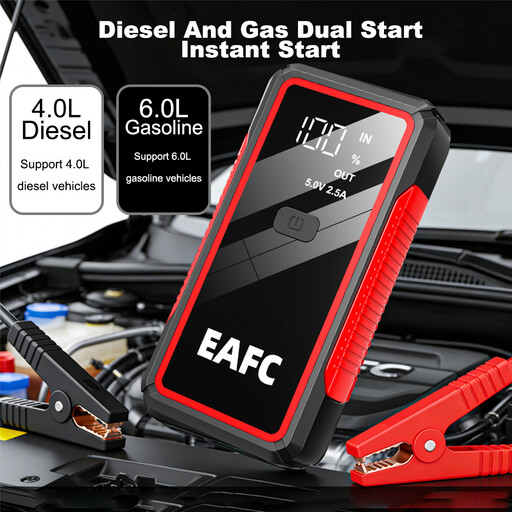
Why This Fits Their Persona: Owners of SUVs, vans, or cars with larger diesel engines need serious starting power, especially in winter. This model delivers a high cranking current suitable for engines up to 6.0L gas and 4.0L diesel.
Instead of just focusing on the 2000A peak current, the description highlights its broad engine compatibility and robust, cold-resistant clamps. This shows the device is designed for heavy-duty conditions.
High starting capacity for larger gas and diesel engines. The 10000mAh battery provides multiple starts on a single charge.
Why This Fits Their Persona: For the daily commuter with a standard passenger car (gas or small diesel), this is a perfect, compact solution. It fits easily in the glove compartment and provides the security of never having to depend on roadside assistance for a dead battery again.
The 8000mAh capacity is realistic and sufficient for multiple start attempts on a standard car, without driving up the price with an unnecessarily large battery. The specifications are clearly tailored to the most common vehicles.
Compact size for easy storage in the car. Its multifunctional nature (including power bank) makes it a handy tool for daily use.
We have compiled a complete, up-to-date list of products that fully meet these strict selection criteria and current safety regulations.
Most manufacturers recommend fully charging a jump starter every 3 to 6 months, even if you don't use it. Lithium-ion batteries slowly lose their charge over time. Regular charging ensures the 12V battery booster is ready for use when you need it and extends the battery's lifespan.
Yes, many models are designed as a jump starter for gas and diesel. However, it is crucial to check the manufacturer's specifications. A booster must provide sufficient cranking amps for your specific engine type and size. A model suitable for a 2.0L gas engine is often not powerful enough for a 2.0L diesel engine.
Traditional jumper cables require another vehicle to start your car. A jump starter, also known as a battery booster or portable jump starter, is a self-contained device with its own built-in battery. This means you don't need help from another car, giving you complete independence in an emergency situation.
