
Vandaag of morgen in huis

Kwaliteit gegarandeerd

Welkomstaanbiedingen ontgrendelen: GRATIS bezorging | Tot 80% korting | Gratis 30 dagen JoyPlus-proefperiode
Download de app
A flat car battery or a soft tyre usually lets you down at the worst possible moment. A car jump starter with an air compressor combines a car battery jump starter with a portable tyre inflator, torch and power bank. It’s handy for the daily commute, long journeys, camping and road trips.
However, not every jump starter with an air compressor is right for your vehicle. Marketing claims about high peak current or 150 PSI don’t tell you everything about ease of use, compatibility or safety. So look out for these common pitfalls.
A 5000A jump starter sounds powerful, but peak current alone doesn’t tell you whether it’s suitable. Check whether the device is designed for a 12V system, what engine size it supports, and whether it works with both petrol and diesel engines.
A diesel engine generally needs more starting power than a comparable petrol engine. For an SUV, van or commercial vehicle, the stated engine capacity is therefore a more useful point of comparison than simply choosing the highest amp figure on the packaging.
A 150 PSI air compressor may have a high maximum pressure rating, but that doesn’t mean it will inflate a car tyre quickly. Check the airflow, for example in litres per minute, whether it has an automatic stop, and which valve adapters are included.
For a car, a clear pressure reading and automatic shut-off are particularly useful. That way, you won’t need to keep watching the display while inflating.
A jump starter contains a lithium battery that slowly loses charge while in storage. If it sits unused in the boot for months, it may not have enough power when you need it. Check the manual for the recommended charging interval and fully charge the device before a long journey.
Don’t use a jump starter on a visibly damaged, leaking or frozen battery. Always follow the manufacturer’s connection sequence and safety instructions.
Check these points before you order:
The POPDEER PD-JA3 product information states that it supports vehicles with engines up to 10 litres for petrol or 8 litres for diesel. According to the manufacturer, the RST button can be used when the battery voltage is below 9V. These are the brand’s product specifications; always check that your vehicle and battery meet the requirements.
A car tyre inflator should not only build up pressure, but also be easy to use. Look for:
According to the product description, the POPDEER PD-JA3 has a maximum pressure of 150 PSI, an airflow of 35 litres per minute, four preset modes and four nozzles. The stated information says that it can reach 20 PSI in around two minutes. The actual time depends on the tyre size, starting pressure and temperature.
A car jump starter with an air compressor should be compact enough to store safely in your car without making it awkward to use. Also look for:
A car power bank is useful in a breakdown, but it’s no substitute for a well-maintained car battery. Treat the jump starter as an emergency aid, not a permanent fix for a battery that keeps going flat.
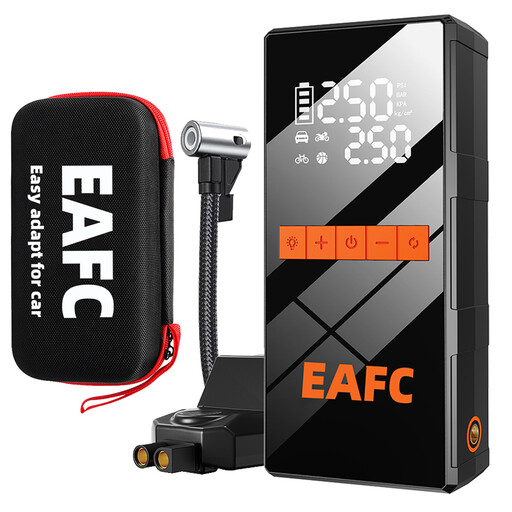
Why it suits this user: A compact 4-in-1 starter kit for drivers looking for a basic solution for a car, short trips and the occasional breakdown.
The product information lists a display with automatic shut-off and multiple pressure units, so you don’t have to rely on the maximum PSI rating alone.
1200A peak current, 150 PSI compressor, USB output and LED lighting in one portable unit.
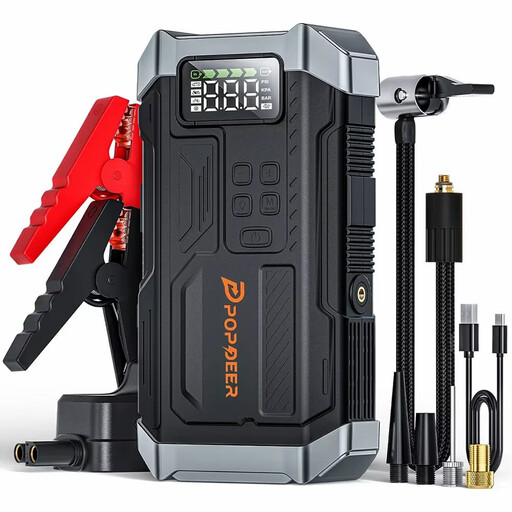
Why it suits this user: A good fit for SUV drivers, road-trippers and anyone looking for one device to jump-start a vehicle, inflate tyres, provide lighting and charge mobile devices.
The specifications list support for vehicles with engines up to 10 litres for petrol and 8 litres for diesel, as well as smart safety protection and automatic shut-off when inflating.
5000A peak current, 150 PSI, 35 litres per minute, USB-C and support for petrol and diesel vehicles.
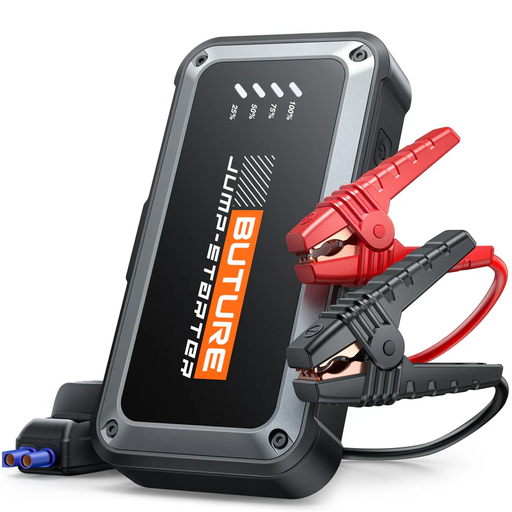
Why it suits this user: Ideal for campers and motorists who mainly want to take a powerful jump starter, a high-capacity power bank and clear lighting with them.
The product information includes charging advice for storage, smart safety features and a weight of 0,370 kg. These specifications give you a clearer idea of its intended use than an amp claim alone.
3000A peak current, 16800mAh power bank, two USB outputs and four lighting modes with an SOS function.
We’ve put together a complete, up-to-date list of products that meet these strict selection criteria and the applicable European safety regulations.
Use the compressor to adjust your tyre pressure, then check it with a reliable gauge. You’ll usually find the correct tyre pressure on a sticker on the door frame, by the fuel filler flap or in the car’s manual.
No. Check that the device is suitable for 12V vehicles and compare the stated maximum engine capacity with your petrol or diesel engine. A heavy commercial vehicle may have different requirements from a compact city car.
Its lifespan depends on the storage temperature, charging habits and how often it’s used. Charge it according to the manual, avoid prolonged exposure to heat and don’t store it completely flat. The number of starts quoted by brands is a product specification, not a guarantee for every use.
It’s usually charged via USB-C or a similar adapter. Power consumption depends on the battery capacity and how often you charge it. The compressor uses more energy than the torch or USB function, especially when a tyre is very flat. For occasional use on the road, charging costs are generally low; the main practical consideration is choosing a model that stays ready to use.
