
Vandaag of morgen in huis

Kwaliteit gegarandeerd

Welkomstaanbiedingen ontgrendelen: GRATIS bezorging | Tot 80% korting | Gratis 30 dagen JoyPlus-proefperiode
Download de app
A flat battery or a soft tyre usually comes at the worst possible time. With a car jump starter with air compressor, you can deal with some situations yourself, without having to wait for roadside assistance or another motorist. But not every model with a high amp rating or “150 PSI” is automatically suitable for your vehicle.
The main pitfalls often come down to three things:
Don’t just look at the highest amp rating on the packaging. Check whether the 12V jump starter is suitable for your vehicle:
A car battery booster is not a replacement for a faulty battery. Only use a car jump starter according to the instructions, and check that the supplied cables are suitable. Connect red to the positive terminal and black to the negative terminal, unless the manufacturer specifies a different method.
A model for a compact petrol car won’t necessarily have enough capacity for a diesel van. If you’re looking for a jump starter for diesel and petrol vehicles, it’s a good idea to compare the stated engine limits with your vehicle’s specifications.
A jump starter with compressor is handy for slowly deflating tyres, bicycles, balls and some inflatables. Look out for:
A higher PSI rating doesn’t necessarily mean a tyre will inflate faster. Airflow, the hose and heat build-up also play a part. Always use the tyre pressure recommended for your car, which you can usually find on the sticker inside the door frame or in the owner’s manual.
The stated mAh figure gives you an indication of battery capacity, but the usable capacity may be lower. Some sellers list a “rated capacity” as well as the nominal capacity, so check both figures.
Useful extra features include:
A power bank for your car is especially useful when travelling and camping, but make sure you fully charge it beforehand. Don’t leave a lithium battery in direct sunlight or a very hot car for long periods. Also check the plugs, clamps and cable insulation before using the device.
The options below are based on the listed product specifications, including starting current, compressor capacity, connections and stated vehicle compatibility. Performance and protection claims come from the product information provided by the relevant brands or sellers. Check the latest manual and specifications before buying.
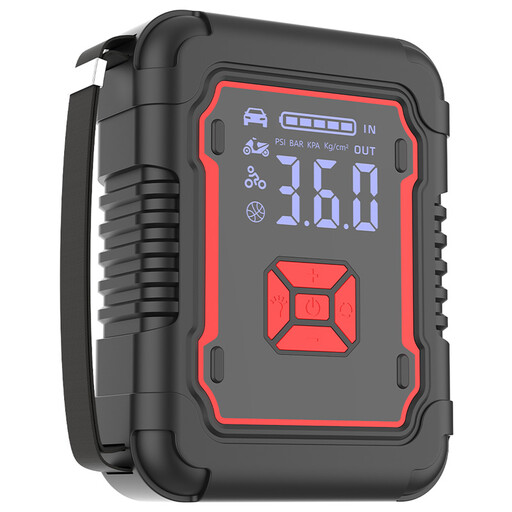
Why it suits this profile: According to the product information, this compact model combines a 3000A peak current, a 150PSI compressor and a power bank function for 12V petrol and diesel vehicles. That makes it a good option for motorists who want one device for basic roadside emergencies.
The stated 20.000mAh capacity is listed alongside a lower rated capacity of 10.000mAh. This gives you a more realistic basis for comparing power banks.
3000A peak current, 150PSI air pump, automatic shut-off according to the product description and USB QC3.0 output.
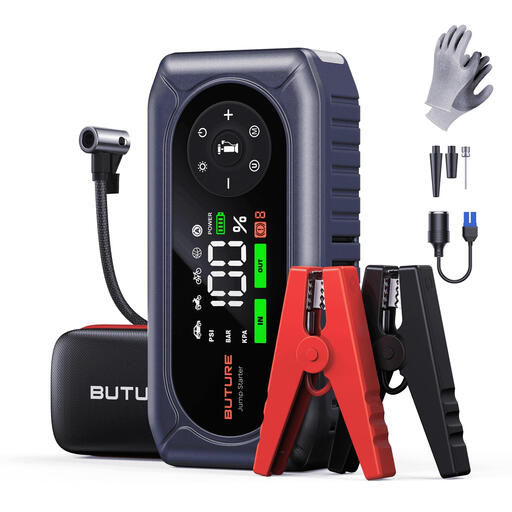
Why it suits this profile: According to the listed specifications, this model is designed for 12V vehicles with petrol engines up to 9,0 litres and diesel engines up to 8,0 litres. Its digital controls and range of pressure settings make it a good fit for users who want more control when inflating tyres.
The product information lists five inflation modes, three pressure units and automatic shut-off. That means you don’t have to rely on the maximum PSI rating alone.
4500A peak current, 150PSI compressor, LCD screen, four nozzles and a stated operating range of approximately -20 to 60 °C.
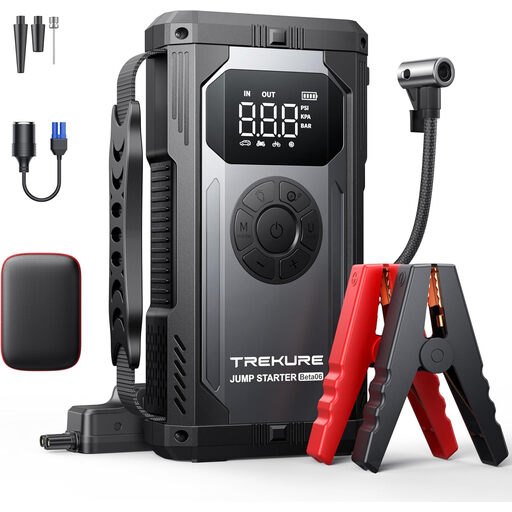
Why it suits this profile: SUV, van and diesel drivers who also want to use devices or 12V accessories on the go can compare the stated high peak current, compressor and 12V output.
The specifications list airflow of up to 35 l/min, adjustable pressure with automatic shut-off, and a screen showing both the current and set pressure.
5500A peak current, 150PSI compressor, support for stated engine sizes up to 10 litres and several safety features according to the product description.
We’ve put together a complete, up-to-date list of products that meet these strict selection criteria and the applicable European safety regulations.
Charge the device first and switch off the vehicle. Connect the smart jump leads as instructed, then try to start the engine briefly. To inflate a tyre, connect the air hose, choose the correct unit and set the desired pressure. Let the compressor cool down between uses if the instructions recommend it.
Its lifespan depends on storage temperature, charging frequency and how often you use it. Check the battery level regularly, recharge the device according to the instructions, and store it somewhere dry and out of direct sunlight. A completely flat lithium battery may be less usable after being stored for a long time.
With a cordless jump starter, the main “running cost” is charging the internal battery. Electricity use is low with normal, occasional use. Pay particular attention to the compressor’s running time: inflating for a long time without a break can mean extra cooling time and more frequent charging.
