
Vandaag of morgen in huis

Kwaliteit gegarandeerd

Welkomstaanbiedingen ontgrendelen: GRATIS bezorging | Tot 80% korting | Gratis 30 dagen JoyPlus-proefperiode
Download de app
Whether you have a flat tyre on the road, are performing a semi-annual tyre change, or doing maintenance in your own garage, a reliable car jack is an indispensable tool for every car owner. But with so many different types and specifications, choosing the right one can be tricky. A jack with insufficient capacity is unsafe, while an overly heavy garage jack can be cumbersome for a quick job.
As a Joybuy Product Recommendation Officer, I'm here to guide you. In this overview, we'll highlight the key points to consider and present a selection of popular models for various situations. This will help you make an informed decision that suits both your vehicle and your needs.
Before you make a choice, it's wise to consider a few practical matters. This will help you find a model that is not only effective but also safe and convenient for your specific use case.
Lifting capacity, expressed in tonnes, is the most critical specification. A common mistake is to assume the jack must support the car's entire weight. However, you only ever lift one corner, not the whole vehicle. A good rule of thumb is that the jack's lifting capacity should be at least 75% of the total vehicle weight. For a 1,500 kg car, a jack with a 1.5-tonne (1,500 kg) capacity is therefore more than sufficient. A 3-tonne jack offers a greater safety margin and is suitable for heavier passenger cars, SUVs, and light commercial vehicles.
There are roughly three types of jacks you'll commonly encounter, each with its own pros and cons:
Always check the jack's minimum and maximum lifting height. The minimum height is crucial if you have a lowered car or a sports car. In that case, you'll need a low-profile jack that can easily slide under a low chassis. The maximum lifting height is important for vehicles with high ground clearance, such as SUVs and vans, to get the wheels sufficiently off the ground.
Based on specifications and applications, we have selected three different car jacks that cover a wide range of needs.
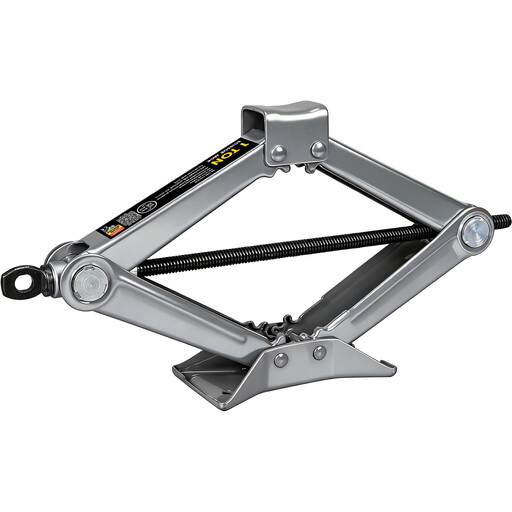
Why it stands out This scissor jack from TCE is designed for convenience and reliability in emergencies. Thanks to its foldable design and a low minimum height of just 88 mm, it is extremely compact and fits easily in the boot.
Key Features
Who is it for? For the motorist seeking a reliable, compact jack for emergencies and simple tasks like a roadside tyre change.
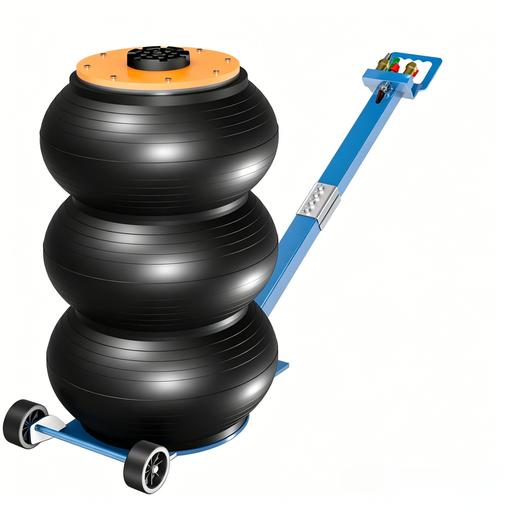
Why it stands out The LARBANKE air bag jack is built for speed and power. Connected to a compressor, this jack can lift a vehicle of up to 5 tonnes in just 3 to 5 seconds. According to the manufacturer, the air supply stops automatically when the maximum height is reached, which enhances operational safety.
Key Features
Who is it for? Ideal for the serious DIYer or home workshop that values efficiency and speed and has an air compressor.
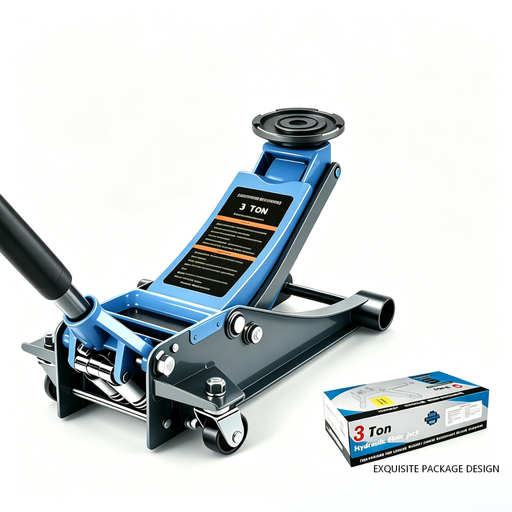
Why it stands out This hydraulic jack from LARBANKE combines a high lifting capacity with a low profile, making it highly versatile. The dual-pump system ensures the jack reaches its maximum height quickly, while the steel and aluminium construction offers a great balance between durability and portability.
Key Features
Who is it for? An excellent all-rounder for the home garage. Suitable for both standard and lowered cars and ideal for regular maintenance and tyre changes.
Every car and every job is unique. Are you looking for a different type, such as a bottle jack, or do you want to compare more options? Explore our full range for more choices.
? View all our lifting equipment
A good guideline is to choose a jack with a lifting capacity of at least 75% of your vehicle's total weight. You can find this weight in your vehicle's registration documents or owner's manual. For example, for a 1,800 kg car, a 2-tonne jack is a safe choice.
A scissor jack works mechanically via a screw thread that you turn by hand. It is compact and lightweight, ideal for emergencies. A hydraulic jack uses oil pressure to lift, which requires far less effort and is much faster. This type is heavier and larger, making it more suitable for use in a garage.
Never place the jack just anywhere under the car. Every vehicle has specific, reinforced points on the chassis designed for jacking. These jacking points are always indicated in your vehicle's owner's manual. Using the correct points prevents damage to your car and ensures a stable, safe lift. Always check this before you begin.
