Vandaag of morgen in huis

Kwaliteit gegarandeerd

Welkomstaanbiedingen ontgrendelen: GRATIS bezorging | Tot 80% korting | Gratis 30 dagen JoyPlus-proefperiode
Download de app
A flat tire on the road, a semi-annual tire change, or a minor repair in your own garage. A reliable car jack is indispensable in many situations. But the market offers a wide range of options: from a compact scissor jack for emergencies to a heavy-duty hydraulic jack for the serious DIY enthusiast.
Choosing the wrong jack is not only inconvenient but can also be unsafe. That's why we've created this guide. Here, we'll explain what to look for and present a selection of popular models for different users. This will help you make an informed decision based on factual specifications.
Before making a choice, it's important to consider three key aspects. These will determine which jack is suitable for your car and your job.
The lifting capacity, expressed in tons, is the most important specification. A jack doesn't need to lift the full weight of your car, as you usually only lift one corner or side. A good rule of thumb is that the jack should be able to support about 75% of the total vehicle weight.
Always check your car's curb weight in the owner's manual or on the vehicle registration documents. When in doubt, always opt for a higher lifting capacity for an extra safety margin.
There are two main types of jacks for consumer use, each with its own pros and cons.
The lifting range (minimum and maximum height) is crucial. A low-profile car jack has a very low entry height (often around 85 mm), which is essential for sports cars or lowered vehicles. For an SUV or van, you'll need a jack with a high maximum lifting height to get the wheel off the ground. Measure the distance between the ground and your car's jack points to ensure the jack will fit.
Based on the criteria above, we have selected a number of models that are popular with different types of users.
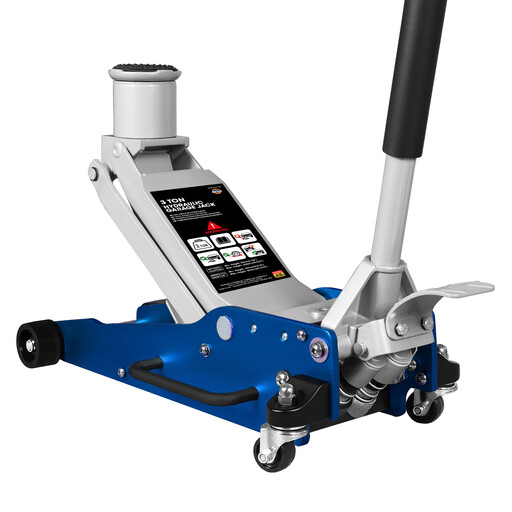
Why It Stands Out: This jack combines a high lifting capacity with a very versatile range. The aluminum construction makes it lighter than steel variants, while the dual pump ensures rapid lifting.
Advantages:
Who Is It For?: The car enthusiast with multiple vehicles, from a low sports car to a heavy SUV, who is looking for a powerful and versatile floor jack.
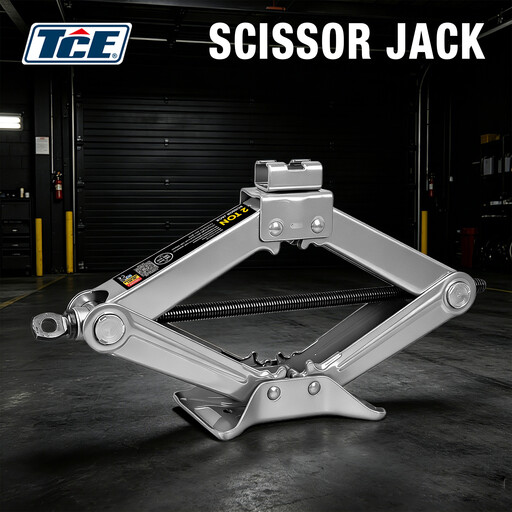
Why It Stands Out: This is a robust and reliable scissor jack that goes far beyond standard models. It is designed for ease of use and compact storage.
Advantages:
Who Is It For?: The car owner looking for a reliable and compact jack for emergencies or an occasional tire change, who wants more sturdiness than a standard-issue jack.
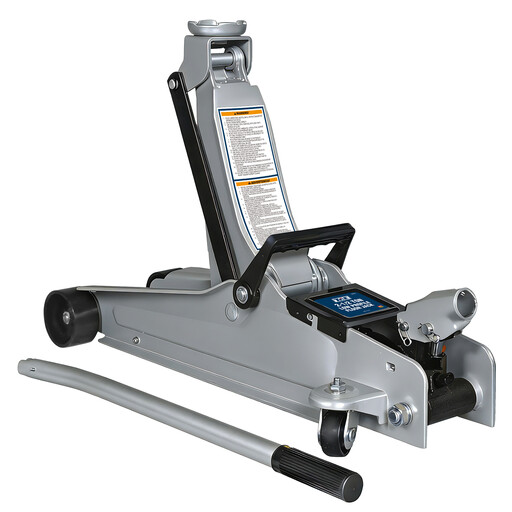
Why It Stands Out: This low-profile car jack is specifically designed for vehicles with very low ground clearance, without compromising on lifting power.
Advantages:
Who Is It For?: Owners of sports cars, performance cars, or lowered vehicles who need a reliable hydraulic jack that is guaranteed to fit.
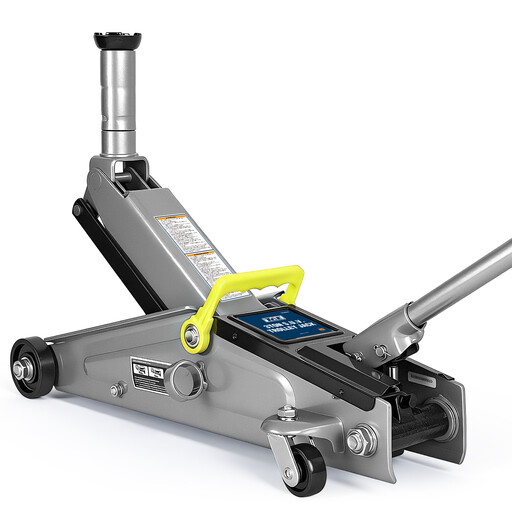
Why It Stands Out: A powerful and no-nonsense floor jack built for heavy-duty work. The focus is on lifting power, a wide range, and safety.
Advantages:
Who Is It For?: The DIYer who primarily works on heavier vehicles like SUVs and vans and needs a robust, safe jack for regular use.
The models above are a selection based on popular specifications and use cases. Are you looking for a different type, a different lifting capacity, or specific features?
Then check out our full range of garage car lifts for more options.
Look at your car's curb weight (found on the registration or in the owner's manual) and choose a jack with a lifting capacity of at least 75% of that weight. A 2-ton car jack is often sufficient for cars up to about 2,500 kg, while a 3-ton car jack is recommended for heavier vehicles. When in doubt, a higher lifting capacity is always a safer choice.
A scissor jack is mechanical, lightweight, and compact, ideal for emergencies. You raise it manually with a crank. A hydraulic jack (or floor jack) uses oil pressure and a lever, making lifting much faster and requiring less effort. It is the preferred choice for regular maintenance.
No, absolutely not. A jack is solely a lifting tool. Once the car is at the desired height, you must always support it with jack stands before working under the vehicle. Never rely on the jack alone to support the car's weight. Safety comes first.
Sincerely,
Joybuy Product Recommendation Officer