
Vandaag of morgen in huis

Kwaliteit gegarandeerd

Welkomstaanbiedingen ontgrendelen: GRATIS bezorging | Tot 80% korting | Gratis 30 dagen JoyPlus-proefperiode
Download de app
A warning light on the dashboard does not automatically mean you need an expensive repair. With the right car diagnostic tool, you can read fault codes, view live data and sometimes perform a maintenance function. The main challenge is choosing a device that suits your car and your level of knowledge.
A simple OBD2 scanner is not the same as a vehicle diagnostic device for a garage. So do not focus only on terms such as “professional” or “full diagnostics”. Always check which systems, functions and car makes are actually supported.
A product may list 16, 28 or even more service functions. That does not mean every function is available on every car. Functions such as ABS SRS diagnostics, TPMS reset, injector coding or ECU coding depend on the make, model, year, engine variant and ECU version.
Before buying, check whether the function you need is available for your vehicle. A seller can often verify this using the VIN number.
A basic scanner mainly reads engine and emissions codes. To diagnose problems with the airbag, automatic transmission, ABS, climate control or body control modules, you need a device with full-system diagnostics.
A car scanner with only generic OBD2 functions may therefore be insufficient when you want to check several vehicle systems.
Check whether updates are included, how long they last and what happens afterwards. Some devices continue to work after the update period ends, while certain online functions or vehicle security portals require separate registration.
For FCA vehicles, AutoAuth may be required, for example. According to the product information for various models, you must register an account yourself and arrange any charges through the official service.
First, choose between:
A bidirectional scan tool goes beyond simply reading codes. When supported by the car, the device can send a command to a component. This could be a cooling fan, fuel pump, window, valve or air-conditioning clutch. This can help narrow down a fault more accurately, but an active test must always be carried out in accordance with the vehicle documentation.
Common functions include:
The presence of a menu option does not guarantee that the procedure will work on your car. Check this before buying and follow the vehicle manufacturer’s safety instructions.
Newer vehicles may use protocols such as CAN FD or DoIP. Bluetooth is useful when you want to walk around the car during a test, while a cabled connection is generally simple and direct.
Also consider:
A smartphone adapter is compact, but depends on an app, Bluetooth and your phone. A tablet model is often more convenient for workshops and mobile mechanics.
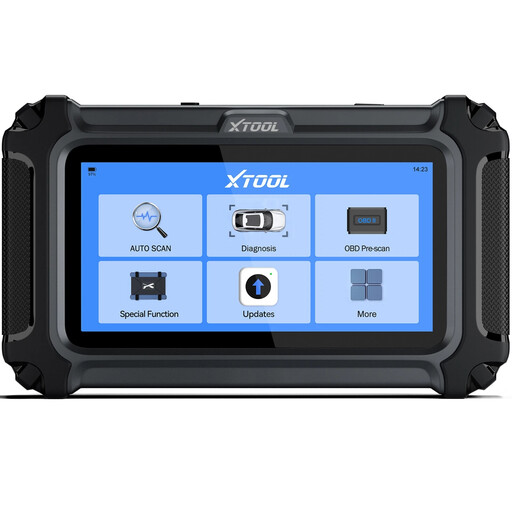
Why it suits this profile: This scanner is aimed at private car owners and DIY enthusiasts who want to check the engine, transmission, ABS and SRS without immediately investing in a comprehensive workshop platform.
The product information explicitly states that maintenance functions may vary by make, model and year. This makes it essential to check compatibility in advance rather than blindly relying on a long list of functions.
Four main modules, live data graphs, AutoVIN and, according to the product description, lifetime software updates without annual subscription fees.
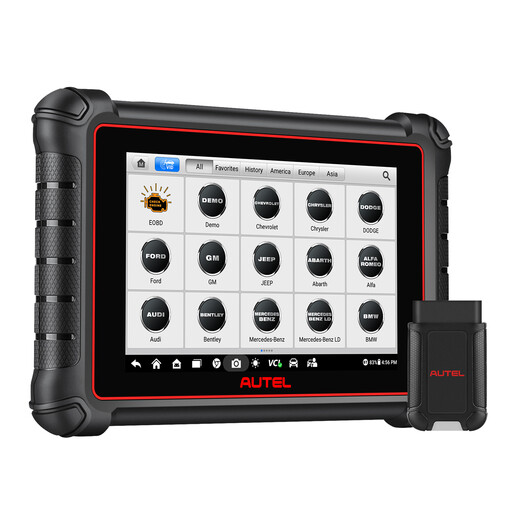
Why it suits this profile: A suitable choice for garages, car dealerships and experienced mechanics who want to combine wireless diagnostics, active tests and reporting in a single tablet.
The product details mention CAN FD, DoIP, FCA AutoAuth and the required update period. This allows you to see in advance which ongoing requirements and extensions are associated with the device.
8-inch touchscreen, full-system diagnostics, bidirectional tests, more than 40 listed service functions and support for an optional battery tester.
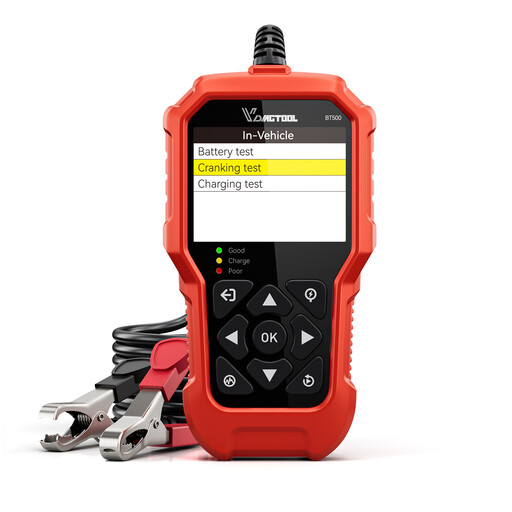
Why it suits this profile: For mobile mechanics, fleet managers and DIY enthusiasts who want to check the battery and charging system separately as well as reading fault codes.
The product description states that lithium and deep-cycle batteries are not supported. This limitation prevents you from buying the device for an unsuitable battery type.
According to the product specifications, it supports 6V, 12V and 24V batteries, with measurements for voltage, resistance, charging and starting systems.
A scanner cannot resolve every fault. For wiring problems, a car cable tester, such as a wire tracer for open circuits and short circuits, can be useful. Pay attention to the voltage range: according to the product information, the V210 is designed for 6–42V DC and only pinpoints a problem broadly using an audible signal.
For mechanical work, a digital torque wrench and a suitable socket set are practical choices. Always check the torque range and accuracy. For tyre pressure, a basic digital tyre pressure gauge is often sufficient. A TPMS tester or car key tool, on the other hand, requires specific compatibility with sensors and vehicle systems.
We have compiled a complete, up-to-date list of products that fully meet these strict selection criteria and the applicable European safety regulations.
Sometimes, but only when the device and the car support the relevant function. Read the fault code first, record the data and fix the cause. Simply clearing the code without carrying out a repair may hide the problem.
Its lifespan depends on usage, storage, updates and connection. Keep the device dry, avoid pulling on cables and use the correct supply voltage. Also check whether the software will continue to function after the included update period ends.
No. For a private car, a four-system scanner or compact Bluetooth adapter may be sufficient. A garage is more likely to need active tests, ECU coding, reports, broader coverage and support for modern protocols. Choose based on the work you need to carry out, not just the price.
