
Vandaag of morgen in huis

Kwaliteit gegarandeerd

Welkomstaanbiedingen ontgrendelen: GRATIS bezorging | Tot 80% korting | Gratis 30 dagen JoyPlus-proefperiode
Download de app
A car diagnostic tool can help you read fault codes, view live data and carry out servicing functions. However, a cheap OBD2 scanner is not automatically suitable for every car. Many buyers focus mainly on the number of functions listed on the packaging, while vehicle compatibility, software requirements and system coverage are more important.
As a Joybuy Product Recommendation Officer, I filter the most important product specifications and common pitfalls, helping you choose a car diagnostic tool that suits your needs.
Manufacturers use broad claims such as “universal vehicle diagnostics” or “compatible with thousands of models”. In practice, functions can vary depending on the make, model, year, engine variant and ECU version. For example, a device may be able to read the engine system but not support the ABS, SRS, transmission or body control module.
Therefore, check the following before buying:
An OBD2 diagnostic tester with 15 or 30 reset functions may sound comprehensive. However, these functions are not always available for every car. In addition, a service reset is different from locating a fault. For professional vehicle diagnostics, you often also need live data, freeze-frame data, ECU information and access to multiple systems.
Some scanners offer free updates for a certain period, while other products state in their product descriptions that they provide lifetime updates. Always check exactly what “free updates” means. They may cover software for specific makes, new functions or only general fault-code information.
Also pay attention to registration. According to the product information for various makes, FCA AutoAuth requires you to register an account yourself. Any costs or access requirements are therefore not automatically covered by the diagnostic tool.
A basic code reader usually only reads emissions-related engine codes. A full-system diagnostic tool can scan multiple modules, depending on the vehicle and software, such as:
Reading live data is useful when you want to see how sensors behave while driving or when the engine is idling. Graphs, freeze-frame data and reports make it easier to compare readings before and after a repair.
With bidirectional control, the scanner sends a command to a vehicle module. An active test can, for example, operate a fan, window, fuel pump, valve or light. This can help determine whether a component, wiring or control system is causing the problem.
This function does not replace a wiring diagram or safe working procedure. Only use active tests when you know which component is being operated.
Modern vehicles use new communication protocols. A CAN FD scanner can process higher data rates than traditional CAN systems in compatible vehicles. DoIP uses Ethernet for certain diagnostic functions.
FCA AutoAuth is relevant to vehicles with a secure gateway. The product descriptions state that some scanners provide access to this system, but separate registration with AutoAuth may be required. Always check the current vehicle coverage and terms.
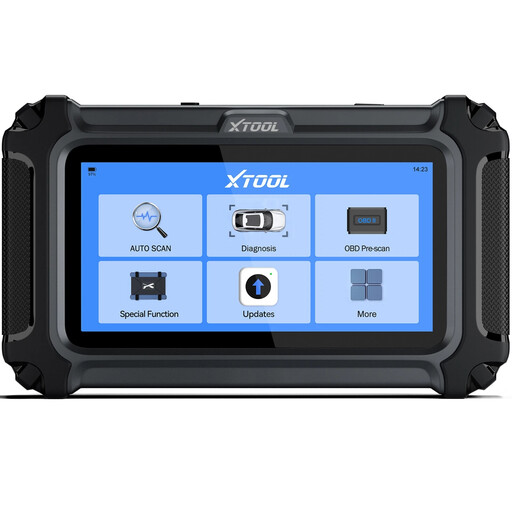
Why it suits this profile: The D5 is designed for everyday diagnostics, with support for the engine, transmission, ABS and SRS. Its built-in DTC library and AutoVIN function are practical for anyone with limited experience.
The product information clearly states that servicing functions can vary by vehicle. This prevents you from assuming that a reset function is universal.
Supports CAN FD and FCA AutoAuth according to the product description, plus four live-data graphs and lifetime free software updates.
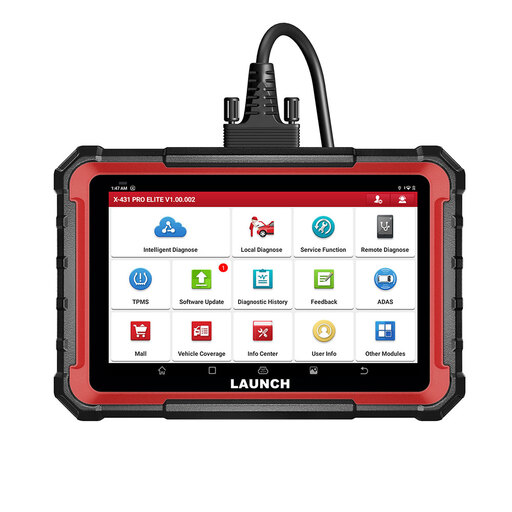
Why it suits this profile: This tablet is designed for garages, car dealers and mechanics who need to access a wide range of systems and vehicles.
The product page states that functions vary by make, model and system. Checking the VIN is therefore still necessary before ECU coding or an active test.
8-inch screen, CAN FD and DoIP, ECU coding, bidirectional control and a stated range of more than 31 servicing functions.
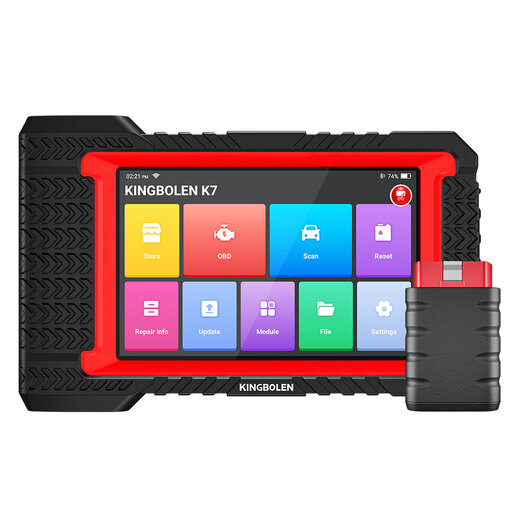
Why it suits this profile: The combination of a 7-inch tablet, Bluetooth VCI, active tests and ECU coding is well suited to mobile mechanics and experienced DIY enthusiasts.
The product information explicitly states that the available menus can vary by vehicle. This makes a compatibility check essential rather than relying blindly on the total number of functions.
According to the product description: more than 28 reset functions, full-system diagnostics, live data, active tests, ECU coding and lifetime free updates.
We have put together a complete, up-to-date list of products that fully meet these strict selection criteria and the applicable European safety regulations.
Many models allow you to read and clear fault codes. Only clear a code after investigating the cause or carrying out a repair. Clearing a code does not automatically mean that the problem has been solved. Afterwards, check whether the fault returns and whether the readiness monitors have been reset.
Use the manufacturer's vehicle list and, if in doubt, provide the seller with the full VIN. Check not only the connection, but also the function you need: reading fault codes, ABS servicing, battery registration, DPF functions, ECU coding or active testing. Support can vary by engine and ECU.
That depends on the product terms. For some models, “lifetime” refers to free software updates for the supported functions. Online accounts, secure access such as FCA AutoAuth or additional hardware may be subject to separate terms. Therefore, check the current product page before placing your order.
