
Vandaag of morgen in huis

Kwaliteit gegarandeerd

Welkomstaanbiedingen ontgrendelen: GRATIS bezorging | Tot 80% korting | Gratis 30 dagen JoyPlus-proefperiode
Download de app
A car diagnostic tool can help you read engine fault codes, check ABS and SRS systems or perform a service reset. However, not every OBD2 scanner is suitable for every car or application. For example, a basic OBD2 code reader may only display engine data, while a more advanced vehicle diagnostic tool can also access the transmission, airbags, TPMS and body control modules.
The biggest mistake is therefore not necessarily buying a tool that is too cheap. The real problem arises when its functions do not match your vehicle, the work you need to carry out or your level of knowledge.
For some products, full-system diagnostics means that the scanner can read several available control modules. This does not mean that every function is available for every make, model and year. ABS SRS diagnostics, ECU coding or DPF regeneration may depend on the vehicle configuration.
Before buying, check:
A long list of 15, 26 or 40 service reset functions sounds appealing. In practice, the list may vary from one vehicle to another. According to the product information provided by the relevant brands, functions such as BMS reset, throttle relearn, TPMS reset and ABS bleeding depend on the vehicle.
A scanner may therefore display a function in its menu without being able to perform it on your car. If in doubt, ask the seller to check compatibility using the VIN.
“Free software updates” may mean that updates are included for the lifetime of the product. For other models, this may only apply for a specific period or to certain functions. FCA AutoAuth is not a universally free service either. According to the product information from several brands, you must register for an AutoAuth account yourself to access secure FCA systems; any charges are determined by the vehicle manufacturer or service provider.
Before buying, check:
A basic OBD2 scanner is mainly designed to read emissions and engine fault codes. That may be sufficient for routine maintenance. If you also want to check the ABS, SRS, transmission, BCM or air conditioning, you need a car diagnostic scanner with broader system access.
Pay attention to the description:
Bi-directional tests are useful for controlling, for example, a cooling fan, fuel pump, injector or window mechanism. They do not replace electrical measurements or mechanical checks. Only use the function when you understand what the command does.
Modern vehicles use a range of communication protocols. A CAN-FD scanner is prepared for vehicles that support this protocol. That does not automatically make the tool suitable for every new model. Always check the specific compatibility list.
On certain FCA vehicles, secure gateway functions are protected. A scanner with FCA AutoAuth may provide access, but separate registration may be required. This is stated in the product information for brands including XTOOL, Autel, MUCAR and KINGBOLEN.
Bluetooth is practical for mobile mechanics and DIY enthusiasts who want to stand outside the car while carrying out diagnostics. A wired scanner, on the other hand, does not require a smartphone app and can be used easily in a workshop.
Also check:
A car battery tester is an addition, not a replacement for a full diagnostic scanner. According to the product information, the VDIAGTOOL BT500 checks 6V, 12V and 24V batteries, charging voltage, starting performance, resistance, SoC and SoH, among other things. According to the same information, the device is not intended for lithium or deep-cycle batteries.
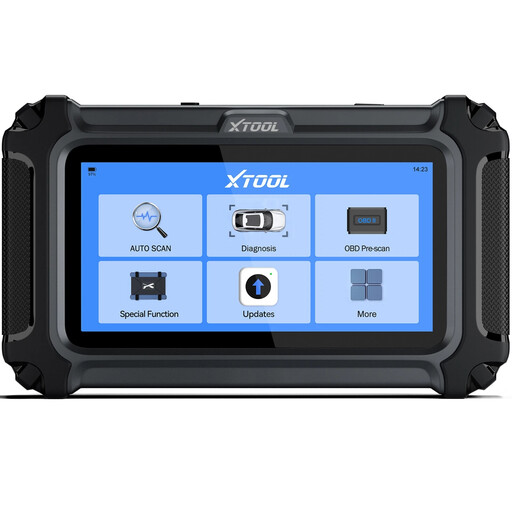
Why it suits this profile: A straightforward choice for private car owners who want to check the engine, transmission, ABS and SRS without immediately investing in a large workshop tablet.
The product information explicitly states that service functions may vary by make, model, year and ECU. This makes it important to check compatibility before buying.
Four main systems, live data, reports, CAN-FD and, according to the product information, lifetime free software updates.
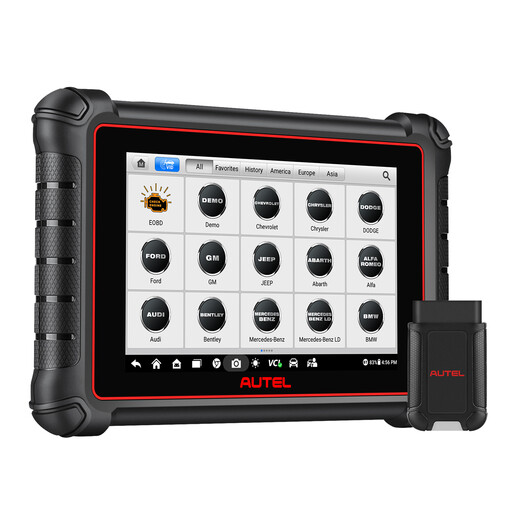
Why it suits this profile: Designed for garages and mobile mechanics who want to combine full-system diagnostics, active tests and reporting in a single tablet.
The product description lists CAN-FD, DoIP and FCA AutoAuth separately. Even so, check whether these functions are actively available for your vehicle.
Bluetooth, full-system diagnostics, bi-directional tests, more than 40 listed service functions and report support.
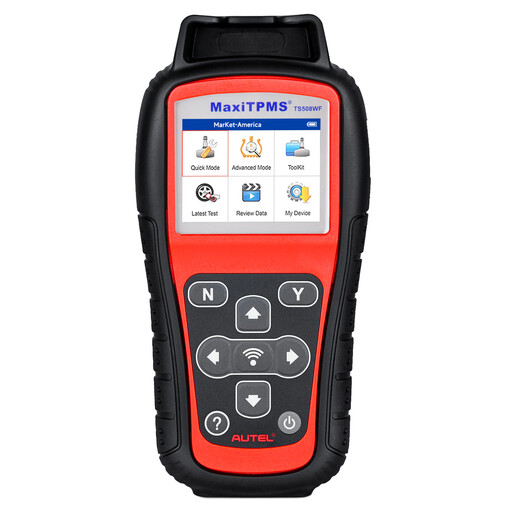
Why it suits this profile: A specialist TPMS diagnostic tool for tyre professionals and users who want to activate, programme and relearn sensors.
The product information makes it clear that programming is intended for Autel MX-Sensors. It is therefore not a universal programmer for every aftermarket sensor.
Supports TPMS diagnostics, sensor activation, three relearn methods and Wi-Fi updates, according to the product description.
We have put together a complete, up-to-date list of products that fully meet these strict selection criteria and the applicable European safety regulations.
Yes, with an OBD2 scanner that supports the vehicle’s protocol. A code points towards the problem, but does not automatically prove which component is faulty. Also check live data, freeze-frame data and the conditions in which the fault occurred.
That varies by model. Some products advertise lifetime free software updates, while others offer one year of updates or a subscription for advanced functions. Check this before buying and look out for any charges for additional services such as FCA AutoAuth.
Not always. A diagnostic scanner can often display the battery voltage, but according to the product specifications, a separate battery tester can also analyse charging, starting and battery data. For a garage, mobile mechanic or vehicle with recurring starting problems, this additional measurement can be useful.
