
Vandaag of morgen in huis

Kwaliteit gegarandeerd

Welkomstaanbiedingen ontgrendelen: GRATIS bezorging | Tot 80% korting | Gratis 30 dagen JoyPlus-proefperiode
Download de app
A warning light on your dashboard. It's a familiar scenario that often leads to a costly garage bill. Your own car diagnostic tool (also known as an OBD2 scanner) puts you back in control. It allows you to identify the cause yourself, fix minor issues, and reset the check engine light. But the market is flooded with models that promise more than they deliver. As a Joybuy Product Recommendation Officer, I'll help you make the right choice without falling for marketing gimmicks.
Before you invest, it's important to recognise the most common pitfalls:
To avoid a bad purchase, it's essential to look beyond the price tag. Pay attention to the following three points that make the difference between a handy tool and a piece of useless plastic.
The term 'OBD2' refers to a standard for reading emission-related engine faults. A simple OBD2 scanner can therefore only read the engine management system. However, modern cars have dozens of electronic control units (ECUs) for systems like the brakes (ABS), airbags (SRS), transmission, and air conditioning.
A device that can diagnose all systems provides a complete picture of your car's health. This is crucial if you want to do more than just turn off a check engine light.
The functionality determines what you can actually do with the data. Look for the following levels:
Most modern scanners work wirelessly via Bluetooth and an app for iOS and Android. This is flexible and user-friendly. Additionally, check if the scanner supports modern communication protocols. CAN FD and DoIP are increasingly required for new models from manufacturers like GM, Ford, BMW, and Volvo. A scanner without this support has limited use for the latest generation of cars.
To help you with your choice, we have matched several popular models to different user profiles.
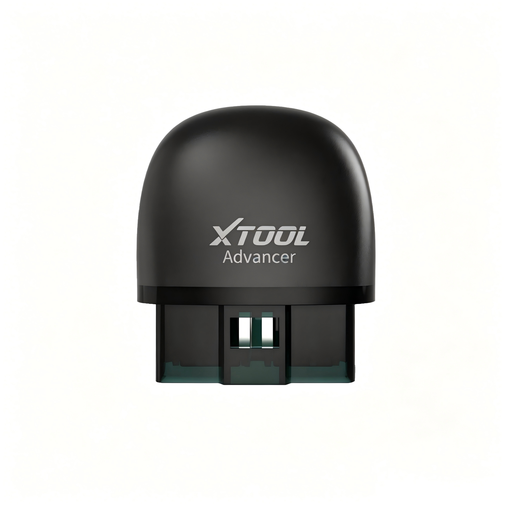
Why This Fits Their Persona: Ideal for those starting with car diagnostics. You want to know why a light is on and perform basic resets, like the oil service, without immediately spending hundreds of euros. This compact dongle works with your smartphone.
No hidden subscription fees for core functions. According to XTOOL, you get lifetime free updates for the full system diagnostics, so you won't face any surprises.
Diagnoses all systems (engine, ABS, airbag, etc.), not just the engine. Works easily via Bluetooth with your own smartphone (for iOS and Android).
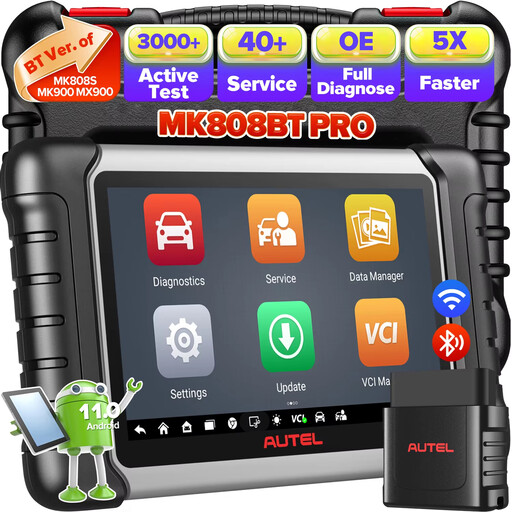
Why This Fits Their Persona: You work on cars regularly and want to not only read fault codes but also actively troubleshoot problems and perform more complex maintenance. A simple dongle is no longer enough; you need a powerful, wireless tool with its own screen.
Provides immediate access to advanced features like active tests without requiring you to pay for each function separately. The software updates are free for the first year, which is clearly communicated.
Full bidirectional control (active test) to command components and quickly locate problems. According to Autel, it features over 38 reset functions for comprehensive maintenance.
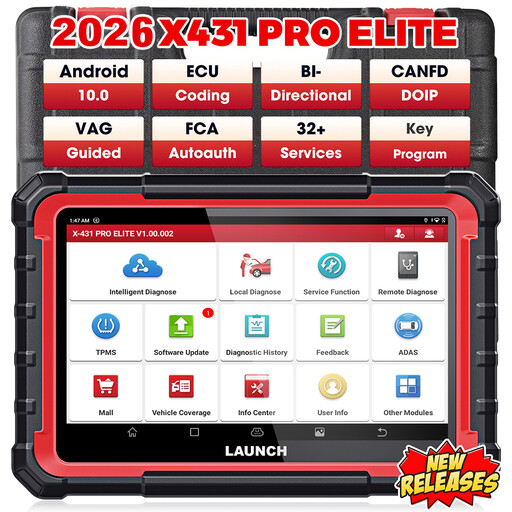
Why This Fits Their Persona: For the small garage or the demanding technician, efficiency is everything. You need a reliable, fast, and future-proof tool that can handle the latest car models and advanced tasks like module coding.
Supports the latest protocols like CAN FD and DoIP, ensuring it won't become obsolete with the newest car models. You're investing in a tool that will remain relevant for a wide range of vehicles for years to come.
Advanced ECU coding for module adaptations and replacements. The hardware is designed for a professional environment, with a fast processor and a rugged housing.
We have compiled a complete, up-to-date list of products that fully meet these strict selection criteria and current regulations.
For petrol cars built after 2001 and diesel cars after 2004, the basic OBD2 standard for engine diagnostics is mandatory in the EU. However, this does not guarantee compatibility for other systems like ABS or airbags. Always check the specific make and model support list provided by the scanner's manufacturer. For cars made after 2020, it is wise to check if protocols like CAN FD are supported.
This is a point you need to pay close attention to. Often, "lifetime free" applies to the basic software and OBD2 functions. For more advanced features, such as specific reset functions or ECU coding, you may need to purchase a subscription after a free period of, for example, one or two years. Read the product description carefully to see exactly which features are covered by the lifetime updates.
Rolling back the odometer is illegal and considered fraud. Diagnostic devices are intended for repair and maintenance. Some very advanced, professional tools have an odometer correction function, but it is exclusively for legitimate situations, such as installing a new instrument cluster where the correct mileage must be entered. This is not a standard feature and is not intended for fraudulent use.
