
Vandaag of morgen in huis

Kwaliteit gegarandeerd

Welkomstaanbiedingen ontgrendelen: GRATIS bezorging | Tot 80% korting | Gratis 30 dagen JoyPlus-proefperiode
Download de app
An unexpected warning light on your dashboard can be a major source of stress. Is it a simple issue, or are you facing an expensive repair? With a quality car diagnostic tool, you can take the guesswork out of the equation. You can read the fault codes yourself, identify the root cause of the problem, and in many cases, even perform minor maintenance tasks.
As a Joybuy Product Recommendation Officer, I'm here to help you navigate the vast selection. In this article, I'll provide practical tips and introduce several popular choices to help you find a device that suits your vehicle and your technical expertise.
Before making a decision, it's wise to consider a few key points. An automotive scanner comes in many shapes and sizes, from basic code readers to professional-grade diagnostic tools.
Think carefully about what you want to achieve with the tool. Is it purely for reading and clearing engine fault codes? If so, a basic OBD2 scanner will suffice. However, if you want to perform full system diagnostics on all vehicle modules—such as the ABS, airbags (SRS), transmission, and air conditioning—you'll need a more advanced model. These devices can not only clear car fault codes but also provide access to a much wider range of data.
Always verify that the diagnostic tool is compatible with your specific car make, model, and year. Most cars built after 1996 (petrol) or 2004 (diesel) in the EU have an OBD2 port, but support for advanced functions can vary by brand. Also, look for support for modern protocols like CAN-FD (used in newer GM models) and DoIP (for recent BMW, Jaguar, and Land Rover models). For recent vehicles from the Fiat Chrysler Automobiles (FCA) group, you often need FCA AutoAuth access to perform secure diagnostics.
A car diagnostic tool with advanced features can save you a significant amount of money in the long run.
Based on specifications and functionality, we've highlighted some of the most compelling options for you.
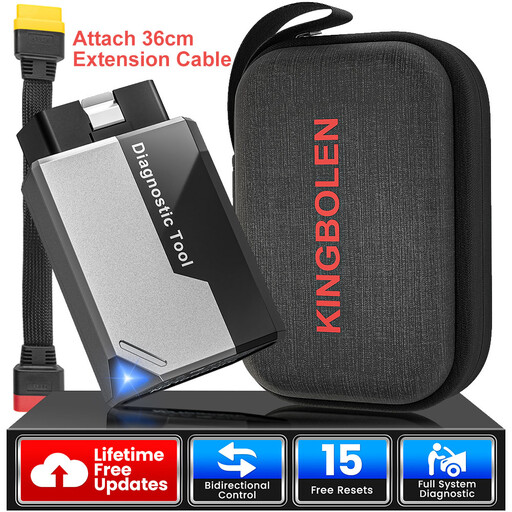
Why It Stands Out The KINGBOLEN Ediag Elite is a compact Bluetooth dongle that transforms your smartphone (Android & iOS) into a powerful diagnostic tool. Its biggest advantage is the lifetime free updates for both the diagnostic software and service functions, with no hidden subscription fees.
Key Features
Who Is It For? This is an excellent choice for the DIY enthusiast and the private car owner looking for an affordable yet highly capable OBD2 scanner with professional-level features.
Check out the KINGBOLEN Ediag Elite
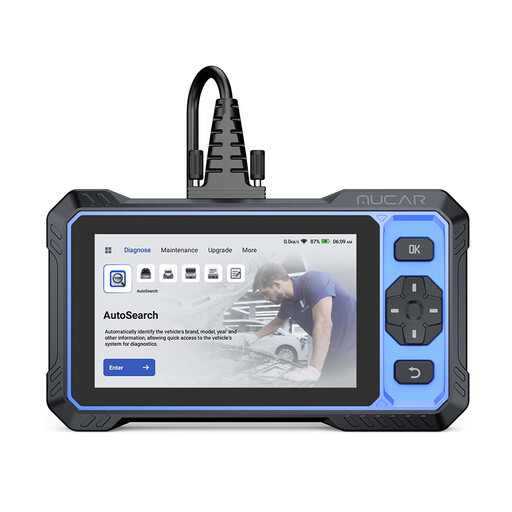
Why It Stands Out The MUCAR 682 is a standalone diagnostic tool with a vibrant 6-inch touchscreen, so you don't need a phone or tablet. The device runs on Android and offers OE-level diagnostics, meaning it can delve into the car's systems as deeply as the equipment used in many professional garages.
Key Features
Who Is It For? This professional automotive scanner is ideal for the serious hobbyist who performs regular maintenance and for small to medium-sized workshops that need a reliable and versatile all-in-one tool.
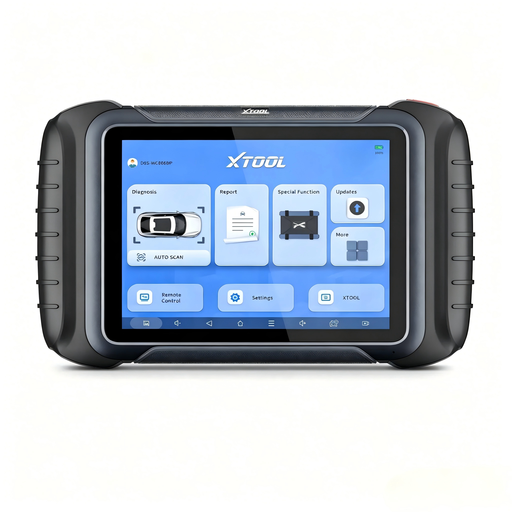
Why It Stands Out The XTOOL D8S takes diagnostics to the next level with features normally found only in much more expensive equipment. Its most notable feature is topology mapping, which visually displays the communication structure between all modules in the vehicle. This makes it incredibly easy to see where a communication fault is located.
Key Features
Who Is It For? This is a powerful car diagnostic tool designed for the professional mechanic and the demanding workshop in need of in-depth diagnostic capabilities, key programming, and ECU coding.
Is the perfect device for you not listed here? No problem. Many more models are available, from simple code readers to the most advanced diagnostic tablets. Take a look at our full range to compare more choices.
Discover More Vehicle OBD2 Scanners
OBD stands for On-Board Diagnostics. OBD1 was the early, non-standardized system used by manufacturers before the mid-1990s. Each manufacturer had its own connectors and codes. OBD2 is the standardized protocol that became mandatory in the US in 1996 and later in the EU. It uses a standard 16-pin connector and standardized Diagnostic Trouble Codes (DTCs), allowing universal scanners like the models mentioned above to communicate with virtually all modern cars.
Yes, one of the basic functions of almost any fault code reader is to clear Diagnostic Trouble Codes (DTCs). This will turn off the check engine light (or another warning light). However, it's crucial to remember that clearing the code does not fix the underlying issue. If the fault is not repaired, the code and the warning light will eventually return.
This largely depends on the brand and model of the device. Some, especially professional-grade, diagnostic tools require an annual subscription to receive software updates for new vehicle models and functions. The models recommended above, such as the KINGBOLEN Ediag Elite and the MUCAR 682, stand out by offering lifetime free updates. The XTOOL D8S offers 3 years of free updates, after which the existing software will continue to function normally. Always read the product description to understand the update policy.
