
Vandaag of morgen in huis

Kwaliteit gegarandeerd

Welkomstaanbiedingen ontgrendelen: GRATIS bezorging | Tot 80% korting | Gratis 30 dagen JoyPlus-proefperiode
Download de app
A car diagnostic scanner can help you read fault codes, check maintenance functions and get a clearer idea of where to start with a repair. However, not every device is suitable for every car. A basic OBD2 scanner, for example, may only display engine data, while a more advanced car diagnostic tool can also access ABS, airbags, the transmission and other control units.
For Dutch car owners, DIY mechanics and small garages, there are three pitfalls in particular to watch out for.
A product page might claim to cover thousands of models or a large percentage of vehicles. That doesn’t automatically mean every function will be available on your car. Make, model, year, engine variant and ECU version all determine which systems and maintenance functions you can access.
So, before buying, check:
A list of 15, 28 or 40 functions might sound impressive, but the number tells you little without compatibility information. A TPMS reset, ABS bleeding, DPF regeneration or ECU coding can work differently from one vehicle to another. Some functions are only available for certain models.
A scanner that only clears fault codes won’t fix the cause. If a fault code returns after you clear it, the underlying problem needs to be resolved first.
Check the difference between included updates and paid renewals. Some devices offer free basic updates, while advanced manufacturer software or online functions may be charged separately. FCA AutoAuth or Renault SGW may require separate registration, a licence or a physical token.
As a result, a cheap scanner may work out less cost-effective in the long run than a model with clearly stated update terms.
A basic OBD2 diagnostic tester usually focuses on the engine and emissions-related data. For more extensive maintenance, you’ll need a full-system diagnostic tool that can also access systems such as:
Check whether the scanner can read and clear fault codes, display live data and save a report. Live data graphs are useful when you want to compare sensors or values during a drive or while the engine is idling.
A bidirectional scan tool or active test function can send a command to a component on compatible vehicles. For example, it might activate a cooling fan, fuel injector, window, relay or ABS pump. According to the manufacturer’s product information, the available tests vary by make, model and ECU. Only use this function if you know which test is suitable for the fault.
ECU coding and module adaptation go a step further. These functions may be needed after replacing a module or component, but they aren’t universally available. If you’re unsure, check compatibility using the VIN.
Newer cars use communication protocols such as CAN FD and DoIP. A CAN FD scanner can process larger data packets on compatible vehicles, while DoIP uses Ethernet for certain diagnostic tasks. This doesn’t automatically make a device suitable for every modern car.
Also check for gateway restrictions. FCA vehicles may require AutoAuth registration. Certain Renault models may need a physical token. Check these requirements before deciding what to buy.
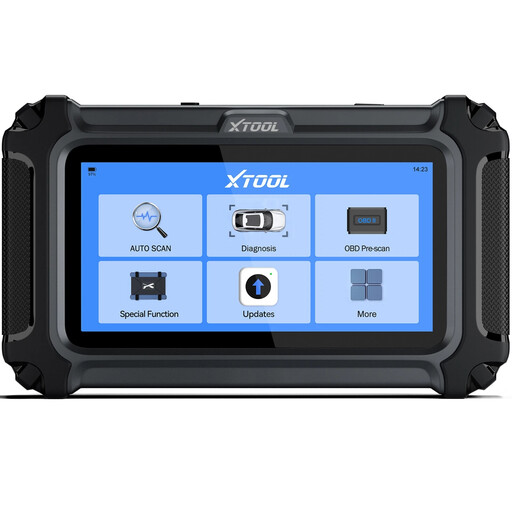
Why it suits this profile: The D5 is designed for everyday use, used-car inspections and basic jobs at home. It supports four main systems and has straightforward controls.
The product information explicitly states that functions vary by make, model, year and ECU. This makes it essential to check compatibility beforehand rather than relying on a general compatibility percentage.
Reads engine, transmission, ABS and SRS codes; supports live data, four graphs, CAN FD and FCA AutoAuth on compatible vehicles.
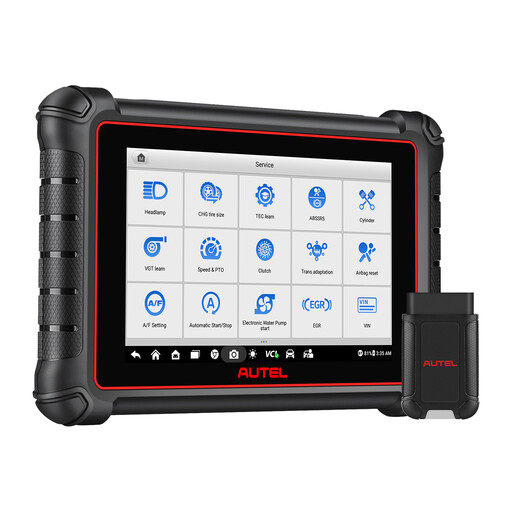
Why it suits this profile: This vehicle diagnostic tool is for users who need TPMS, ECU adaptations and extensive maintenance functions as well as fault code reading.
The description specifies one year of free updates and makes clear that support varies by vehicle. Also check which functions remain available after the update period.
According to the product information, it supports TPMS diagnosis and programming, more than 40 maintenance functions, ECU coding, active tests, CAN FD and DoIP.
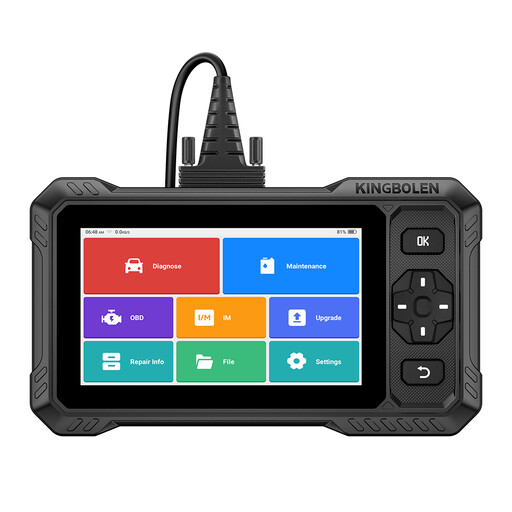
Why it suits this profile: The S6 Elite is designed for full-system diagnosis, active tests and repeated use in a workshop or mobile service setting.
The product information states that active tests and resets vary by vehicle. It also lists the additional requirements for FCA AutoAuth and Renault SGW separately.
According to the product description: full-system scanning, more than 3,000 listed active test functions, 15 maintenance functions, CAN FD and lifetime Wi-Fi updates.
We’ve put together a complete, up-to-date list of products that meet these strict selection criteria and the applicable European safety regulations.
No. A basic device will often read mainly engine and emissions codes. For ABS, airbags, the transmission or body control modules, you’ll need a scanner with full-system access. Always check the vehicle list and the functions available for your model.
Its physical lifespan depends on how it’s used and stored, as well as wear on the cable or connector. How useful the software remains depends mainly on updates and vehicle support. A device with free updates can be appealing, but check whether this applies to all functions and whether certain online services require a separate payment.
Not necessarily. A compact scanner may be enough for engine codes and live data. If you also want to carry out a car maintenance reset, ABS bleeding, TPMS functions or a bidirectional test, you’ll need a more advanced model. Choose based on the jobs you actually do, rather than the product name alone.
