
Vandaag of morgen in huis

Kwaliteit gegarandeerd

Welkomstaanbiedingen ontgrendelen: GRATIS bezorging | Tot 80% korting | Gratis 30 dagen JoyPlus-proefperiode
Download de app
A gleaming car doesn’t start with the most expensive machine, but with tools suited to the job. Anyone looking for car detailing tools will soon come across polishers, polishing pads, drill brushes and complete maintenance kits. However, attractive product claims can sometimes hide a poor purchase.
High speed may sound appealing, but it is not automatically suitable for car paintwork. Too much heat or pressure in one spot can place uneven stress on the paint layer. So check whether a car polisher offers multiple speed settings, a soft start and a suitable backing plate.
For small areas, headlights, wheels and bodywork edges, a mini car polisher is often more practical than a larger model. A compact machine gives you greater freedom of movement, but is less suitable for treating an entire car quickly.
A cleaning and polishing kit may contain many components, but always check the fittings and dimensions. Pay attention to:
For example, a set with an M10 drill adapter is not automatically suitable for every machine. Also check that the drill chuck grips the adapter securely.
Drill brushes are useful for tyres, floor mats, tiles and heavily soiled plastic parts. However, hard nylon brushes can scratch paintwork, glass or leather. Use a soft brush on delicate surfaces and test it on an inconspicuous area first.
Claims such as ‘damage-free’ or ‘professional finish’ are not a guarantee for every material. According to the manufacturer’s product information for the Oxerbog set, the brushes vary in hardness, with the stiffer versions intended for more durable surfaces.
A rotary polisher turns the pad directly in a circular motion. This can be useful for targeted work, but requires an even movement and an appropriate speed. An eccentric or dual-action machine also moves the pad in an orbit. This is often more convenient for beginners and larger painted surfaces.
Some compact models combine both systems. According to the product description, the BATOCA S5 has a rotary setting and orbital movements of 3 mm and 12 mm. The BATOCA S4 also operates with a rotary and orbital mode, according to the manufacturer. When buying, check which drive system and throw length are actually suitable for your job.
With a cordless polisher, the battery voltage, capacity and number of batteries determine how long you can work. A second battery means you do not have to stop immediately, but the stated operating time is often an indication based on specific conditions.
According to BATOCA’s own information, the S5 comes with two 12 V, 2.0 Ah batteries. For the S2, BATOCA specifies two 5 Ah batteries and an operating time of approximately 60 minutes. In practice, this duration may vary depending on pressure, speed, temperature and workload. Also check the charging time and whether spare batteries are available to buy.
The right car polishing pads are at least as important as the machine. A firm pad is generally used for more intensive correction work, while a soft pad is intended for fine polishing or finishing. Ideally, use a separate, clean pad for each compound and paintwork stage.
According to the product information, the 8-piece polishing pad set contains five foam pads, a synthetic wool pad, an M10 adapter, an adhesive backing plate and a screw. The pads have a diameter of 80 mm and are intended for compatible electric or pneumatic polishers and drills. Wash pads with clean water after use and allow them to dry out of direct sunlight.
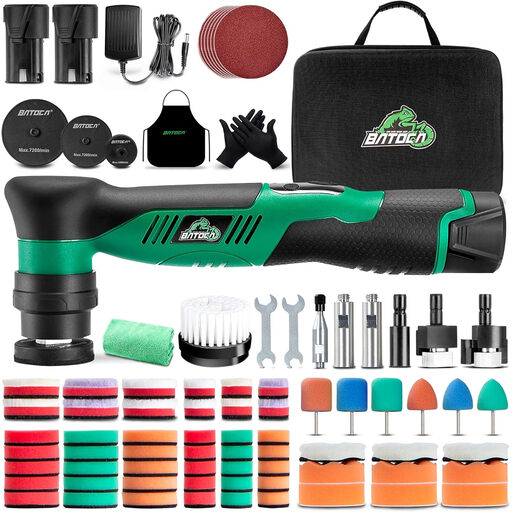
Why it suits this profile: This compact machine is suitable for detailed work on badges, headlights, edges and smaller painted areas. The set includes three backing plate sizes and two interchangeable batteries.
The six speeds, from 2,000 to 5,500 revolutions per minute, provide more control than a machine with just one fixed speed. Use the lowest setting for wax and delicate areas.
Three polishing modes, 25 mm/50 mm/75 mm backing plates and two 12 V 2.0 Ah batteries, according to the product description.

Why it suits this profile: This model is aimed at users who want to treat larger surfaces and monitor the speed while working.
According to BATOCA, the LCD shows the speed and battery status. This helps you repeat a chosen setting, but does not replace selecting the right pad and pressure.
Two 5 Ah batteries, six speeds, a 125 mm polishing sponge and a stated charging time of approximately 2.5 hours.
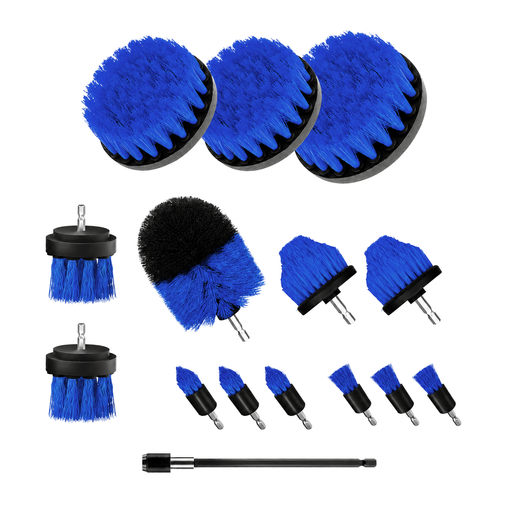
Why it suits this profile: For anyone who wants to clean car interiors, wheels, tiles and hard-to-reach gaps using an existing drill.
The set contains brushes with different hardness levels. According to the manufacturer, the soft versions are intended for delicate areas; hard brushes should not be used on paintwork or leather.
15 pieces, a universal hex shank and an extension for areas beneath seats and between wheel rims.
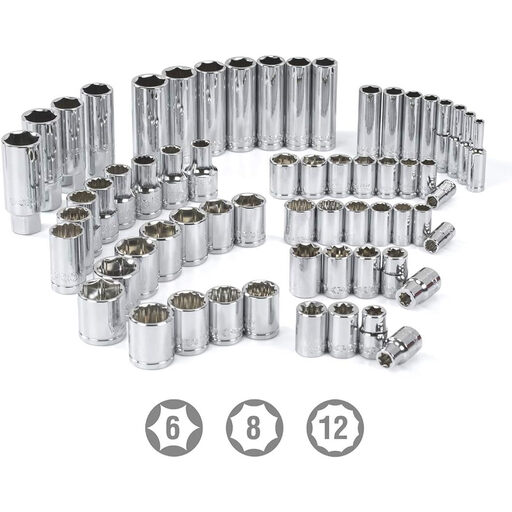
Why it suits this profile: A comprehensive tool set is practical for garages, vehicles and general household maintenance when buying individual tools quickly becomes expensive.
The components are stored in a case with four trays. This makes it quicker to see which socket or ratchet is missing, while keeping metric and imperial sizes separate.
450 pieces, 1/4, 3/8 and 1/2 inch drives, plus a combination of sockets, ratchets, spanners and bits.
Only use a polisher on a clean, dry surface. Remove sand and dirt before you start, use light pressure and keep the pad moving. Wear safety goggles when using rotary brushes, and keep loose clothing and long hair away from them.
If you want to restore car paintwork, first establish whether you are dealing with dirt, oxidation, a superficial scratch or paint damage extending down to the undercoat. Polishing does not automatically remove deep damage. For small stone chips, you could consider a stone chip repair kit, but follow the instructions and check that it is suitable for the surface. For damage in the driver’s field of vision on the windscreen or larger cracks, repairing it yourself may not be appropriate; a windscreen repair specialist can assess the damage.
For mechanical maintenance, a socket set, ratchet set or compact metric spanner set can be useful additions. Make sure you use the correct size, and do not use a ratchet instead of a torque wrench when a specific tightening torque is required.
We have put together a complete, up-to-date list of products that fully meet these strict selection criteria and the applicable European safety regulations.
A compact dual-action polisher with multiple speeds is often a straightforward place to start. Choose a model where the backing plate and polishing pads are clearly specified. Begin at a low speed with a soft pad on a small, inconspicuous area.
Their lifespan depends on use, compound, pressure and cleaning. Rinse pads after every job, remove product residue and allow them to dry completely. Replace a pad when the foam tears, becomes hard, loses its shape or remains heavily saturated with polishing compound.
Only if the manufacturer states that the brush and its hardness are suitable for this purpose. Use a soft nylon brush at low speed and with minimal pressure. Test it on a concealed area first. Hard brushes are generally more suitable for rubber, robust plastic parts, tiles or heavily soiled wheels than for painted bodywork.
