
Livraison le jour même et le lendemain

Qualité garantie

Débloquez vos offres de bienvenue: Livraison GRATUITE | Jusqu'à -80 % | 30 jours d'essai gratuits à JoyPlus
Téléchargez l'application
Keeping your car clean may seem simple, but choosing the wrong car detailing products can damage the paintwork, cost you money and cause frustration. When choosing a car polishing machine, car wash brush or pressure washer for your car, price isn’t the only thing that matters. The combination of power, ease of use, accessories and intended use determines whether a product is right for you.
A higher wattage or speed doesn’t automatically mean better results. A rotary polisher can remove a lot of material quickly, but it requires control. Polishing for too long around edges or on thin paint can cause heat to build up. A dual-action polisher moves the pad in both a rotating and orbital motion, making it easier for many beginners to use with control.
Pay attention to:
Grit on a brush can cause scratches, even if the bristles themselves feel soft. Rinse the car and brush thoroughly first. Where possible, use separate accessories for the paintwork, interior, wheels and tyres.
The firmness of car polishing pads matters. A firm pad is designed for correction work, while a softer pad is better suited to finishing, gloss products or wax. Always check that the pad size and fitting are compatible with the machine.
Advertised battery life is often measured without a load. Actual run time may be shorter while polishing. Check the number of batteries, capacity in Ah, charging time and whether you can swap batteries. For a whole car, a model with two batteries may be more practical than a compact device with just one.
A cordless car polisher is handy if you work outdoors or don’t want to use an extension lead. Bear in mind the weight and balance, as prolonged use of a heavy device can put strain on your wrist and shoulders.
A larger pad works efficiently on broad body panels. A smaller backing plate is more helpful for narrow pillars, bumpers and hard-to-reach corners.
Check whether the pad fits the backing plate with Velcro or another type of fastening. A mismatch may cause it to shift during use. Clean pads after every session and let them dry completely. A worn or dirty pad can treat the surface unevenly.
For a car wash brush, soft, dense fibres and a head that’s easy to rinse are practical features. A telescopic handle helps you reach roofs and tall vehicles, but don’t force the locking mechanism.
A pressure washer for your car can loosen dirt, but using it from too short a distance or with the wrong nozzle can put strain on delicate rubber seals, paintwork edges or stickers. Start with a wide spray and keep a suitable distance. A foam nozzle can distribute shampoo more evenly, but it doesn’t replace thorough rinsing.
Also check:
Use electrical appliances according to the instructions and check that the plug, cable and product information are suitable for use in your area. Also check that the required product information is provided and that the product has the appropriate CE marking, where applicable.
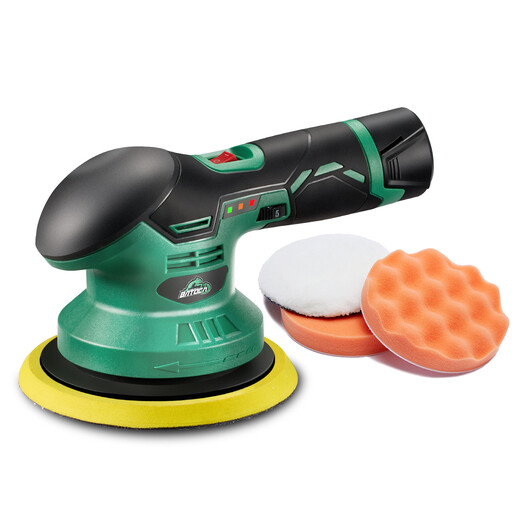
Why it suits this type of user: With one battery, six speed settings and a 5 mm random orbit, this cordless model is aimed at anyone looking to get started with waxing and light polishing jobs at home.
The adjustable settings help you avoid starting at a high speed straight away. Check the battery charge beforehand and use a clean pad.
12 V battery, speed settings from 1 to 6, 2.0 Ah battery and compatibility with standard detailing pads.

Why it suits this type of user: The LCD display, two 5 Ah batteries and 125 mm pad are practical for users who regularly work on larger areas of the car.
The battery diagnostics and six settings make it easier to keep an eye on speed and remaining charge.
2 × 5 Ah lithium batteries, LCD display, 8 mm orbital throw and an advertised charging time of 2.5 hours.
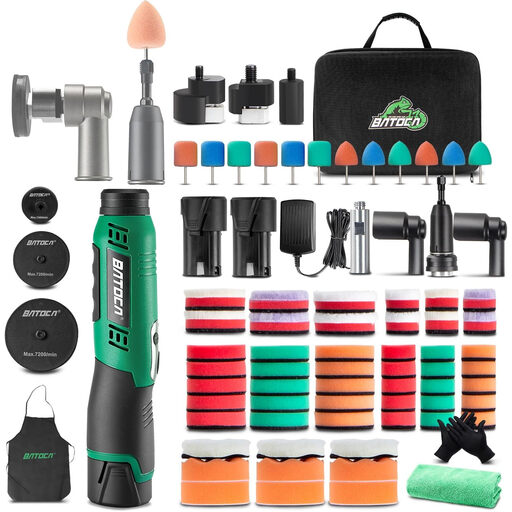
Why it suits this type of user: This compact machine is designed for detailed work around badges, wheels, headlights and edges, where a standard polisher can be harder to manoeuvre.
The small backing plates keep the working area limited. This helps prevent you from accidentally using a large pad on edges or narrow areas.
DA and RO modes, 25 mm, 50 mm and 75 mm backing plates, six settings and 2 × 12 V 2.0 Ah batteries.
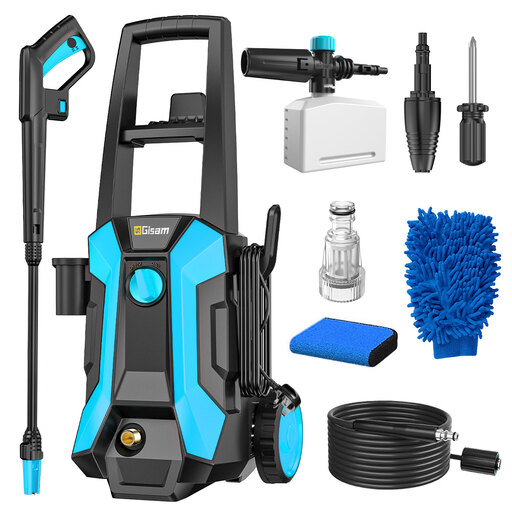
Why it suits this type of user: If you want to clean your car, patio, fence and driveway with one electric appliance, this model comes with several nozzles and a long hose.
The included foam nozzle and rotary nozzle give you different ways to clean. Always use a wide spray and keep a suitable distance when cleaning car paintwork.
2200 W, advertised pressure of 180 bar, 480 l/h, 8 m hose and accessories for foam and different water sprays.
We’ve put together a complete, up-to-date list of products that meet these strict selection criteria and the applicable European safety requirements.
A mini polisher can offer more precision on small surfaces. Use a regular car cleaning brush mainly for air vents, seams and interior details. According to the product description, the soft brush in the range is designed for dust and dirt in narrow openings; always check first that the bristles are free of grit.
It depends on the condition of the paintwork, how you use the car and which products you choose. Polishing removes a thin layer from the surface, so it shouldn’t automatically be part of every wash. For regular maintenance, washing, drying and applying a suitable protective product are often a good first step.
Often, yes, as the orbital movement makes it easier to work evenly. Always start at a low speed, practise on a small area and keep the machine moving. Check the instructions and use a pad that’s suitable for your polish.
Alongside the purchase price, you’ll need to consider pads, microfibre cloths, shampoo, polish, wax and possibly extra batteries. Washable pads and reusable accessories can help keep ongoing costs down, provided you clean and dry them thoroughly straight after use.
