
Vandaag of morgen in huis

Kwaliteit gegarandeerd

Welkomstaanbiedingen ontgrendelen: GRATIS bezorging | Tot 80% korting | Gratis 30 dagen JoyPlus-proefperiode
Download de app
Keeping your car looking its best takes more than a bucket and an old cloth. With the right car detailing products, you can care for the paintwork, wheels, interior and boot more effectively. Yet many car owners buy accessories that turn out to be unsuitable for their car or the way they work.
The most common disappointing purchases stem from three pitfalls:
Checking compatibility, materials and dimensions beforehand helps you avoid waste. Below, you’ll find the key things to consider, along with product suggestions for different needs.
A car polisher is not automatically suitable for every surface. A machine with a larger polishing pad can be practical for large areas of paintwork. For bumpers, badges, headlights, wheel edges and narrow body panels, a mini polisher is often easier to handle.
Check these specifications:
A cordless polisher gives you greater freedom to move around, but run time depends on the workload and how you use it. Information about maximum run time is generally based on specific conditions, so don’t treat it as a guaranteed working time during intensive polishing.
Car polishing pads vary in firmness and texture. A firm pad is generally used for more intensive correction, while a soft pad is better suited to fine polishing or applying a product. Don’t use one pad for every product: residue from a coarser compound can affect the final finish.
Before use, check:
Clean pads after use according to the product instructions and let them dry completely. Replace them if the foam splits or becomes badly misshapen.
A drill brush set can save time when cleaning tyres, floor mats and hard-to-reach seams. However, the rotating action also increases the risk of damage if you apply too much pressure.
Use soft nylon brushes on delicate surfaces such as leather, glass and paintwork. Medium-stiff brushes are better suited to wheels and robust plastic parts. Avoid using stiff brushes on delicate paintwork or soft leather. Work at a low speed, dampen the surface first and avoid pressing on one spot for too long.
Wear safety glasses while working, and switch off the drill before changing a brush.
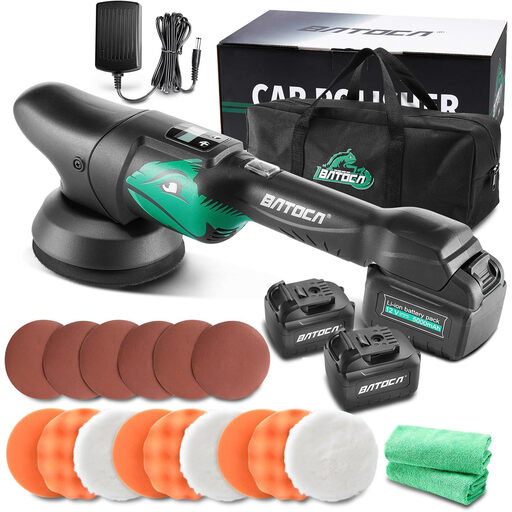
Why it suits this type of user: This cordless polisher is designed for car owners who want to tackle larger surfaces themselves without a mains cable getting in the way. According to the product information, it has two 5 Ah batteries, six speed settings and an LCD screen showing speed and battery details.
The six speed settings help you avoid starting on a high setting on the paintwork. The 125 mm polishing pad is a manageable size for general bodywork; always start by testing with light pressure.
Two interchangeable 5000 mAh batteries, according to the product description, an LCD display and a soft-start function.
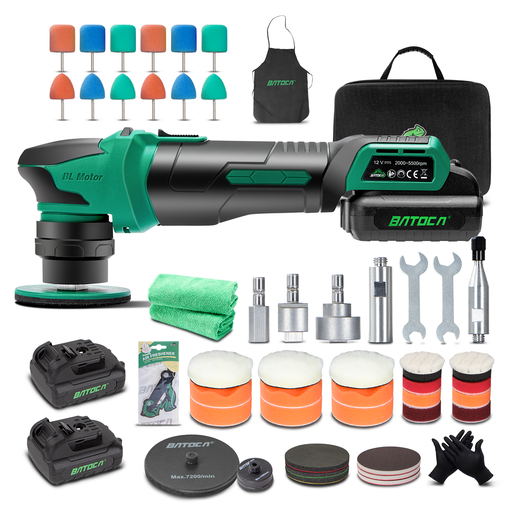
Why it suits this type of user: The S4 is designed for detailed work on mirrors, wheels, bumpers and edges. According to the product information, this model has a brushless motor, two polishing modes, four speed settings and two 12 V 2,5 Ah batteries.
Its compact size reduces the chance of catching edges or badges with a large pad. The four settings let you start gently, but choosing the right pad is still essential.
Rotary and random orbital action, a brushless motor according to the product description, and accessories for detailed polishing.
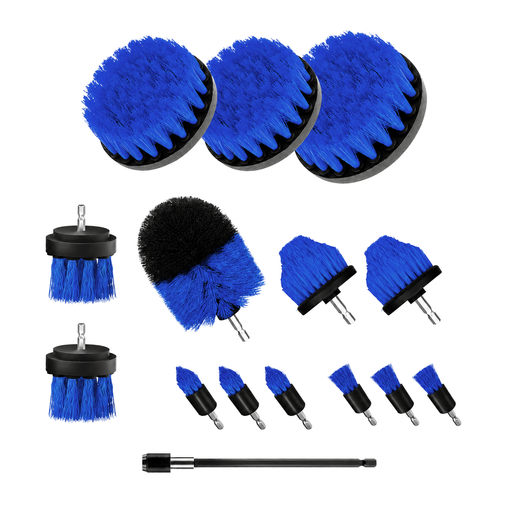
Why it suits this type of user: This set is designed for anyone who regularly cleans tyres, wheels, plastic parts, mats and crevices. According to the product information, the brush heads have a hex shank and fit many drills and electric screwdrivers.
The different brush stiffnesses let you choose a softer head for the interior and glass. Use the stiffer options only on hard-wearing surfaces, and avoid applying pressure for too long.
A selection of nylon brushes, an extension attachment and a standard hex shank, according to the product description.
You don’t always need an electric tool to clean your car interior. Start by cleaning dry with a soft cloth or vacuum cleaner, then use cleaning products sparingly. Test them on leather, plastic and fabric in a hidden area first.
When cleaning wheels, it’s best to rinse off loose dirt first. This helps prevent grit from scratching the surface as you brush. Use separate brushes for the wheels and interior.
A boot organiser is useful if shopping, cleaning products or emergency supplies often roll around loose in the boot. According to the product information, the Oxerbog storage box has a capacity of 60 litres, three main compartments, a lid and a foldable design. Check the dimensions of 50,8 × 36,8 × 32 cm before ordering. Secure the box, and don’t put sharp, flammable or leaking items inside.
A window cleaning set with a telescopic pole can be useful for cleaning windows. According to the product information, the Alpina Window Cleaning Set includes a pole that extends from 57 to 130 cm, a squeegee, a window washer and two microfibre cloths. The product isn’t specifically listed for cars, so use it mainly on suitable, flat windows and check that its dimensions work for your needs.
We’ve put together a complete, up-to-date list of products that meet these strict selection criteria and the applicable European safety regulations.
Start with a soft wash mitt, microfibre cloths, a suitable interior brush, wheel cleaner and, if you like, a polisher with adjustable speed. Add specialist pads or brushes for specific surfaces later.
It depends on how they’re used, the pressure applied, how they’re cleaned and how they’re stored. Rinse brushes after use and leave them to dry. Clean polishing pads straight after use and replace them as soon as they split, harden or lose their shape.
As well as the purchase price, you’ll need to consider batteries, charging, replacement pads and polish. A second battery can be useful for longer jobs, while a compact mini polisher is particularly worthwhile if you often work on small areas or details.
