
Vandaag of morgen in huis

Kwaliteit gegarandeerd

Welkomstaanbiedingen ontgrendelen: GRATIS bezorging | Tot 80% korting | Gratis 30 dagen JoyPlus-proefperiode
Download de app
If you look after your own car, you probably want three things: a clean finish, no damage and no money wasted on accessories that end up unused after a few goes. There’s a wide range of car detailing products to choose from, but the differences often come down to small details. The wrong brush, insufficient battery capacity or an unsuitable polishing pad can make the job harder.
This guide will help you with cleaning your car’s interior, cleaning wheels, polishing car paintwork and keeping your equipment neatly stored.
A stiff brush can be useful for rubber mats or heavily soiled plastic, but it isn’t automatically suitable for paintwork, glass or leather. The bristle stiffness is especially important when choosing car cleaning brushes and drill cleaning brushes.
Use soft nylon bristles on delicate surfaces. Choose medium-stiff bristles for wheels and robust plastic parts. Stiff brushes are better suited to hard-wearing materials and shouldn’t be used on paintwork or soft leather.
A set with lots of parts may look appealing, but first check what you actually need. For polishing, the connection, pad size and speed control matter more than the total number of sponges. With a cordless polisher, the combination of battery capacity, charging time and the availability of a second battery also matters.
Words such as “professional”, “scratch-free” or “perfect shine” don’t automatically guarantee a particular result. According to the manufacturer’s own product information, an item may be suitable for certain tasks, but the result also depends on the surface, cleaning product, pressure and speed you choose. Always test it on an inconspicuous area first.
A standard hex connection is practical for drill cleaning brushes. According to the product information, the Oxerbog sets have a hex shank and are designed for most cordless drills and electric screwdrivers. However, check that your drill’s chuck grips the connection securely.
An extension rod is useful for the space beneath seats, gaps in the boot and hard-to-reach areas of a wheel. Never start the machine unless the brush is securely attached.
Nylon is hard-wearing and suitable for a range of cleaning tasks, but the density and stiffness vary from brush to brush. When cleaning wheels, look out for brake dust and dirt in narrow gaps, but use light pressure. Let the cleaning product loosen the dirt first, rather than scrubbing dry for a long time.
For car interiors, soft brushes and microfibre materials are usually more practical. For leather, always check the care instructions from your car’s interior manufacturer.
A car polisher with variable speed gives you more control than a machine with just one fixed speed. An orbital or dual-action movement may be easier for many DIY users to manage, while a rotary machine requires more experience and control.
Also consider:
Never use a dirty pad. Grit or dried product can cause new marks while polishing.
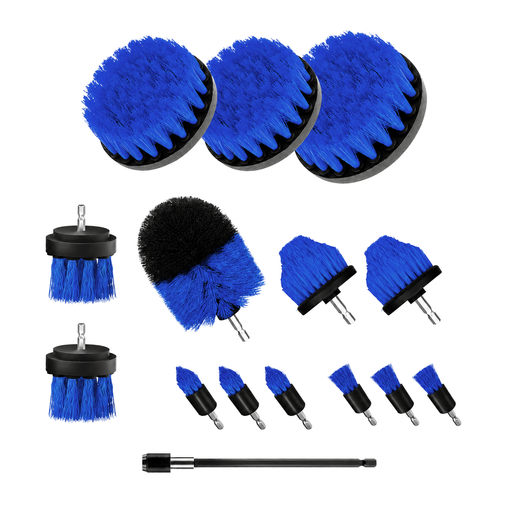
Why it suits this profile: If you already own a cordless drill, you can use it with this set for a range of cleaning tasks, without having to buy a separate rotary cleaner.
The set includes seven brush sizes, so you won’t have to use one large, stiff brush everywhere. Choose the softest option for delicate areas and test it first.
Hex connection, extension rod, and PP plus stainless steel according to the product specifications; total weight approximately 0.8 kg.
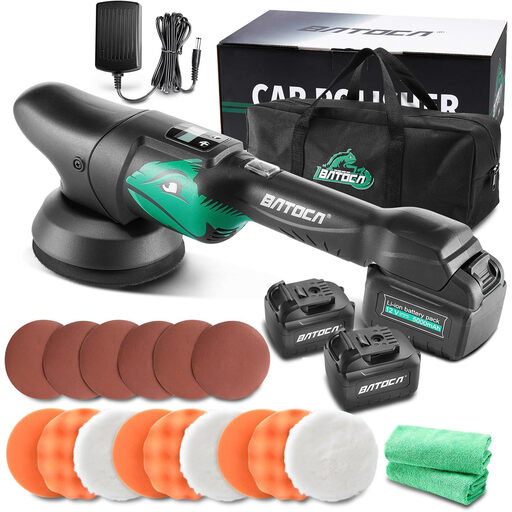
Why it suits this profile: This cordless polisher is designed for users who want to work on larger areas of paintwork with more control over speed and working time.
The speed control helps you avoid working at one fixed speed all the time. Start at a low setting and increase it only if the surface and product allow.
According to the product specifications: two 5 Ah batteries, an LCD speed display, six speed settings and a 125 mm polishing sponge.
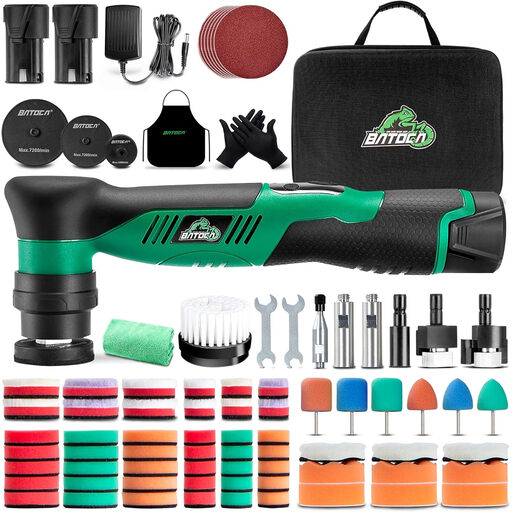
Why it suits this profile: This compact model is designed for details such as headlights, wheel edges, badges and narrow bodywork lines.
Small backing plates help you avoid using a large pad on edges or small areas. Use the rotary setting only if you have sufficient control.
Three functions according to the product information: rotary, 3 mm orbital and 12 mm orbital; supplied with two 12 V batteries and 25, 50 and 75 mm backing plates.
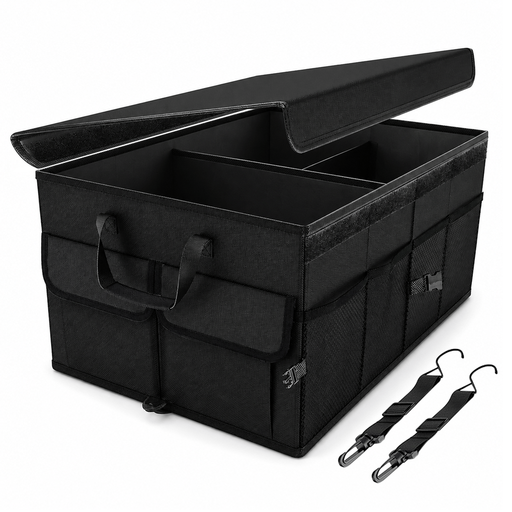
Why it suits this profile: If you want to keep cleaning products, shopping or emergency supplies neatly organised in your car, having a dedicated storage space in the boot is practical.
The foldable design means an empty box won’t take up space all the time. Check the straps, and position the box so it doesn’t obstruct your view or safety markings.
60-litre capacity, three compartments, 600D Oxford fabric and a foldable design, according to the product details.
We’ve put together a complete, up-to-date list of products that meet these strict selection criteria and the applicable European safety regulations.
A window squeegee set with a telescopic handle is handy for cleaning windows. According to the product information, the Alpina set includes a handle that extends from 57 to 130 centimetres, a squeegee, a window cleaner and two microfibre cloths. The product isn’t specifically described as being for cars, so check that its size and intended use are suitable for your vehicle.
Start with a microfibre cloth, a mild cleaner, a soft interior brush, a wheel brush and, if you like, a basic drill brush set. A polisher is only worth considering once you know how to choose the right pads and speed, and how to use the machine.
It depends on how often you use them, how dirty they get and how well you maintain them. Rinse brushes after use and leave them to dry. Wash polishing pads according to the product instructions and replace them if the material is misshapen, torn or heavily saturated.
A mini car polisher is most useful for small areas, edges and hard-to-reach spots. A larger machine will usually take less time on large panels. Always check the pad size, battery life and speed settings before you buy.
