
Vandaag of morgen in huis

Kwaliteit gegarandeerd

Welkomstaanbiedingen ontgrendelen: GRATIS bezorging | Tot 80% korting | Gratis 30 dagen JoyPlus-proefperiode
Download de app
Keeping your car clean sounds simple, until the wrong brush leaves scratches, a battery runs flat too quickly or a polishing pad doesn’t fit your machine. Search for car detailing products and you’ll often see terms such as “professional”, “powerful” and “long-lasting protection”. Without specific details, these claims don’t tell you much.
Look out for these three common pitfalls:
For a cordless pressure washer, battery capacity, run time and hose length are practical things to consider before buying. A portable model with a 1200mAh battery and a stated run time of around 15 minutes is best suited to a quick wash or rinsing part of the car. You may need a spare battery or a break to wash a full-sized SUV.
Also check whether the appliance can draw water from a bucket. This is useful in places without an outdoor tap, but the filter needs to be clean and the hose mustn’t kink. A foam bottle is a useful extra, but rinse it with clean water after use to help prevent blockages.
For paintwork, glass and plastic, soft, clean fibres matter more than having a large number of brushes. Grit in a brush can cause scratches, even if the manufacturer describes the material as scratch-free. So use separate brushes for:
A car wash brush with chenille fibres can clean large areas efficiently. For small gaps, an interior cleaning brush with microfibre or fine fibres works better. Clean and dry each brush after use.
When choosing a car polisher, look at the drive type, speed, backing plate and pad size. A dual-action machine doesn’t just rotate; it also moves in an oscillating motion. This can make it easier for beginners to control than a rotary machine, but it won’t remove every scratch by itself.
Before you buy, check:
Always test on a small, inconspicuous area first. Keep the machine moving and don’t apply sustained pressure to edges or areas with thin paintwork.
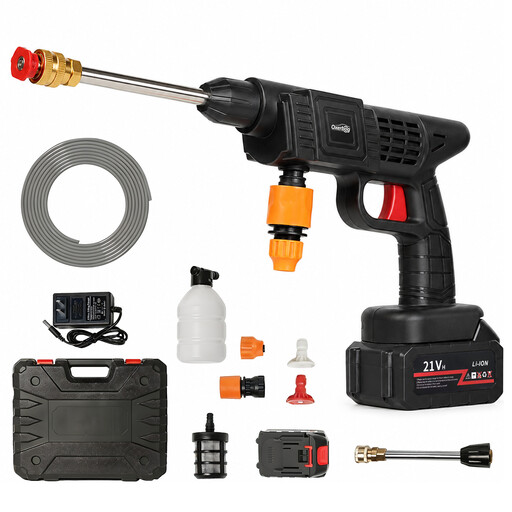
Why it suits this type of user: This portable model is designed for people who want to rinse their car without a mains power connection or outdoor tap. The specifications list a 5-metre hose and a run time of around 15 minutes.
The product information gives specific details about the battery, hose, accessories and run time. This lets you plan ahead around its limited operating time.
Cordless design, 5-metre hose, multiple nozzles and a foam bottle included, according to the product specifications.
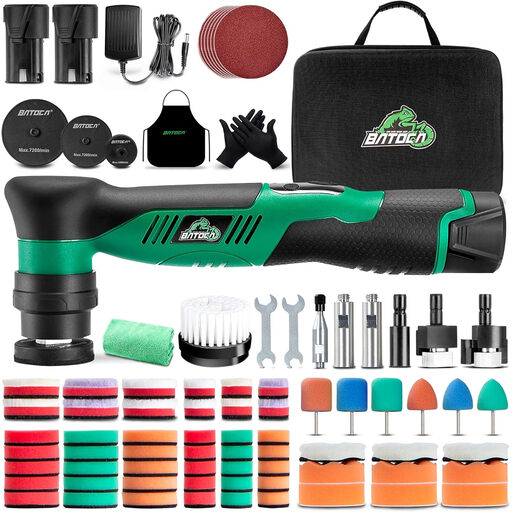
Why it suits this type of user: If you want to work on different areas of paintwork and small details, the product information says this model offers rotary, 3 mm dual-action and 12 mm dual-action movements.
The machine isn’t presented as a one-size-fits-all solution: its different drive types and small backing plates are clearly described. Choose the setting and pad to suit the task.
Two 12V 2.0Ah batteries, six speeds and 25, 50 and 75 mm plates, according to the product description.
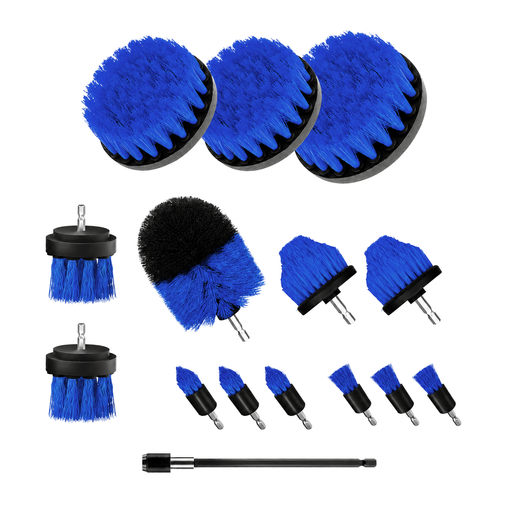
Why it suits this type of user: This set is designed to tackle stubborn dirt on wheels, in seams, on seats and on plastic parts. Its hexagonal shank is designed for use with many standard cordless drills.
The set includes brushes with different levels of stiffness. Use softer options on delicate surfaces and stiffer brushes only on suitable, hard-wearing areas.
A range of sizes, an extension piece and PP nylon brushes with a standard hex shank.
We’ve put together a full, up-to-date list of products that meet these strict selection criteria and the applicable European safety regulations.
Start with a bucket, car shampoo, microfibre cloths, a soft car wash brush, an interior brush and a safe drying towel. Add a cordless pressure washer, polisher and polishing pads later, if you find yourself carrying out maintenance more often.
Rinse off grit first, use clean cloths and keep separate materials for the paintwork and wheels. Check brushes for stones or hard debris before each use. Use light pressure and work from cleaner areas to dirtier ones.
It depends on how they’re used, stored and maintained. Rinse polishing pads after use, let them dry fully and replace them if they split or become misshapen. Battery life varies depending on the machine, speed and load. So check the stated capacity and run time rather than relying on the word “powerful”.
