
Vandaag of morgen in huis

Kwaliteit gegarandeerd

Welkomstaanbiedingen ontgrendelen: GRATIS bezorging | Tot 80% korting | Gratis 30 dagen JoyPlus-proefperiode
Download de app
A clean car doesn’t automatically require a garage full of kit. With the right car detailing accessories, you can tackle dust, sand, pet hair, water and light paintwork grime more effectively. The main challenge is knowing which specifications are useful and which are just marketing claims.
If you focus only on a high suction power or RPM figure, you could end up buying a device that offers little in practice. Even a soft brush can cause scratches if sand gets trapped between the bristles. Use the tips below to choose the right accessories for cleaning, drying, vacuuming and polishing your car.
A car vacuum cleaner with a high Pascal rating might look appealing, but that figure doesn’t tell you everything. The nozzle design, airflow, filter and dust container capacity all affect how practical the device is. Always check:
A cordless handheld vacuum cleaner is handy for quick clean-ups, but not every model is suitable for liquids or large amounts of sand.
Sand and small stones can get trapped in a car wash brush, car cleaning sponge or cloth. If you then apply pressure, these particles can drag across the paintwork or glass. Rinse the car and the cleaning tool first. Then work with gentle, even strokes, using separate cloths for the wheels, interior and paintwork.
A car window squeegee is designed to remove water from smooth surfaces. The instructions for the relevant silicone squeegee say to rinse the surface first and not to use the squeegee dry or apply too much pressure. A squeegee can actually cause scratches if used on dried-on dirt. Use it only on suitable, smooth surfaces such as glass and thoroughly rinsed paintwork.
For crumbs, dust and pet hair on seats or mats, a suitable nozzle and an easy-to-access dust container are often more important than the maximum power alone. Check the run time too:
These figures come from the product descriptions and aren’t necessarily directly comparable. When it comes to filters, check the care instructions: a washed filter must be completely dry before you put it back.
For washing, soft chenille fibres, car microfibre cloths and a clean sponge are practical options. Check whether the head can be removed so you can rinse it and leave it to dry. A telescopic handle can be useful for larger cars, but don’t force the locking mechanism.
When using a pressure washer on your car, keep a suitable distance and choose an appropriate spray pattern. Don’t direct a powerful jet at rubber seals, sensors, damaged paintwork or openings for an extended period. With a car wash brush, rinsing first is more important than pressing hard.
A car polisher with adjustable speed gives you more control than a device with just one setting. The EAFC 12 V Cordless Polisher/Waxer/Sander lists eight speeds from 2800–5500 rpm and an orbital stroke of 0.9 cm. The 21V version also lists eight settings, 2800–5500 rpm and a 125 mm disc diameter.
Polishing won’t automatically remove deep scratches. Test the product on a small, inconspicuous area first and use a suitable pad. According to the product information, a 100 mm wool polishing pad is washable and reusable, but it must be attached correctly to a compatible hook-and-loop disc.
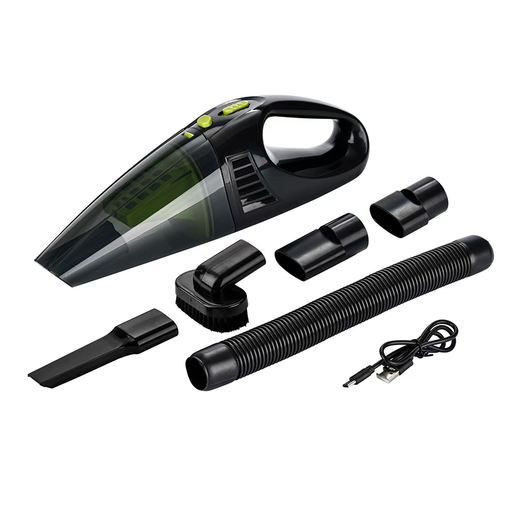
Why it suits this user: This compact model is designed for quick clean-ups of seat crevices, mats, desks and small surfaces. Its cordless design means there’s no cable to get in the way during short cleaning sessions.
The product information lists a run time of approximately 14–16 minutes. This makes it clear that the model is intended mainly for short cleaning sessions, rather than extended use.
0.4-litre dust container, HEPA filter, cordless design and ABS plastic construction for flexible use.
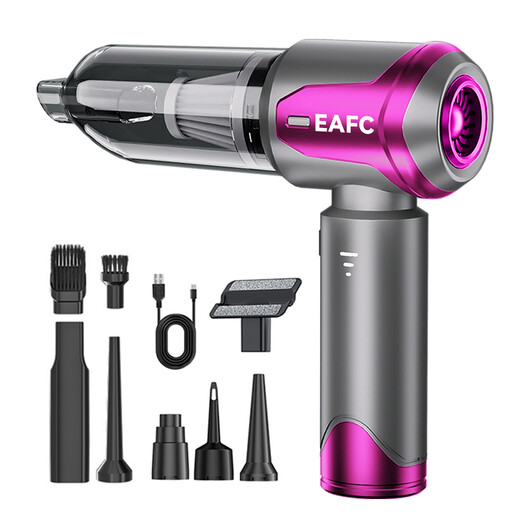
Why it suits this user: If you want one device for your car, office and home, this model combines vacuuming, blowing, inflating and deflating in a single unit.
The product page lists several nozzles, a USB-C connection and a washable HEPA filter. Always check the manual before using the device for a specific task.
Listed suction power of 16,000 Pa, 6000mAh battery, three speeds and four functions.
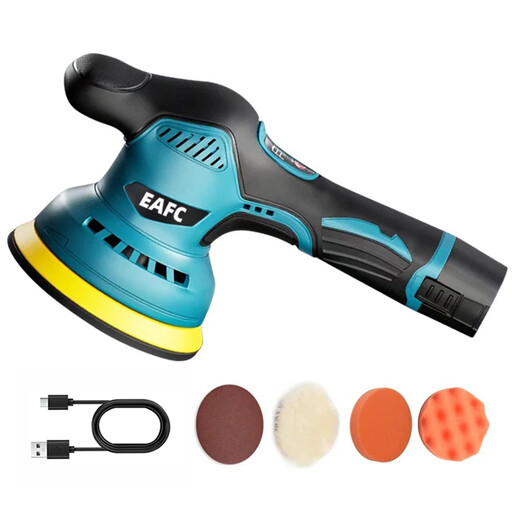
Why it suits this user: This model is a good fit if you regularly apply wax or carry out light polishing jobs and want to adjust the speed as you work.
Adjustable speed means you don’t have to work at maximum RPM all the time. Use suitable pads and avoid applying prolonged pressure to edges and areas with thin paintwork.
12V system, eight speeds from 2800–5500 rpm and support for a 125mm self-adhesive disc.
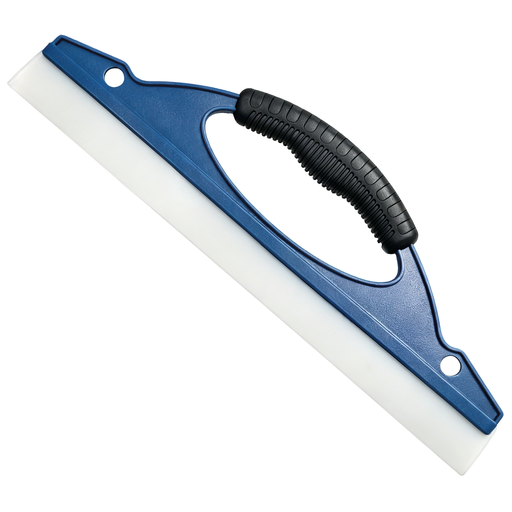
Why it suits this user: This tool is ideal if you want to quickly remove water from windows, mirrors and smooth bodywork after washing your car.
The instructions warn against wiping dry, applying too much pressure and using the squeegee on rough or hot surfaces. Rinsing the surface first is essential.
TPR handle, silicone squeegee blade and compact size of 30 × 9.5 cm.
Empty a cordless vacuum cleaner after use. Let filters dry completely and store devices, hoses and cloths clean and frost-free.
We’ve put together a complete, up-to-date list of products that meet these strict selection criteria and the applicable European safety regulations.
Start with a cordless handheld vacuum cleaner, a few car microfibre cloths, a soft car wash brush or car cleaning sponge, and a suitable glass squeegee. Add a car air blower or polisher later if you expect to use one regularly.
First remove loose hair with a brush or hair-removal nozzle. Then vacuum the upholstery and seat crevices. Check whether the device is designed for dry dirt only, and clean the filter afterwards.
Run time varies by model, setting and battery capacity. For example, the product information lists around 14–16 minutes for the ATSHARK A-016 and up to around 25 minutes on the standard setting for the Aspiron AS-CA038. For a big clean, a model with a longer run time or a corded 12V vacuum cleaner may be more practical.
