
Vandaag of morgen in huis

Kwaliteit gegarandeerd

Welkomstaanbiedingen ontgrendelen: GRATIS bezorging | Tot 80% korting | Gratis 30 dagen JoyPlus-proefperiode
Download de app
Keeping your car clean doesn’t start with buying as much as possible. It’s about choosing the right combination of cleaning accessories, polishes and storage solutions. If you focus only on a low price or an impressive product photo, you may run into practical problems: a brush that scratches, a car polisher that isn’t right for the job, or an organiser that slides around in the boot.
This guide helps car owners, DIY enthusiasts and professional detailers choose the right car detailing accessories.
Leather, paintwork, plastic, glass and wheels don’t all respond in the same way to brushes or pads. A stiff brush may be suitable for a hard-wearing wheel, but too aggressive for soft interior trim. Always check the bristle stiffness, the material and the recommended use.
A high speed setting doesn’t automatically make a car polisher suitable for every job. On small surfaces, control, size and adjustable speed can matter more than maximum power. Without the right pad and technique, too much heat or pressure can damage the paintwork.
A car cleaning kit may look complete, but become awkward to use if its parts are left loose in the garage or boot. Measure the available space before you buy. For a boot organiser, also consider stability, compartment layout and whether it folds away when not in use.
A rotary polisher spins around a fixed centre point. An orbital or DA polisher combines rotation with an orbital movement. For detailed work around badges, headlights, wheel edges and bumpers, a mini car polisher is often more practical than a larger model.
Also look out for:
According to the product description, the BATOCA S6, for example, has a DA/RO system, six speed settings and two 12 V 2.0 Ah batteries. These specifications tell you about the product, but don’t guarantee a particular polishing result.
Use firm pads for more intensive polishing and softer pads for refining or buffing. The right choice also depends on the polish you’re using, the paintwork and how much pressure you apply. Check that the pad fits the backing plate and that its fastening system, such as hook-and-loop, is compatible with your machine.
A set with several types of car polishing pads can be useful, but only if you keep the pads clearly separated according to product and use. Clean them after use and let them dry completely. Any dirt left on a pad can cause scratches during your next treatment.
A standard hex shank makes a brush set compatible with many cordless drills and electric screwdrivers. However, check that your drill chuck grips the shank securely. Choose soft bristles for delicate surfaces, medium-stiff bristles for some wheels, for example, and stiff bristles only for hard-wearing materials.
Use light pressure and avoid scrubbing in one spot for too long. When using drill cleaning brushes, it’s a good idea to wear safety glasses, as dirt and cleaning products can splash around.
An organiser made from 600D Oxford fabric, with reinforced side and base panels, is designed to hold its shape. Also consider:
A capacity of 60 litres can be useful for cleaning products, shopping and emergency supplies, but don’t put sharp, flammable or leaking items in a fabric organiser. Also make sure it doesn’t block any visible reflective parts or other safety features.
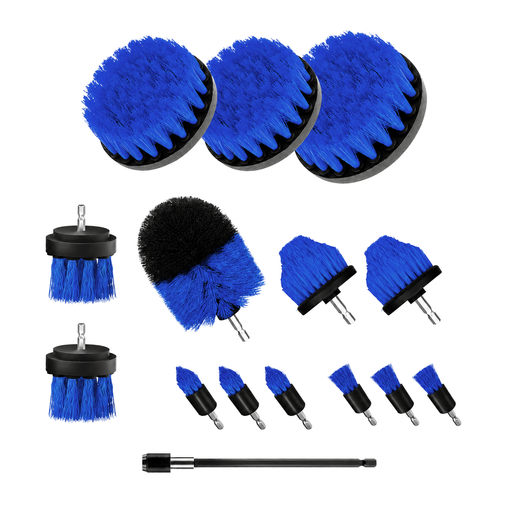
Why it suits this user: If you already own a cordless drill, you can use this set without buying a separate electric cleaner. The different sizes are suitable for seats, gaps, wheels and tiles, among other things.
The set includes nylon brushes in several levels of stiffness. This lets you choose a brush that’s better suited to each surface, rather than using one stiff brush everywhere.
Hex shank, seven brush head sizes according to the product specifications, and an extension for hard-to-reach areas.
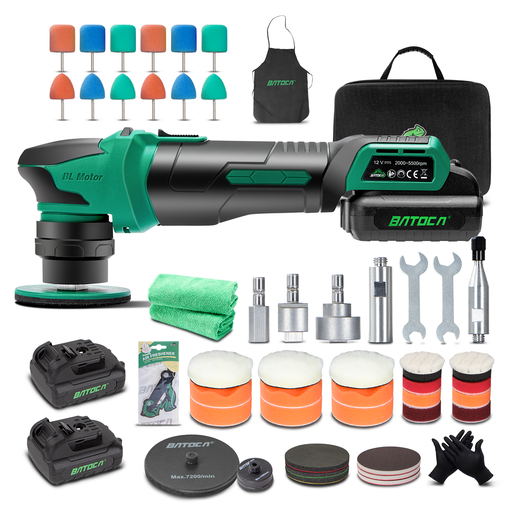
Why it suits this user: This model is designed for detailed work where control and reach matter, such as around mirrors, bumpers, wheels and other narrow areas.
According to the product specifications, the dual drive lets you choose between rotary and orbital polishing. This means you’re not limited to just one type of movement.
Four speed settings, two 12 V 2.5 Ah batteries according to the product information, and several small backing plates.
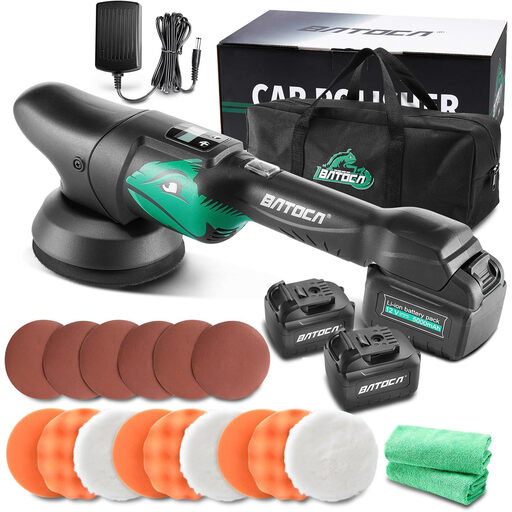
Why it suits this user: The larger 125 mm polishing pad and speed display are well suited to users who regularly work on larger areas of bodywork.
The six speed settings and soft start, according to the product specifications, give you more control than a machine with a single fixed speed.
Two 5 Ah batteries according to the product description, an LCD display and an 8 mm orbital movement.
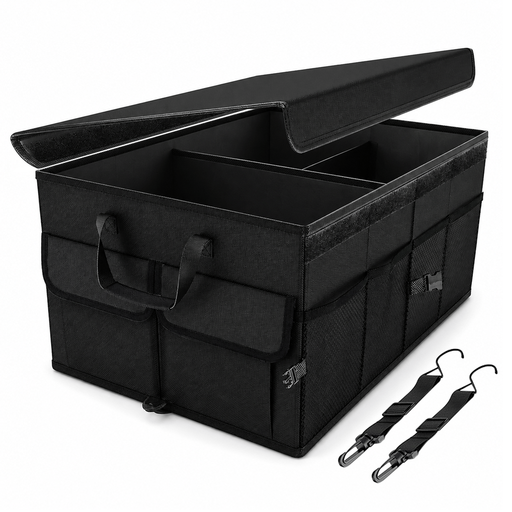
Why it suits this user: A good choice if you want to keep cleaning products, shopping or emergency supplies separate in the boot, without leaving the box there permanently.
According to the product information, the box has three main compartments, adjustable dividers, a lid and straps. This helps keep loose items separate and secure the box in place.
60-litre capacity, 600D Oxford fabric, reinforced panels and a foldable design according to the product specifications.
We’ve put together a complete, up-to-date list of products that meet these strict selection criteria and the applicable European safety regulations.
For fine polishing work, consider a set with different foam and wool pads. According to the product information, the eight-piece set includes five waffle pads, a synthetic wool pad, an M10 adapter and an adhesive polishing backing plate. Always check the maximum speed and use a separate pad for each product.
A window cleaning kit can come in handy for glass and mirrors. The Alpina set includes a telescopic handle measuring 57 to 130 centimetres, a squeegee, a window washer and two microfibre cloths. It isn’t specifically marketed for cars, but it can be useful for large glass surfaces. When cleaning glass, use a clean cloth so you don’t drag grains of sand across the surface.
Start with microfibre cloths, a mild cleaner, a soft brush and a bucket, and consider adding an organiser. Only add a car polisher and polishing pads once you know what kind of paint treatment you want to carry out.
It depends on the battery, pad size and working speed. A cordless polisher is convenient as you won’t need an extension lead, but check the stated run time and have a charged spare battery ready for longer jobs.
Their lifespan depends on the pressure, speed, dirt and how well they’re maintained. Rinse brushes after use, let pads and brushes dry completely, and replace them when the bristles become misshapen, the foam is damaged or dirt can no longer be removed properly.
