
Vandaag of morgen in huis

Kwaliteit gegarandeerd

Welkomstaanbiedingen ontgrendelen: GRATIS bezorging | Tot 80% korting | Gratis 30 dagen JoyPlus-proefperiode
Download de app
A car dash cam can be useful in the event of a collision, parking damage or a dispute about what happened. However, an expensive model isn’t automatically right for you. Manufacturers often focus on 4K, smart features and night vision, while less prominent details can be just as important.
Look out for these common pitfalls:
A 4K dash cam records more pixels than a Full HD model. This can help when reviewing number plates and road signs, but the final image quality also depends on the sensor, lens, compression, exposure and positioning.
A dash cam with Sony STARVIS 2 uses a sensor series that, according to the relevant brands’ product information, is designed to perform better in low light. Don’t take this as a guarantee of sharp footage in every night-time situation. Clean windows, correct exposure and a well-adjusted viewing angle are still important.
Also check how the cameras work together. For example, a dual dash cam might offer 4K at the front and 1080p at the rear. That’s different from a system with the same resolution at the front and rear.
A dash cam with night vision needs to cope with headlights, street lighting and dark roads. HDR can help expose light and dark areas more effectively at the same time. Brands may also use their own image-processing algorithms. Treat performance claims with care: according to a brand’s own testing or product information, these technologies may improve low-light recording, but results in practice depend on speed, reflections in the windscreen and ambient light.
Check the aperture value too. A lens with, for example, F1.8 lets in relatively more light. This is a verifiable specification, but it doesn’t guarantee good night-time footage on its own.
With loop recording, old, unlocked video files are overwritten when the card is full. This means you don’t have to delete files manually every day. A G-sensor can detect a sudden impact or collision and lock a clip.
Do check regularly that the card is still working properly. Use a microSD card that meets the manufacturer’s requirements and format it according to the instructions. A large storage capacity isn’t always enough if the card isn’t fast enough to record from the front and rear cameras at the same time.
The models below are matched to different situations. The features listed are based on the product information provided. Always check the current contents of the box, compatibility and required accessories before buying.
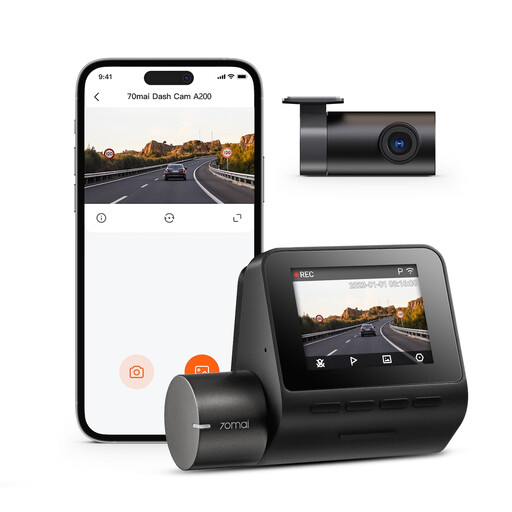
Why it suits this profile: This straightforward front and rear dash cam is for drivers looking for basic coverage without opting straight away for a system with multiple cameras.
The product information clearly states that this is a dual-channel set and that the microSD card isn’t included. This lets you factor in the cost of storage in advance.
1080p recording at the front and rear, 60 fps at the front, HDR, G-sensor, Wi-Fi and control via the 70mai app.
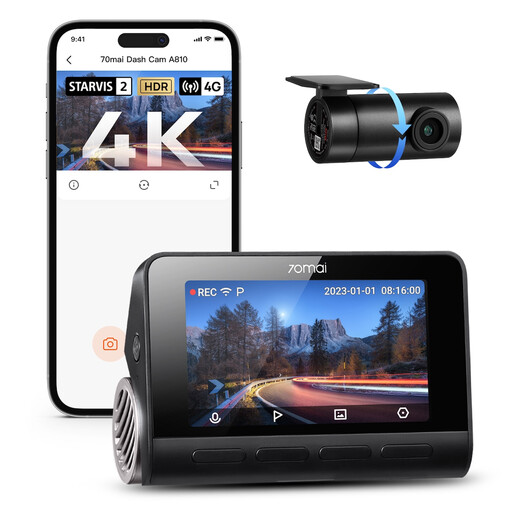
Why it suits this profile: A good choice for commuters and families who drive a lot and value high front resolution, GPS and an additional rear camera.
The specifications distinguish between 4K at the front and 1080p at the rear. Check separately whether a microSD card and hardwire kit for parking features are included.
4K front camera, 1080p rear camera, Sony STARVIS 2 sensors according to the product information, built-in GPS and Wi-Fi/app features.
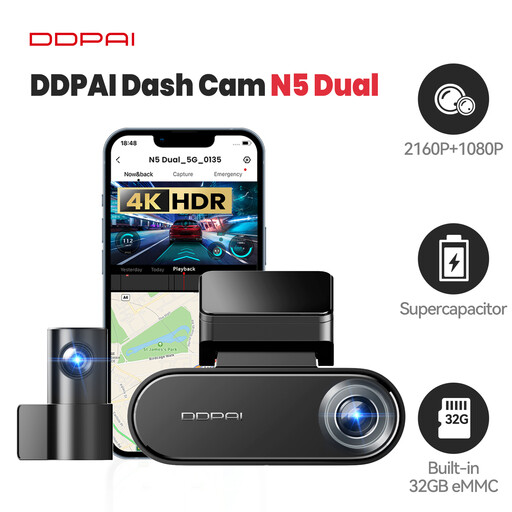
Why it suits this profile: A good option for professional drivers, long-distance motorists and vehicle owners who need fast file transfers and multiple storage options.
As well as built-in storage, this model supports an external microSD card, according to the specifications. Parking mode does require a hardwire kit, which is sold separately.
4K front recording, 1080p rear recording, 32 GB eMMC, support for up to 512 GB microSD, GPS, 5GHz Wi-Fi, app and G-sensor.
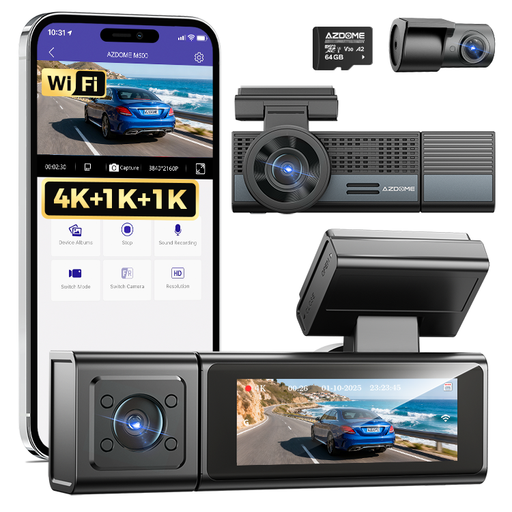
Why it suits this profile: A 3-channel system is designed for anyone who wants to record the inside of the car as well as the road ahead and behind.
The channel layout is clearly stated: 4K at the front and 1K for both the interior and rear. A 64GB card is also included, according to the product information.
Three cameras recording simultaneously, 4K front camera, Wi-Fi, app, GPS, night vision and parking surveillance according to the product description.
We’ve put together a complete, up-to-date list of products that meet these strict selection criteria and the applicable European safety regulations.
Position the front camera so it doesn’t obstruct your view of the road, with the lens roughly in the middle of the windscreen. Check that the camera doesn’t block your view. Tuck cables along the edge of the roof lining and make sure they don’t interfere with the airbags.
A hardwire kit is often needed for parking surveillance. Make sure a connection to the fuse box is installed carefully and check whether the kit protects against low battery voltage. If you don’t drive your vehicle often, extended parking recording may put a strain on the battery.
Footage may contain personal data, such as number plates and faces. Use recordings only for their intended purpose and don’t share them publicly unless necessary. If there’s an incident, it may be worth checking first what information the insurer, police or another party involved needs.
Not always. A single front camera may be enough for drivers who mainly want to record the road ahead. A dash cam with a rear camera is more useful for rear-end collisions, parking damage and situations where what happened can’t be seen from the front alone.
Its lifespan depends on heat, how long it’s used, its power supply, memory card and build quality. According to the product information, a model with a supercapacitor may handle sudden power loss better than a system that relies solely on a small internal battery. Check the card regularly and replace it if you get error messages or find damaged files.
In addition to the purchase price, a microSD card, hardwire kit, installation and any 4G services can add to the cost. Wi-Fi and an app are usually intended for local file transfers and don’t automatically require a subscription. For remote alert features, check whether you need a separate module, SIM card or data connection.
