
Vandaag of morgen in huis

Kwaliteit gegarandeerd

Welkomstaanbiedingen ontgrendelen: GRATIS bezorging | Tot 80% korting | Gratis 30 dagen JoyPlus-proefperiode
Download de app
A flat phone battery during a long journey, a failing starter battery or an electric car that does not charge quickly enough at home: a car charger can prevent a great deal of inconvenience. However, not every charger is suitable for every car or device. High wattages, universal compatibility and smart features are sometimes presented more broadly than the technical specifications justify.
This buying guide explains what to look for in a 12V car charger, fast USB-C charger, car jump starter or electric vehicle charger.
A 45W, 90W or even 160W charger only delivers that output under specific conditions. The car socket, fuse, charging protocols and connected devices determine how much power is actually available. For example, the ATSHARK K006S states that its output may be limited by the car’s fuse capacity.
Therefore, check:
A USB-C car charger charges phones, tablets or certain laptops via a 12V or 24V socket. An electric vehicle charger, on the other hand, uses a Type 2 connection and much higher charging capacities.
A 7 kW charging point usually operates on a single phase. An 11 kW wallbox generally uses three phases at 16A per phase. A 22 kW EV charger also requires a suitable three-phase connection, as well as a car that supports this output. Always check your electric car’s onboard charger, your consumer unit and the available mains connection.
IP65 or IP66 indicates a level of protection against dust and water under defined conditions. It does not mean that a device can be used safely in a puddle, underwater or without correct installation. Also check the cable, plug, mounting height and the manufacturer’s instructions.
For a permanently installed wallbox, installation by a qualified professional is advisable. The consumer unit, residual-current protection and cable cross-section must be suitable for the charging capacity.
A USB-C car charger is useful for modern smartphones, tablets and some laptops. Pay attention to the difference between a USB-C port and a USB-C cable: both must support the desired output. A charger with multiple ports may distribute its total output across the connected devices.
For families and commuters, a car charger with multiple ports is practical. Two USB-A ports are sufficient for phones, while several USB-C ports are better suited to newer devices. A compact 12V car charger also helps prevent unnecessary strain on the socket or dashboard.
When choosing a Type 2 EV charger, look at:
A portable EV charger is suitable if you want to charge at different locations. A permanently mounted wallbox is more convenient for everyday use at home. A smart charging point with an app may offer features such as charging schedules, current settings, charging history and notifications. These features are only useful if Wi-Fi coverage, app support and installation are properly set up.
A car jump starter must be suitable for the type of vehicle. Check whether the device is suitable for 12V petrol and diesel engines and look at the stated peak current. A car battery booster is not a replacement for a well-maintained battery; keep it charged and follow the connection sequence in the manual.
A combined device with a car tyre inflator can be useful for journeys and outdoor activities. Pay attention to the maximum pressure, hose length, charging method and weight. A higher PSI rating does not automatically mean that the device inflates more quickly: airflow and ease of use are also important.
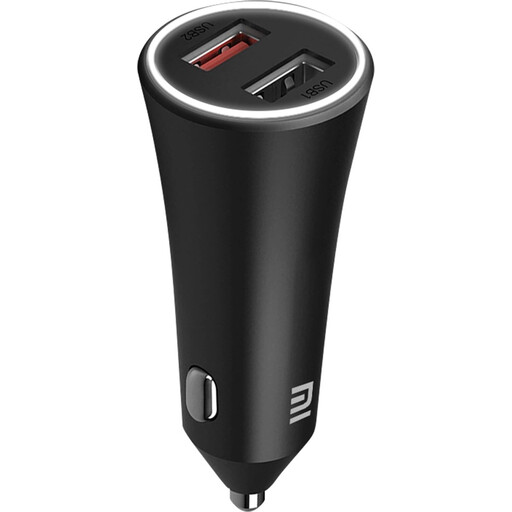
Why it suits this profile: A straightforward choice for motorists who want to charge two devices simultaneously via USB-A without a bulky accessory in the car.
The product specification clearly states that it has two USB-A ports and a total output of 37W. Bear in mind that USB-C devices require a suitable cable or adaptor.
12-24V input, two ports, 37W total output and a compact metal design, according to the product description.
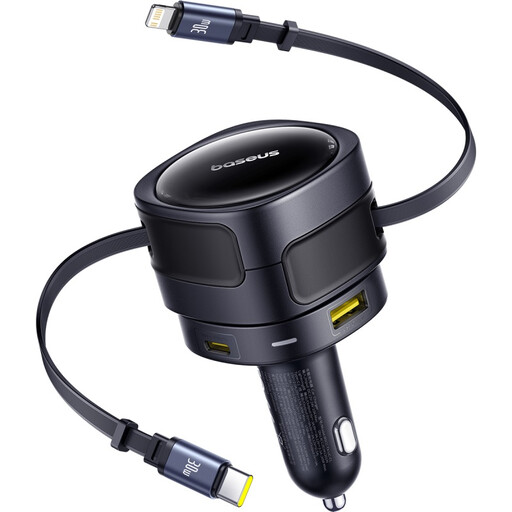
Why it suits this profile: Suitable for drivers who want to combine multiple devices and connections during the commute or long family journeys.
The power distribution is specified clearly: up to 30W per built-in cable or USB port, with a total of up to 90W depending on the combination used.
Two built-in cables, USB-C and USB-A output, 12-24V input and a stated total output of up to 90W.
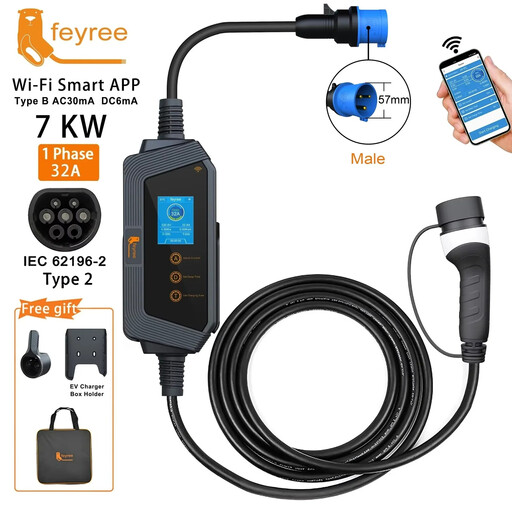
Why it suits this profile: A practical solution for EV and plug-in hybrid drivers who want to charge using Type 2 at home or while travelling, with adjustable current settings.
The output is specified as 7kW with a maximum of 32A and adjustable current levels. This makes it clear that the car and electrical installation also influence charging speed.
Type 2 according to IEC 62196-2, five-metre cable, IP66, adjustable current and control via a Tuya app, according to the product information.
We have put together a complete, up-to-date list of products that fully meet these strict selection criteria and the applicable European safety regulations.
For a phone, a USB-C charger with USB PD is often suitable, provided that your phone and cable support this protocol. USB-A may be sufficient for older devices. Always check the charging protocol and output per port. A 12V or 24V socket must also be suitable for the vehicle.
An 11 kW wallbox usually requires a three-phase connection and suitable protection in the consumer unit. Connecting it yourself can create risks and may affect safety and the warranty. Have the installation assessed and carried out by a qualified installer in accordance with local regulations.
Its service life depends on storage temperature, charging frequency and maintenance. Charge the device according to the manual, store it in a dry place and check the charge level before setting off. A jump starter that is stored completely flat for a prolonged period may lose capacity.
