
Vandaag of morgen in huis

Kwaliteit gegarandeerd

Welkomstaanbiedingen ontgrendelen: GRATIS bezorging | Tot 80% korting | Gratis 30 dagen JoyPlus-proefperiode
Download de app
A flat smartphone battery on a long car journey is frustrating, but choosing the wrong car charger can also waste your money. A high wattage on the packaging doesn’t automatically mean your phone will charge faster. Ports, cables and your car’s power supply can all limit performance.
Pay particular attention to these three common pitfalls:
Read on to find out which specifications matter and which models are suited to different needs.
Most cars have a 12V socket. Lorries, motorhomes and some commercial vehicles use 24V. So a 12V car charger won’t necessarily be suitable for every vehicle.
Models with a DC 12–24V input offer greater flexibility. Examples include various PAVAREAL and Baseus models in the range. Even so, check your vehicle’s manual and the product specifications before ordering.
Power is measured in watts. For a smartphone, 20W to 30W is often enough for a quick charge, while a tablet or laptop may need more power. A PD fast car charger uses USB Power Delivery via USB-C. Check whether your device supports this protocol.
It’s worth distinguishing between:
A USB-A charger can be a good choice for older cables and accessories. For recent iPhones, Samsung phones and laptops, a USB-C car charger with PD is often more practical. Check the cable, too: one with a low power rating can limit charging speed.
A multi-port car charger is handy for families or commuters who want to charge a phone, sat nav and tablet at the same time. Check whether you need USB-A, USB-C or a built-in cable.
A built-in or retractable cable saves space, but make sure it’s compatible with your device. According to Oxerbog’s product information, the included Type-C cable is designed for iPhone 15, 16 and 17 series and Android devices; it isn’t suitable for iPhone 14 or older models.
Choose a model with a secure fit and use the charger according to the instructions provided. Bear the following points in mind:
A CE or RoHS marking can provide useful information about documentation and compliance, but it doesn’t replace checking the product specifications and instructions for use.
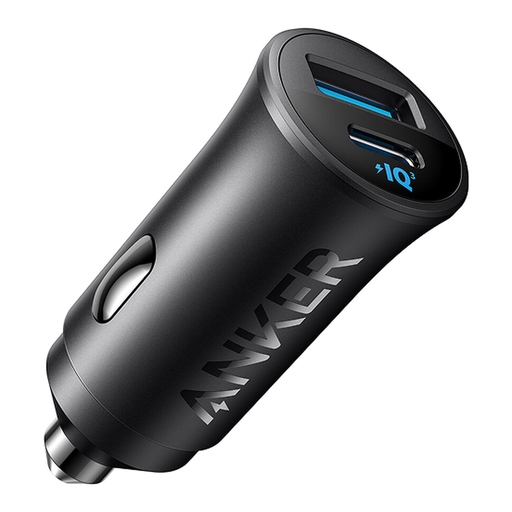
Why it suits this user: With two USB ports and a total output of 30W, it’s a straightforward choice for everyday use with a smartphone and a second USB device.
The product information clearly states the total output and number of ports. This makes it less likely that you’ll expect a high individual output that isn’t available.
30W total output, two USB ports and a compact casing. The product description says it has built-in protection against overcharging, overheating and short circuits.
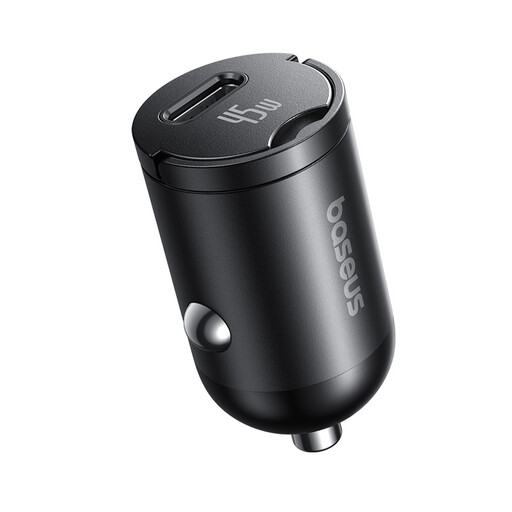
Why it suits this user: A good fit if you’re looking for a USB-C car charger for a smartphone, tablet or compatible laptop, and value having a cable included.
The USB-C output is rated up to 45W, and the product information states that the input supports DC 12–24V. Check that your laptop supports USB-C charging.
USB-C output up to 45W, suitable for 12V and 24V sockets, and supplied with a 1-metre USB-C to USB-C cable.
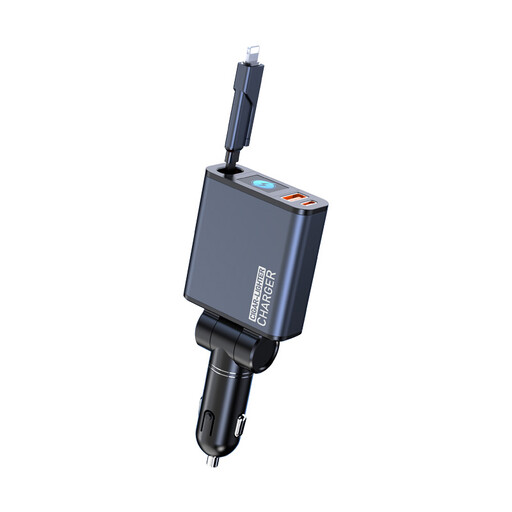
Why it suits this user: A practical option for travellers or families who use several devices at once and appreciate built-in retractable cables.
The product information specifically notes that the actual output may be limited by your vehicle’s fuse. Check your vehicle’s manual before using it at high power.
According to the product information, it has two USB-C ports, one USB-A port, two retractable cables and supports 12V/24V input.
We’ve put together a complete, up-to-date list of products that meet these strict selection criteria and the applicable European safety requirements.
It depends on the port, cable and charging standard. A USB-C car charger with USB Power Delivery may be suitable for many recent iPhones and Samsung phones, but always check the product specifications for both the charger and your cable.
Yes, if your laptop supports USB-C Power Delivery and the charger provides enough power. Check your laptop’s required wattage. A 20W charger is generally intended for smaller devices; some laptops need a higher output.
A plugged-in adapter may use a small amount of power, depending on the model and the car. Unplug the charger if your vehicle will be parked for an extended period, especially if the instructions recommend doing so.
