
Vandaag of morgen in huis

Kwaliteit gegarandeerd

Welkomstaanbiedingen ontgrendelen: GRATIS bezorging | Tot 80% korting | Gratis 30 dagen JoyPlus-proefperiode
Download de app
A phone running out of charge on a long journey, a tablet losing power on the way or a laptop that isn’t getting enough power: a car charger may seem simple, but there are big differences between models. Don’t just look at a high wattage or terms such as “fast charging”. The connection, power distribution and compatibility with your vehicle all affect how well a charger works in practice.
This buying guide helps drivers, commuters, travellers and motorhome or lorry drivers choose the right charger. We look at specific specifications, connections and use cases.
A USB car charger rated at, say, 100W or 160W won’t necessarily deliver all that power to a single connected device. When you connect several devices, the available power is shared between them. So check:
A high wattage is most useful when the car, cable and connected device are all compatible.
USB-C describes the shape of the connector, not the charging speed. A USB-C car charger may support USB Power Delivery, but this should be stated explicitly in the specifications. For a laptop, for example, a PD car charger with sufficient output power is more practical than a basic USB-A port.
Check the cable, too. A cable with a lower power rating can limit charging performance.
Most cars use a 12V socket. Some lorries, motorhomes and other vehicles use 24V. So a 12V car charger or 24V car charger needs to be compatible with your vehicle’s voltage.
Check the size as well. A wide adapter could get in the way of buttons, the gear stick or a storage compartment. A compact car charger is often more convenient in a smaller car, while a model with built-in cables can reduce the number of loose cables in the cabin.
For a smartphone, 20 to 30W is often enough for fast charging, depending on the model. Tablets and laptops need more power. Look for specific standards such as:
So a fast car charger isn’t simply a product with a high wattage. The protocol, cable and device all play a part. According to the manufacturer’s product information, the ATSHARK K006S supports several charging protocols, including PD and QC. This information comes from the brand and should be treated as a product specification, not as a guaranteed charging speed for every device.
A multi-port car charger is useful for passengers, families and business journeys. USB-A is still handy for older cables, while USB-C is better suited to many recent phones, tablets and laptops.
A model with a built-in cable can be practical, but check the connector carefully. For example, a cable for USB-C devices won’t necessarily work with older iPhone models that have a different connector. When choosing an iPhone car charger, the connection on your specific iPhone matters more than the brand name alone.
Check whether the charger is suitable for 12V, 24V or both. The car’s fuse may also limit the maximum charging capacity. For example, the ATSHARK K006S product information warns that the vehicle’s fuse can restrict the available power.
A charger may get warm during high-power charging, but stop using it if the casing is damaged, the cable is frayed or the connection is loose. Keep the ports dry and position the adapter so that it doesn’t get in the way of the controls.
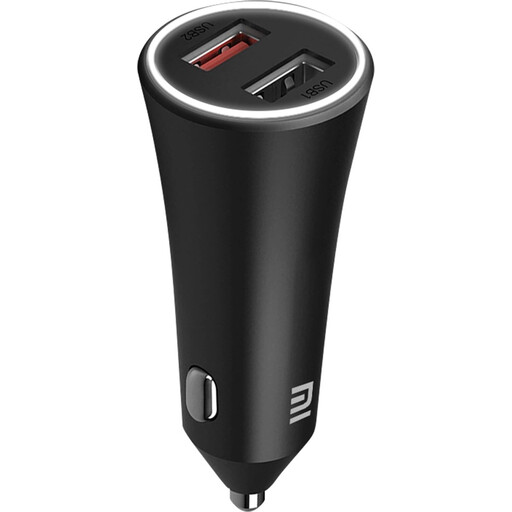
Why it suits this user: A straightforward choice if you want to charge two smartphones or USB devices at once, without extra cables or complicated settings.
The specifications list two USB-A ports and 37W of total power. That makes it clearer what you’re getting than a charger that only makes a general fast-charging claim.
Two USB-A outputs, 37W total power, a compact design and 12V-24V support according to the product information.
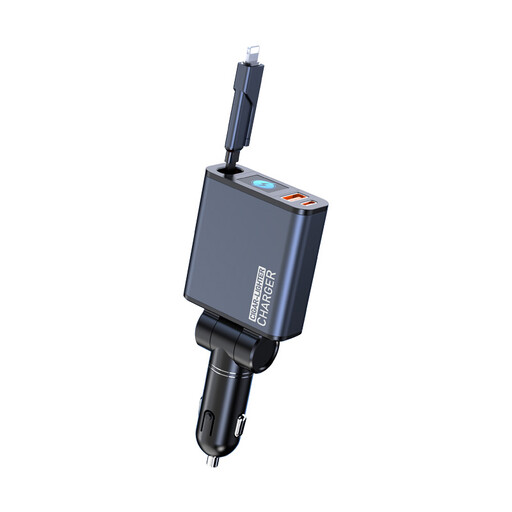
Why it suits this user: Ideal for drivers using several devices, such as smartphones, tablets and a laptop on longer journeys.
The product description lists the total power, two USB-C ports, one USB-A port and 12V-24V support. The built-in cables help reduce the number of loose cables in the cabin.
160W total according to the manufacturer, three ports, two 90 cm retractable cables and a 100W E-Marker cable included.
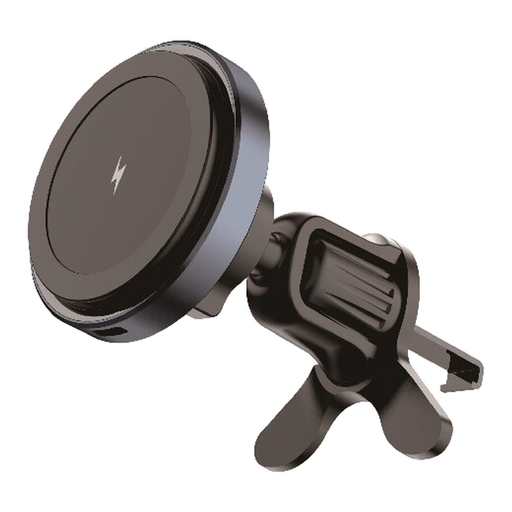
Why it suits this user: Handy if you want to combine navigation and charging with a wireless phone mount in your car, SUV or lorry.
The specifications explicitly list 5W, 7.5W, 10W and 15W, as well as the required USB-C power supply. According to the product information, an 18W PD charger or higher is recommended for 15W charging.
Wireless magnetic charging, 360° adjustability and support for MagSafe-compatible phones and cases.
We’ve put together a full, up-to-date list of products that meet these strict selection criteria and the applicable European safety regulations.
Only if the product information says so. Models with a 12V-24V input are designed for this, but always check your vehicle’s specifications. Don’t assume a 12V model can be used in a lorry or motorhome with a 24V system.
Its lifespan depends on heat, moisture, strain on the cable and how often you use it. Don’t pull a built-in cable out further than the stated length, and don’t use a charger if its casing or cable is damaged. Store loose cables without sharp bends and keep the ports clean.
No. A wireless car charger requires a phone that supports wireless charging. Magnetic attachment also only works properly if the phone or case is suitable. So check both wireless charging and magnetic compatibility before buying a wireless car charger.
