
Vandaag of morgen in huis

Kwaliteit gegarandeerd

Welkomstaanbiedingen ontgrendelen: GRATIS bezorging | Tot 80% korting | Gratis 30 dagen JoyPlus-proefperiode
Download de app
A dead phone or laptop battery on the road is more than just an inconvenience; it can disrupt your entire schedule. A good car charger, therefore, isn't a luxury—it's an essential car accessory. However, the market is flooded with options that promise a lot but deliver little. Many chargers are slow, get dangerously hot, or break after just a few months.
As a Joybuy Product Recommendation Officer, I'll help you see through the marketing jargon. In this guide, we'll cover the most common pitfalls and the specifications you really need to pay attention to, ensuring you choose a charger that is both reliable and safe.
Before you make a purchase, it's crucial to recognise the common issues that lead to a bad buy.
To avoid the pitfalls mentioned above, focus on the following objective specifications. These determine the performance and safety of your car charger.
The total power output, measured in Watts (W), is the most important indicator of charging speed. A simple rule of thumb:
Check that the charger supports the specific fast-charging protocols your devices use. A charger with USB-C and PD support is the most future-proof choice.
Consider your use case. Do you often drive alone or with passengers? What devices will you be charging?
A reliable car charger must have built-in protection against overcurrent, overvoltage, and short-circuiting. A CE mark is a basic requirement here. Materials like aluminium or high-grade polycarbonate (PC) dissipate heat more effectively than cheap ABS plastic, making the charger safer and more durable. For specific applications, like a permanent dash cam power supply, a stable and safe power delivery is crucial to avoid unnecessarily draining your car's battery.
Below is a selection of products matched to specific user profiles. These aren't 'winners', but practical solutions for different needs, based on their specifications.
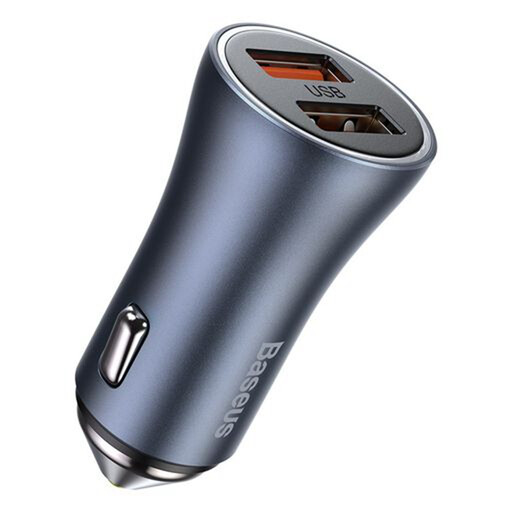
Why it's a match: Ideal for those who need a reliable, no-nonsense charger to fast-charge a phone while powering another device simultaneously. Compact and functional for daily use.
Delivers an honest 20W per port, enough to fast-charge most phones. The aluminium casing ensures good heat dissipation, preventing overheating.
Two powerful ports in a compact design. The included USB-C cable makes it a complete set.
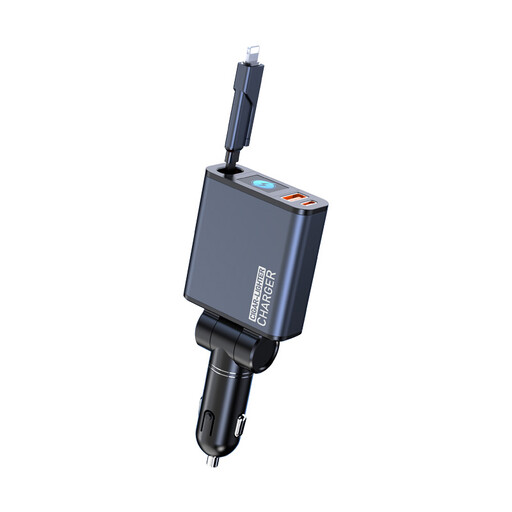
Why it's a match: For the professional who uses their car as a mobile office. This charger has enough power to charge a laptop, tablet, and phone simultaneously, without compromise.
With a total output of 160W and support for QC5.0, this is a true powerhouse that delivers on the promise of a car laptop charger. The retractable cables prevent a tangle of loose cords.
Extremely high power output and built-in retractable cables for a tidy interior. Effortlessly charges multiple power-hungry devices at once.
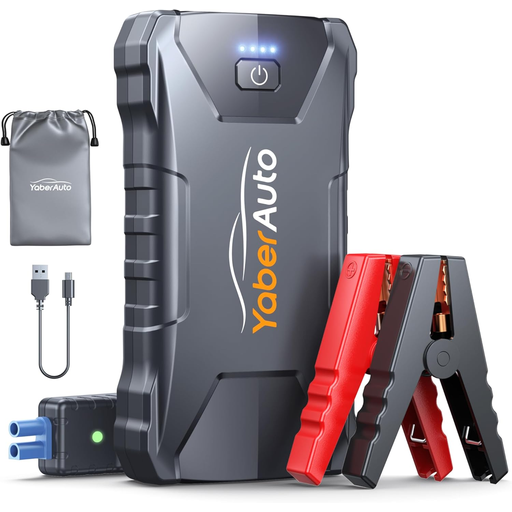
Why it's a match: For those who want to be prepared for more than just a dead phone. This is not just a power bank, but also a jump starter for when your car battery dies. A complete car emergency kit in one.
This product goes beyond a simple charger. It solves the fundamental problem of a dead car battery, so you'll never have to wait for roadside assistance again. Its built-in safety features prevent incorrect use.
Multifunctional: serves as a jump starter, a power bank for your devices, and an LED flashlight. An investment in peace of mind on the road.
We've compiled a complete, up-to-date list of products that fully meet these strict selection criteria and safety regulations.
1. How many watts do I need for my car charger? For a modern smartphone, 30W is a good benchmark for fast charging. If you also want to charge a laptop, look for models with 65W or more. For simply topping up a phone while driving, 15-20W can be sufficient.
2. Can a car charger drain my car battery? When the car's engine is running, this isn't a problem. The alternator continuously recharges the battery. If you use the charger while the engine is off, it can indeed slowly drain the battery. However, most modern cars cut power to the 12V socket when the engine is off. Chargers with built-in voltage protection, like those used for a permanent dash cam power supply, will shut themselves off before the battery gets too low.
3. What's the difference between a cheap and an expensive car charger? The difference lies mainly in three areas: power, safety, and build quality. More expensive chargers often offer higher and more stable power output, support more fast-charging protocols, and have advanced safety circuits to protect your devices and your car. They are typically made from better, heat-resistant materials, which improves their lifespan and safety.
