
Vandaag of morgen in huis

Kwaliteit gegarandeerd

Welkomstaanbiedingen ontgrendelen: GRATIS bezorging | Tot 80% korting | Gratis 30 dagen JoyPlus-proefperiode
Download de app
Replacing a broken headlight, a dim fog light or a worn-out tail light might seem straightforward. Yet motorists often end up buying the wrong car bulbs. A bulb may appear to have the same fitting, but still not fit due to the light function, connector, CAN-bus or the available space inside the headlight housing.
What’s more, marketing claims such as “500% brighter” or “lasts 60,000 hours” don’t tell the full story. Those figures usually come from the brand’s product description and say little about the light distribution in your headlight. So it’s best to focus on verifiable specifications and legal applicability.
An H7 bulb will only fit in a socket designed for H7. But that doesn’t automatically mean every H7 bulb is suitable for every vehicle. The available space, mounting, connector and onboard computer can all differ.
With H7 car bulbs, you therefore need to check:
A higher light output doesn’t automatically mean a better result. Your car’s reflector and lens work together with the bulb to create the beam pattern. An LED bulb that physically fits can produce an incorrect beam pattern or dazzle oncoming traffic.
According to their own product descriptions, some LED headlights claim higher light output, a long service life and a correct 1:1 light distribution. Check for yourself whether the bulb is approved for your headlight unit, and have the beam checked after installation.
With halogen bulbs, the colour and light intensity often change gradually. If you replace just one bulb, the left and right sides can look noticeably different. A set of 2 car bulbs is therefore practical for headlights. This way, the light colour and output stay the same on both sides.
The fitting is the first thing to select. Commonly used types include:
Always check your car’s manual or the existing bulb. If in doubt, a vehicle check using the manufacturer’s data is safer than relying on a general “universal” claim.
Halogen bulbs usually give a warm white to light yellow light. LED headlights are often available around 6000 to 6500 kelvin, which makes them appear cooler or whiter. However, a higher kelvin value doesn’t automatically mean you’ll see further.
An example is the OSRAM NIGHT BREAKER 220 H11. According to the product description, this halogen bulb has a colour temperature of 3750 kelvin, a stated light output of 1350 lumens and a beam reach of up to 150 metres. The claim of up to 220% more brightness is based on a comparison with the legal minimum standard, according to OSRAM’s product information.
Check whether the bulb is suitable and approved for your vehicle, function and country according to the manufacturer. For halogen bulbs, ECE R37 and ECE R112 are relevant markings, depending on the bulb type and application. An aftermarket LED bulb may technically fit, but it won’t automatically be legally suitable for every headlight unit.
When fitting, pay attention to the following:
With LED fog lights and LED headlights that have a fan, there must also be enough space behind the housing. Too little space can hinder installation or cooling.
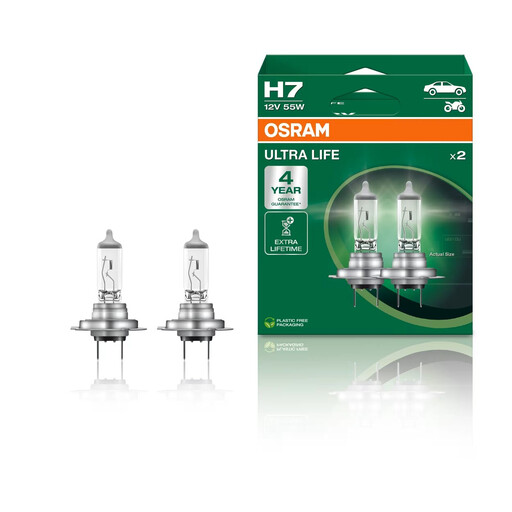
Why this fits the profile: A direct H7 replacement for anyone who doesn’t want an LED upgrade or extra electronics.
The specification lists a standard H7 fitting and 55 watts. Just check that your car actually uses H7.
Set of two, 55 W and, according to the product description, a service life of up to four times that of standard halogen bulbs.
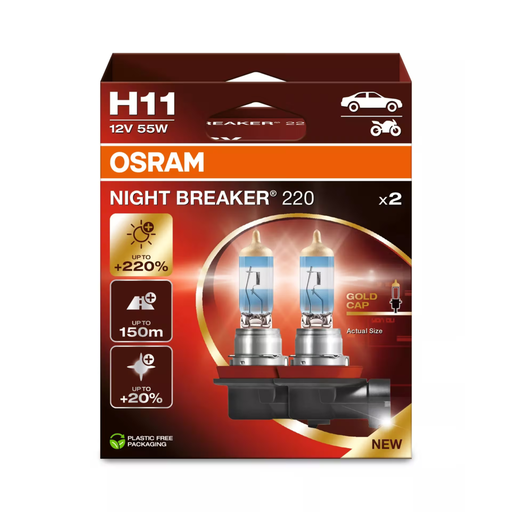
Why this fits the profile: For drivers who want to stick with halogen and are looking for a whiter light output.
The H11 fitting and application must be checked in advance using the current OSRAM compatibility list.
3750 kelvin, 55 watts, 1350 lumens and a pack containing two H11 bulbs, according to the product data.
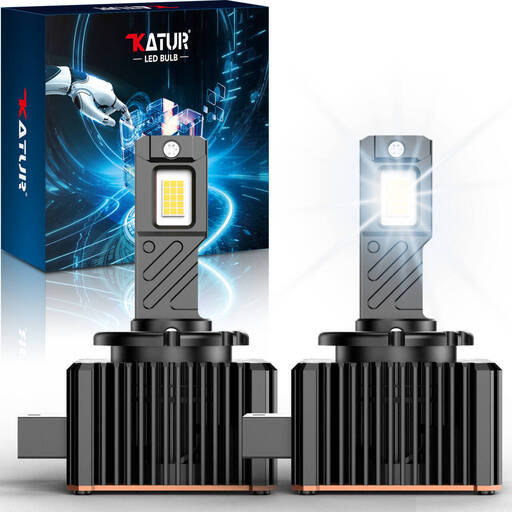
Why this fits the profile: Aimed at vehicles with an existing HID/D3S or D3R headlight unit.
The product description explicitly states that this bulb is only intended as a replacement for HID, not for halogen or LED units.
6500 kelvin, set of two and a 1:1 plug-and-play design according to the product information.
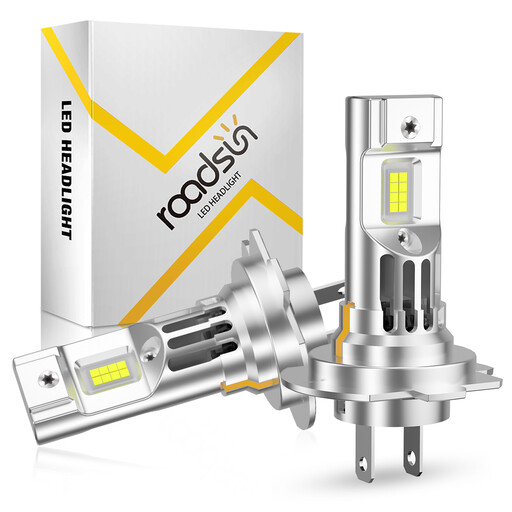
Why this fits the profile: For those who want to fit them themselves and are after a cool white light colour, provided the vehicle compatibility is correct.
The description mentions a built-in fan, but also warns that a CAN-bus decoder may be needed for some European vehicles.
H7 fitting, 6500 kelvin, IP68 rating according to the product information and a set of two.
We’ve put together a full, up-to-date list of products that fully meet these strict selection criteria and comply with current European safety regulations.
Check the fitting on the old bulb, in the manual or via the manufacturer’s compatibility finder. Also look at the light function and the type of headlight unit. An H7 bulb is not automatically suitable for every car with a similar connector.
Not always. The LED bulb must physically fit, cool properly and produce a suitable beam pattern. Error messages, flickering or issues with legal approval can also arise. So check the vehicle list, the light function and the relevant approval before fitting LED headlights or LED fog lights.
The service life depends on the type of bulb, vibrations, heat, hours of use and the electrical system. Halogen bulbs are generally easier to replace, while LED bulbs can last longer according to brand claims. Treat stated values, such as 50,000 or 60,000 hours, as manufacturer product specifications and not as a guaranteed service life in every car.
