
Vandaag of morgen in huis

Kwaliteit gegarandeerd

Welkomstaanbiedingen ontgrendelen: GRATIS bezorging | Tot 80% korting | Gratis 30 dagen JoyPlus-proefperiode
Download de app
A flat 12V battery usually happens at the worst possible time: on a cold morning, during a camping trip or in a remote car park. With a car battery jump starter, you can sometimes start the engine yourself, without relying on another car or breakdown assistance. However, portable jump starters vary considerably in power, connections and ease of use.
A high peak current sounds appealing, but it doesn’t tell you everything about whether a model is suitable. Check which engine size and fuel type the model is designed for, according to its product specifications. A jump starter for an 8-litre petrol engine isn’t automatically suitable for every diesel engine.
Also check the difference between peak current and continuous current. Peak current is used briefly when starting the engine. Manufacturers don’t always list this figure using the same testing method, so you shouldn’t compare models based on their amp rating alone.
Lithium batteries gradually lose their charge. After several months in a cold or very hot car, a model may not have enough power left. Check the battery level regularly and follow the charging schedule in the manual. Some manufacturers recommend recharging the battery after long periods in storage to maintain its capacity.
A jump starter with a compressor is handy for topping up a car tyre, bicycle tyre or ball. However, the compressor won’t repair a puncture, and its speed and maximum pressure vary between models. Check the airflow in litres per minute, the maximum pressure in psi and whether it has an automatic shut-off function.
Most portable car jump starters are designed for vehicles with a 12V lead-acid battery. Check your car’s handbook to confirm this. A jump starter isn’t designed to power electric vehicles and can’t simply be connected to every type of battery.
Next, compare the stated engine support:
Where possible, choose a model with protection against reverse polarity, short circuits, overheating, overcharging and sparks. These features offer practical protection if the unit is connected incorrectly or used for an extended period. They don’t make a device risk-free: don’t use it if the cables are damaged, the battery is leaking or the casing is cracked.
Check the length and quality of the clamps, too. Metal clamps and thicker cables can be useful when the battery terminals are difficult to reach. Only use the smart jump leads supplied if the manufacturer requires you to do so.
Battery capacity is often listed in mAh, but Wh gives you a better idea of the actual energy stored. A jump starter power bank with USB-C or USB-A can charge phones, tablets or navigation devices. Check whether a charging adapter is included, too. Some models come with a USB cable only.
A compact portable car charger fits easily in a glovebox. A heavier model often provides more starting power or extra features, but takes up more space. A storage case helps keep the cables and accessories together.
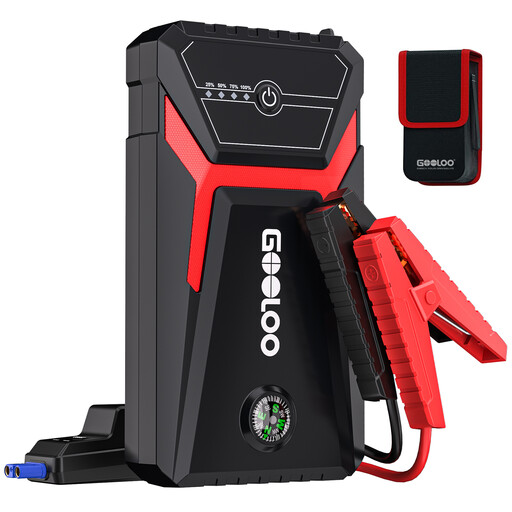
Why it suits this use: This model is designed for drivers looking for a compact 12V emergency jump starter for a car, motorbike or motorhome.
The limits are clearly stated: according to the product information, it supports 6.0-litre petrol engines and 4.0-litre diesel engines. This lets you check engine compatibility in advance.
1500A peak current, two USB ports, a 400-lumen light and ten stated safety features.
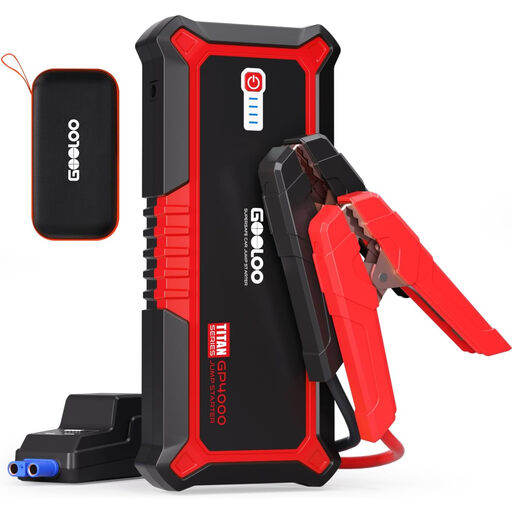
Why it suits this use: Suitable for drivers of larger vehicles who value extra starting power and a robust casing.
The product information separately lists support for all petrol engines and diesel engines up to 10.0 litres. Always check this against your vehicle details.
4000A peak current, BOOST function, USB and Type-C connections, metal clamps and a storage case.
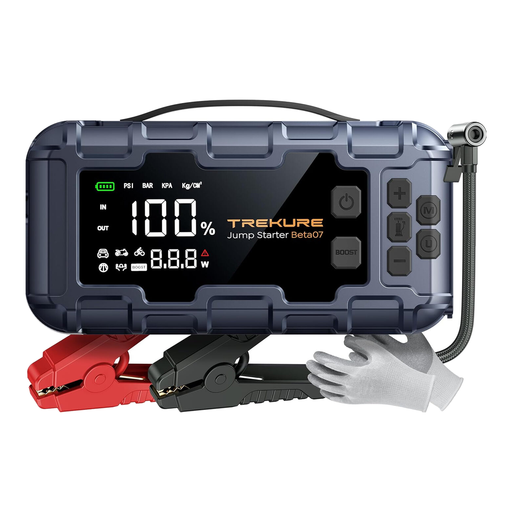
Why it suits this use: For owners of SUVs, motorhomes and commercial vehicles who also want to top up their tyres and charge devices while on the road.
According to the product information, the compressor has an LCD display, automatic shut-off and a stated maximum pressure of 160 psi. This gives you more detail than simply saying “with compressor”.
6000A peak current, 160PSI compressor, 45W USB-C, two USB-A ports and 600-lumen lighting.
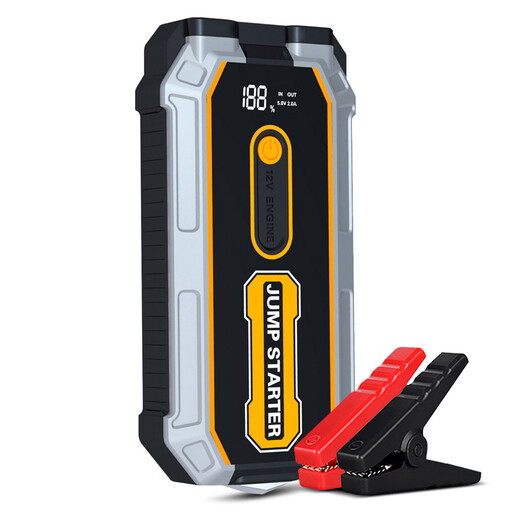
Why it suits this use: A practical choice for drivers and motorcyclists with limited space in their car or rucksack.
Its dimensions and weight are clearly stated: approximately 330 grams and 165 × 84 × 30 mm. You’ll know exactly what you’re carrying in your car.
1200A peak current, 12800mAh battery, LCD display, USB output and three light modes.
We’ve put together a complete, up-to-date list of products that meet these strict selection criteria and the applicable European safety regulations.
No. Check the 12V compatibility, engine type and maximum engine capacity. A car may not start if the battery is damaged, the cables are connected incorrectly or the model doesn’t provide enough starting power.
Its lifespan depends on charging cycles, storage temperature and maintenance. Recharge the device periodically, even when you’re not using it, and follow the brand’s instructions. Don’t use a lithium battery if it’s swollen, leaking or damaged.
The device draws power from its built-in battery, so there are no fuel costs. Your main cost is the electricity used to recharge it via USB-C, a car socket or the supplied adapter. The capacity, charging speed and compressor power determine how often you can use its features before it needs recharging.
