
Vandaag of morgen in huis

Kwaliteit gegarandeerd

Welkomstaanbiedingen ontgrendelen: GRATIS bezorging | Tot 80% korting | Gratis 30 dagen JoyPlus-proefperiode
Download de app
A flat battery always seems to happen at the worst possible time: on a cold morning, by the side of the motorway or just as you’re about to set off in your campervan. A car battery jump starter can get you moving again without relying on another car and a set of jump leads. However, not every portable jump starter is suitable for every vehicle.
As Joybuy Product Recommendation Officer, I assess product information for practical details. Look out for these three common pitfalls:
Don’t just look at the peak current: check the maximum engine size as well. Manufacturers often list separate figures for petrol and diesel engines. A diesel engine generally needs more starting power than a similar-sized petrol engine.
A 12V jump starter for a small petrol car has different requirements from a car battery booster for an SUV, van, campervan or boat. So check:
A boost function can help when the battery voltage is very low, but it doesn’t guarantee that a completely faulty or damaged battery will start.
A good car jump starter should come with clear connection instructions. Many models list protection against reverse polarity, short circuits, overcurrent, overheating and overcharging. This reduces the risk of incorrect use, but always check the positive and negative terminals first.
The usual procedure is:
Only use the supplied cables if the manufacturer says to. Don’t let the red and black clamps touch.
A higher battery capacity may allow you to make several starting attempts or charge a phone. Be aware of the difference between mAh, Wh and the stated starting current. These figures aren’t directly comparable.
A jump starter with a compressor is handy if you also want to top up your tyres. Check the maximum pressure, airflow, hose length, nozzles supplied and automatic shut-off. If you only need it for emergencies on the road, a compact model without a pump may fit more easily in your glovebox.
Don’t leave a lithium jump starter in direct sunlight or an extremely hot car for long periods. Recharge it periodically according to the manual, even when you’re not using it.
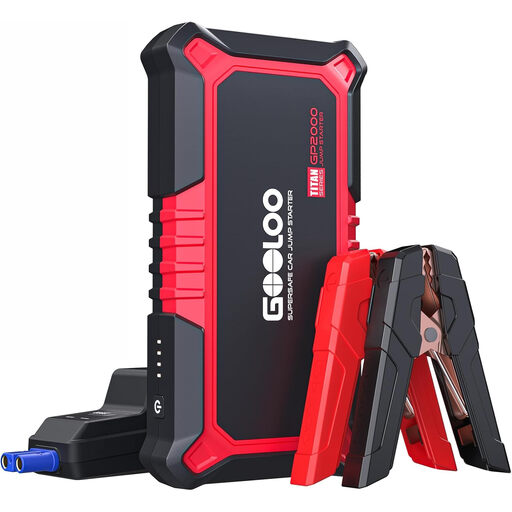
Why it suits this need: This model combines a portable car battery charger with a power bank and light, without a compressor. According to the product specifications, it’s designed for 12V vehicles with petrol engines up to 8,0 litres and diesel engines up to 6,0 litres.
The product specifications clearly state the engine limits and list 10 safety features. That means you don’t have to rely on the amperage claim alone.
2000A peak current, around 545 grams, two USB outputs and a 400-lumen light with several modes.
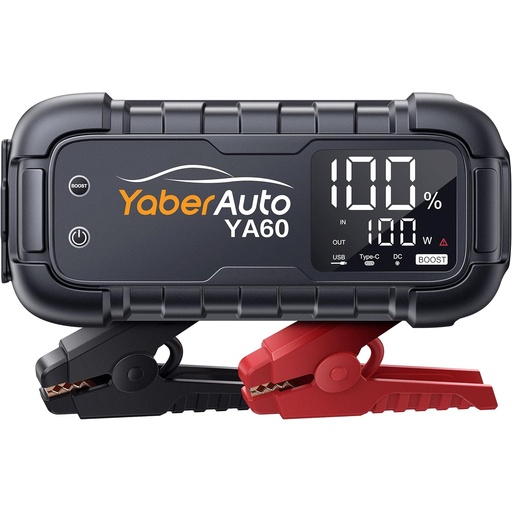
Why it suits this need: Suitable for drivers of larger cars, campervans or commercial vehicles who also need to charge laptops and phones.
As well as the peak current, the product information gives specific engine limits: all petrol engines and diesel engines up to 12,0 litres. Check these against your vehicle’s details before buying.
8000A peak current, 65W USB-C, two USB-A outputs, a 150W DC output and a 600-lumen light.
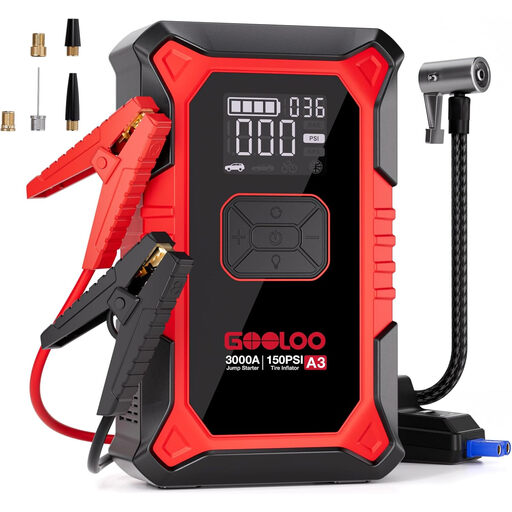
Why it suits this need: For drivers, motorcyclists and campers who want to combine a jump starter with a compressor, power bank and digital tyre pressure gauge.
The product specifications state an airflow of 35 l/min, automatic shut-off and five inflation modes. This gives you more detail about the compressor than a vague claim of a “powerful pump”.
3000A peak current, compressor up to 150 PSI, 35 l/min airflow, and support for petrol engines up to 9,0 litres and diesel engines up to 6,5 litres.
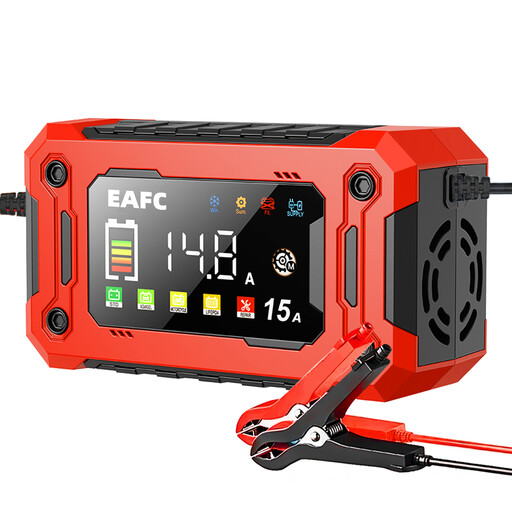
Why it suits this need: This isn’t a portable jump starter, but a mains-powered charger for anyone who wants to top up a 12V battery at home, in the garage or while a vehicle is in storage.
This is a deliberate choice to charge the battery rather than try to start the vehicle at the roadside. The product specifications mention automatic shut-off, several charging modes and overheating protection.
15A charging current, suitable for several lead-acid battery types, and a display showing charging status and mode.
We’ve put together a complete, up-to-date list of products that meet these strict selection criteria and the applicable European safety regulations.
No. Check that your vehicle has a 12V system and compare its engine size with the product specifications. A 24V system, an electric vehicle’s high-voltage battery or a damaged battery will usually be outside the jump starter’s intended use. If you’re unsure, consult your car’s manual.
It depends on the model. Recharge the device after use and follow the manufacturer’s storage instructions. Some models specify a long standby time, but it’s still sensible to check the charge periodically. A flat jump starter in your boot won’t help if you break down.
They serve different purposes. A jump-lead-and-power-bank kit or jump starter is designed to get you started quickly at the roadside. A portable car battery charger with a mains plug charges the battery more gradually and is better suited to home maintenance. If you want to be prepared for both situations, keep a jump starter in the car and a 12V charger in the garage.
