
Vandaag of morgen in huis

Kwaliteit gegarandeerd

Welkomstaanbiedingen ontgrendelen: GRATIS bezorging | Tot 80% korting | Gratis 30 dagen JoyPlus-proefperiode
Download de app
A dead battery is a common problem, especially during cold winter months or after a long period of inactivity. The result is always the same: a car, motorcycle, or boat that won't start. A reliable car battery charger is not a luxury, but a practical tool to extend the life of your battery and avoid unexpected costs.
This article will help you choose a suitable battery charger. We will discuss the key points to consider and highlight several popular choices based on their specifications and features. This way, you can make an informed decision that fits your vehicle and needs.
The market offers many different chargers. To make the right choice, it's helpful to pay attention to a few key aspects.
Charger Type: Smart or Traditional? A smart battery charger is equipped with a microprocessor that automatically regulates the charging process. These chargers stop charging when the battery is full and often switch to a maintenance mode. This also makes them suitable as a trickle charger or battery maintainer, ideal for keeping the battery of a seasonal vehicle (like a motorcycle or boat) in top condition during winter storage.
Compatibility with Your Battery Check what type of battery your vehicle has. Most modern chargers are suitable for various types, such as Lead-Acid, GEL, and AGM. A specific AGM battery charger mode is often available on smarter models. Also, ensure the charger has the correct voltage; for most cars and motorcycles, this is a 12V battery charger.
Extra Features: Pulse Repair Some chargers offer a pulse repair charger function. This technology is designed to restore the performance of older, weakened batteries by combating sulfate buildup on the battery plates. This can be a useful feature if you want to try and extend the life of a somewhat older battery.
Below is a selection of battery chargers, chosen based on their specifications and functionalities.
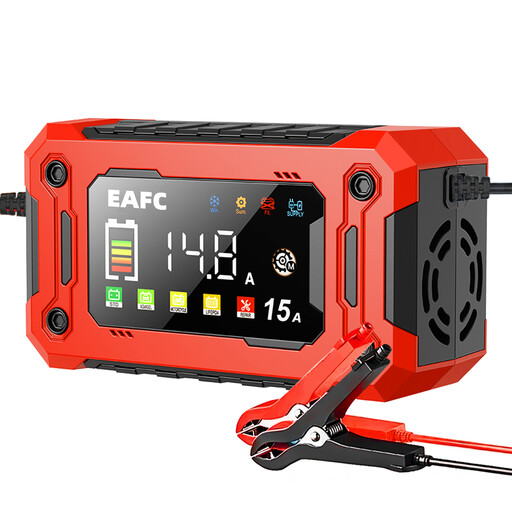
Why it stands out This charger combines a high charging power of 15A with advanced features. The large HD screen provides clear information about the charging status, mode, and any errors at a glance.
Key Features
Who is it for? For the user seeking a powerful and versatile charger for various vehicles, from a motorcycle battery charger to cars and SUVs. The pulse repair function makes it especially interesting for maintaining older batteries.
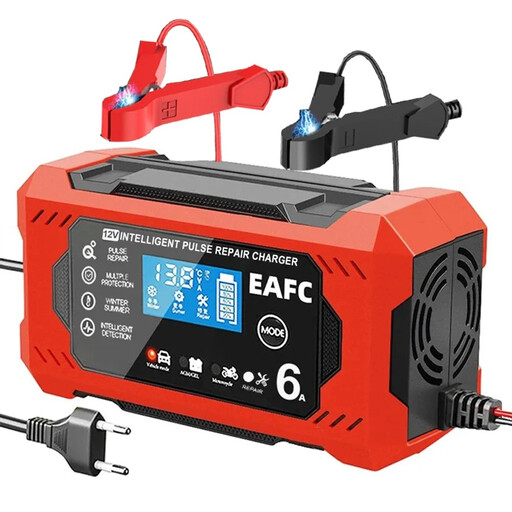
Why it stands out This is a compact and user-friendly smart battery charger. Its microprocessor-controlled operation and clear LCD screen make it an accessible choice for general use.
Key Features
Who is it for? Ideal for car owners and motorcyclists looking for a reliable, no-nonsense charger for standard charging and maintenance tasks. Its compact size makes it easy to store.
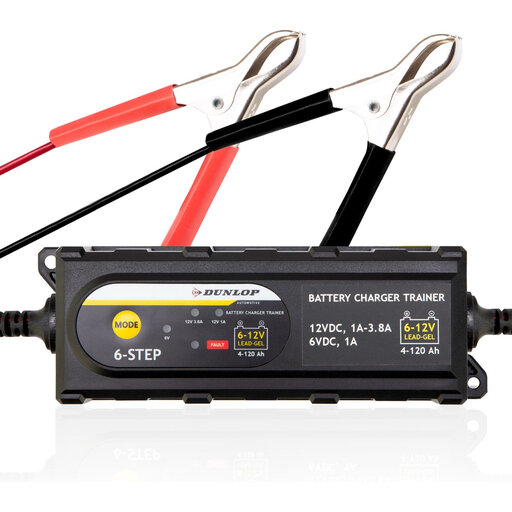
Why it stands out This charger from Dunlop is specifically designed as a smart maintenance charger. With a 6-step charging process and an IP65 rating (jet-water resistant), it is built for durability and precision.
Key Features
Who is it for? Perfect for owners of seasonal vehicles like motorcycles, boats, or classic cars. Anyone looking for a reliable trickle charger to keep a battery in optimal condition for an extended period will find this a suitable candidate.
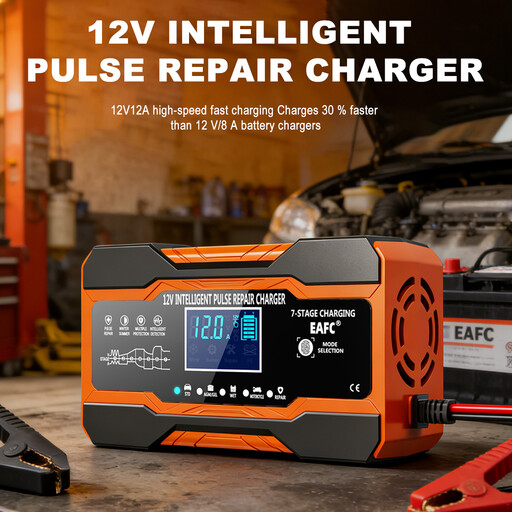
Why it stands out This charger offers a good balance between power (12A) and smart features. It is designed for a very wide range of batteries, from 2Ah to 150Ah, and has a comprehensive set of safety features.
Key Features
Who is it for? An excellent all-rounder for the DIY enthusiast who wants one charger for various vehicles and battery sizes. The extensive protection and fully automatic operation provide extra peace of mind.
A battery charger is essential for maintaining your vehicle. But sometimes you need power for other devices, especially on the go. Are you looking for a solution to charge your phone, tablet, or laptop?
Then check out our selection of Portable Chargers with Type-C for convenient power banks and other mobile charging solutions.
1. Can I leave a battery charger permanently connected? Yes, you can with a smart battery charger or trickle charger. These are designed to switch to a maintenance mode once the battery is full. This prevents overcharging and keeps the battery in optimal condition, which is ideal for vehicles that are stored for long periods.
2. What is the difference between a battery charger and a jump starter? A battery charger slowly and controllably charges a battery over a period of several hours. A jump starter delivers a short, powerful burst of current to start an engine with a dead battery, but it does not charge the battery itself.
3. How does a pulse repair function work? A pulse repair charger sends small, controlled pulses of current to the battery. According to manufacturers, this process helps to break down sulfate crystals that form on the battery plates over time. This can help improve the capacity and lifespan of an older, weakened battery.
