
Vandaag of morgen in huis

Kwaliteit gegarandeerd

Welkomstaanbiedingen ontgrendelen: GRATIS bezorging | Tot 80% korting | Gratis 30 dagen JoyPlus-proefperiode
Download de app
A portable car tyre inflator, battery charger or car jump starter may seem like a quick purchase. However, accessories vary considerably in terms of connections, battery compatibility, charging capacity and ease of use. A high amperage rating or a long list of features does not automatically mean that a product is suitable for your vehicle.
The biggest purchasing mistakes when buying car accessories are usually easy to avoid:
First, check the voltage. Many accessories for passenger cars operate at 12 volts, but a battery tester may also support 6 or 24 volts. This is relevant for motorbikes, motorhomes, boats, lorries and other vehicles.
With a car battery charger, you should also check:
A 6-amp charger and a 15-amp charger are not automatically interchangeable. A higher charging current can be useful for larger batteries, while lower power may be suitable for smaller batteries or long-term trickle charging.
With a car jump starter, read the stated starting current carefully. Pay attention to the difference between nominal starting current and peak current. Also check whether the device is suitable for petrol or diesel engines and what maximum engine capacity is specified.
Safe use is just as important as capacity:
A car battery tester can do more than simply display voltage. Check whether the device measures CCA, internal resistance, state of charge, battery condition and the starting system, for example. Also check whether your battery type and testing standard are supported.
For vehicle diagnostics via OBD2, compatibility with your car make and app is important. Pay attention to supported protocols, operating system and any limitations. A device for general system diagnostics does not automatically offer service resets or special functions.
For maintenance and cleaning, speed, disc diameter, battery life and weight are key factors. A compact car polishing machine is practical for headlights, badges and small areas, but less suitable for prolonged work on an entire car.
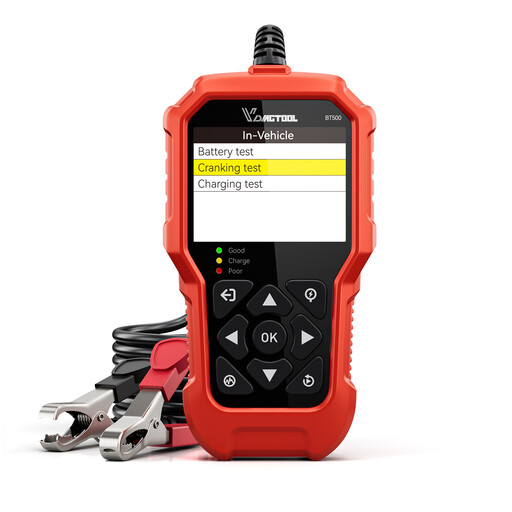
Why it suits this profile: A clear, easy-to-use battery tester is an accessible first step for motorists who want to check the condition of their car battery themselves.
The product description states that it supports 6V, 9V, 12V and 24V, with a range of 5–3000 CCA. Deep-cycle and lithium batteries are not supported, so check this in advance.
According to the product specifications, it measures voltage, resistance, SoC, SoH, starting and charging, among other things.
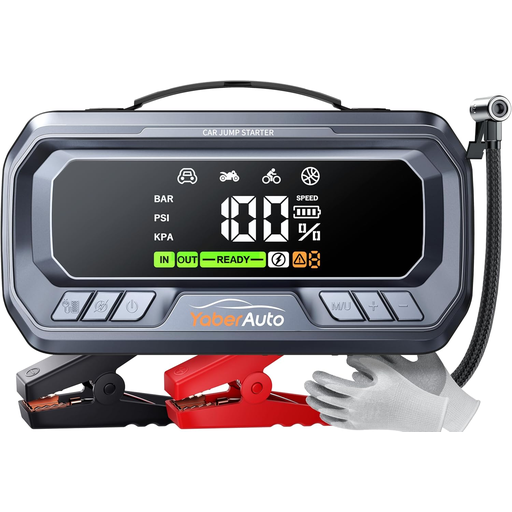
Why it suits this profile: Suitable for drivers who want one portable device for jump-starting, inflating tyres, providing light and powering mobile devices.
In addition to the stated peak current of up to 6500A, the specification lists a starting current of 600A and support for diesel engines up to 8.0 litres. Compare this with your vehicle.
According to the product specifications: a compressor up to 160 PSI, USB-C PD up to 65W and a light with multiple modes.
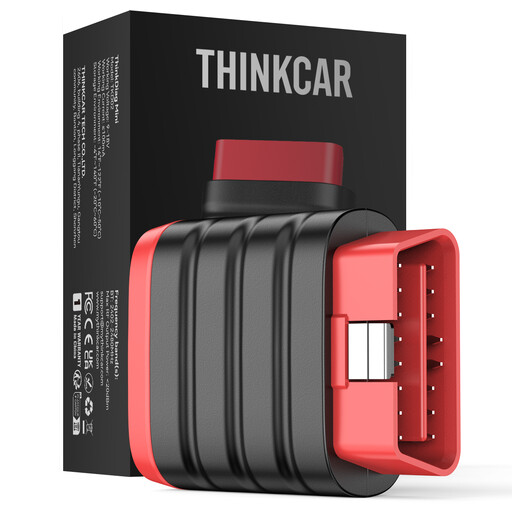
Why it suits this profile: For DIY enthusiasts and mechanics who want to carry out vehicle diagnostics via a smartphone without using a large wired device.
The specification lists Bluetooth, iOS and Android support, as well as several communication protocols. According to the product information, service resets and special functions are not included.
Compact dimensions of 60 × 48.5 × 22.5 mm and support for 22 languages, including Dutch.
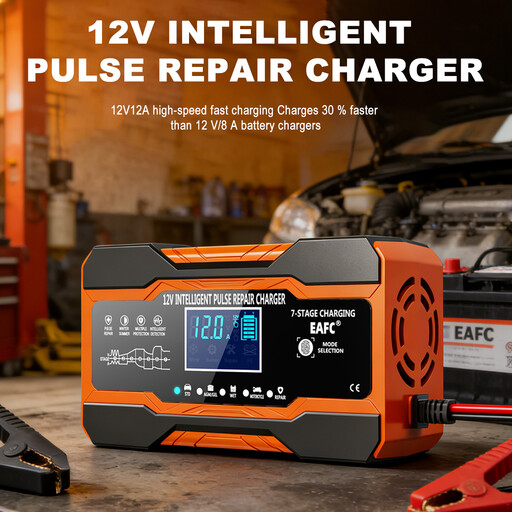
Why it suits this profile: A practical choice for anyone who regularly wants to charge a 12V lead-acid battery in a car, motorbike, lawnmower or boat.
According to the product specifications, the charger is intended for lead-acid batteries from 2Ah to 150Ah. Check the capacity and select the correct mode before connecting it.
12A output, LCD status display, summer and winter modes, plus protection against overheating and reverse polarity, among other features.
We have put together a complete, up-to-date list of products that fully meet these strict selection criteria and the applicable European safety regulations.
For many motorists, a car tyre inflator, jump leads or a jump starter, a torch and a basic car battery tester are practical choices. Anyone who carries out their own maintenance can also add a car battery charger or OBD2 diagnostic device. Choose based on your vehicle and how you plan to use it, rather than simply on the number of features.
Its lifespan depends on the battery type, temperature, usage pattern, state of charge and short journeys. A battery tester can reveal changes in voltage, resistance and starting power. It cannot predict exactly when a battery will fail, but it can help you spot warning signs sooner.
A charger uses electricity for as long as it is actively charging. Actual consumption depends on the battery capacity, charge level, charging current and efficiency. So check the power consumption and charging time. An automatic maintenance mode can be useful, but always follow the instructions and charge the battery in a dry, well-ventilated environment.
