
Vandaag of morgen in huis

Kwaliteit gegarandeerd

Welkomstaanbiedingen ontgrendelen: GRATIS bezorging | Tot 80% korting | Gratis 30 dagen JoyPlus-proefperiode
Download de app
A screen with wireless CarPlay, a dash cam or a digital tyre inflator can make your car more practical without major modifications. Yet many buyers fall into the same traps. A large screen doesn’t automatically mean it will fit, a high resolution says little about the audio connection, and a wireless connection only works well if your phone and vehicle are compatible.
This guide helps you compare car accessories using verifiable specifications. That way, you can choose the right option for navigation, camera footage, baby monitoring, tyre maintenance or HDMI connectivity.
“Wireless” sounds straightforward, but CarPlay and Android Auto have different requirements. Check the following first:
A wireless CarPlay screen isn’t the same as a universal phone holder. Some models also support Android Auto, while others only work with an iPhone.
A product name may include terms such as 4K, night vision or 360°. So be sure to check the full specifications. Important details include the resolution of the front and rear cameras, the viewing angle, how footage is stored and how the cable is fitted.
A CarPlay screen with a reversing camera can help with parking, but it doesn’t replace good all-round visibility. The camera must be securely fitted, and the cable must not obstruct your view or access to the controls.
Check whether the product runs from a 12V or 24V socket, USB or fixed wiring. A screen with a separate cable is quick to install, but you’ll need to think about cable routing. A reversing camera or baby monitor will also need a longer power cable.
Pay attention to where you place it, too: a screen must not block your view of the road, airbags or controls. Only use features such as video and streaming when the car is stationary and it’s permitted under traffic regulations.
A larger screen makes maps and camera footage easier to read, but it also takes up more space. A portable screen of around 10 inches is suitable if you want a clear view of your dashboard display. Check the resolution as well as the size. For example, the ESSGOO has a resolution of 1600 × 600, while the OTTOCAST ScreenFlow screen uses 1920 × 720.
A portable CarPlay display is handy if you don’t want to replace your factory-fitted radio. Check that the mount is sturdy enough and that your car has a suitable audio output.
Wireless CarPlay and Android Auto accessories usually use Bluetooth and Wi-Fi to connect. Audio can then run through Bluetooth, AUX, an FM transmitter or the built-in speaker. Not every car works equally reliably with every method.
For a direct connection between devices, a physical cable may be a better choice. The Neomounts HDMI6MM 1.8-metre HDMI cable has two male HDMI connectors, HDMI specification 1.4, bandwidth of up to 10.2 Gbps and support for 1080p+ at up to 120 Hz, according to the product description. You can also browse our range of display cables for other connection needs.
For a digital tyre inflator, the pressure range, display readability and cable length are important. Always check the recommended tyre pressure for your vehicle; the inflator’s settings are no substitute for the vehicle manufacturer’s guidance.
A portable air compressor is particularly useful as a handy extra for the road. Check the power connection and cable length. A 12V model won’t necessarily suit every vehicle or situation.
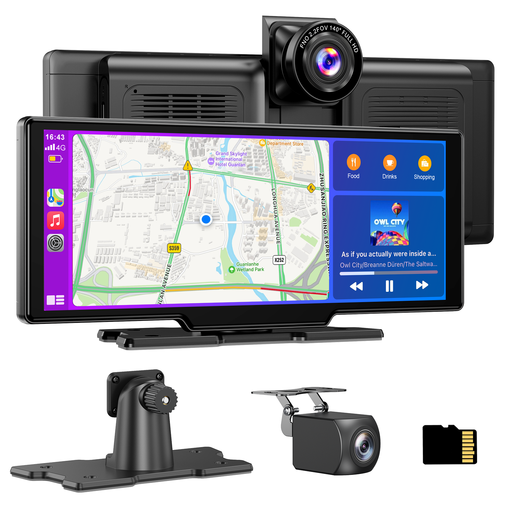
Why it suits this type of user: This model is designed as a relatively simple upgrade for cars with a 12V or 24V connection. It combines wireless CarPlay, Android Auto and camera features in one portable system.
The product description lists the power supply, smartphone versions, connection options and installation details. This lets you check in advance whether it’s compatible with your car and phone.
10.26-inch screen, wireless CarPlay and Android Auto, 4K front camera, 1080p rear camera and 64GB TF card included, according to the product information.
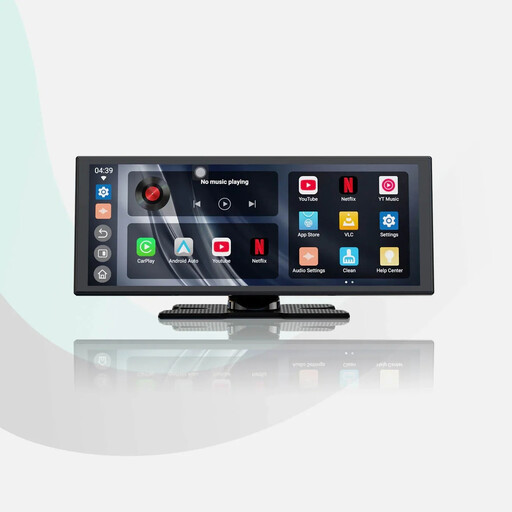
Why it suits this type of user: Ideal for drivers looking for a larger screen, built-in apps and a combination of navigation and reversing-camera footage without replacing the factory-fitted radio.
The description lists separate Bluetooth and Wi-Fi connections, screen resolution and the initial setup required. Be sure to check your car’s audio connection in advance.
11.4-inch screen with 1920×720 resolution, wireless CarPlay and Android Auto, built-in apps and a wired 1080p rear camera, according to the product description.
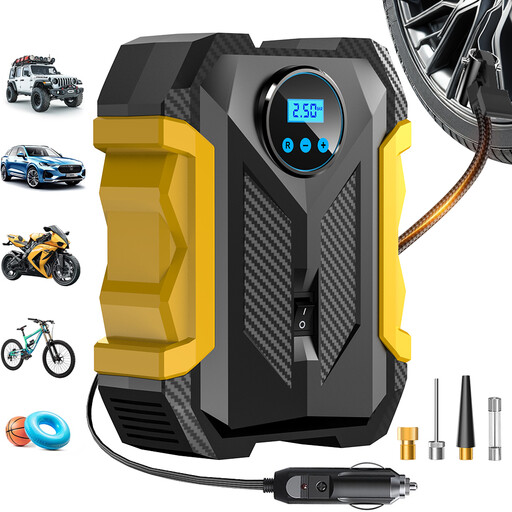
Why it suits this type of user: A practical choice for motorists, motorcyclists and cyclists who want to check and adjust their tyre pressure themselves while out and about.
The digital pressure display makes the reading easy to see at a glance. Before buying, check that the 12V connection and included 3-metre cable are suitable for your vehicle.
Portable design, digital pressure display, a stated maximum of 150 PSI and built-in LED lighting, according to the product information.
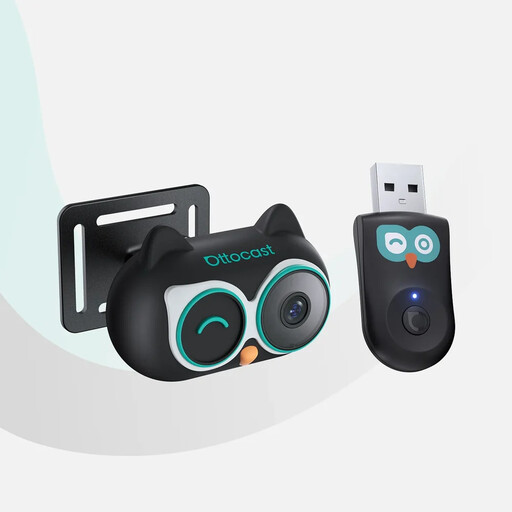
Why it suits this type of user: This in-car baby camera is designed for families whose vehicle already has wired OEM CarPlay and a touchscreen.
The compatibility limitation is clear: an iPhone is required for the CarPlay feature; Android Auto isn’t supported. According to the description, Android users can only use the monitoring features.
1080p camera, 150° viewing angle, four display modes, 3-metre power cable and, according to the product description, a night mode with no visible red infrared light.
We’ve put together a complete, up-to-date list of products that meet these strict selection criteria and the applicable European safety regulations.
Not automatically. It depends on your phone, the available power supply and your car’s audio connection. Also check whether the model supports both wireless CarPlay and Android Auto. Some accessories require an existing wired CarPlay interface.
Position the screen securely without obstructing your view, connect the power supply and pair your phone via Bluetooth and Wi-Fi as instructed in the manual. Then choose the appropriate audio output, such as Bluetooth, AUX, FM or the built-in speaker. Test the connection while the car is stationary.
A 12V tyre inflator draws power from your car and doesn’t need separate fuel or a subscription. Ongoing costs are mainly related to wear and tear, storage and the possible replacement of parts. Check your tyre pressure regularly against the value recommended for your vehicle.
