
Vandaag of morgen in huis

Kwaliteit gegarandeerd

Welkomstaanbiedingen ontgrendelen: GRATIS bezorging | Tot 80% korting | Gratis 30 dagen JoyPlus-proefperiode
Download de app
A flat battery, soft tyre or dirty car upholstery never happens at a convenient time. Yet many motorists only buy an accessory once the problem has already occurred. As a result, a prominent number on the packaging can sometimes get more attention than whether the product is suitable for the car, battery or situation.
When choosing car accessories, these are the main pitfalls to watch out for:
With a car battery, 12V is only the starting point. Check whether it is an AGM, EFB, GEL, flooded lead-acid or lithium battery. A 12V battery charger needs to have the right programme. According to the product information, the EAFC 12V 6A charger is suitable for AGM, GEL, SLA, EFB and flooded lead-acid batteries with a capacity of 4 to 100 Ah.
For a motorhome, boat or solar battery, there are other things to consider. According to its product specifications, the Foursun 12V 100Ah LiFePO4 battery has a charging voltage of 14,4 ± 0,2V, a stated energy capacity of 1280 Wh and a built-in BMS. Only use a suitable charger for lithium batteries, and check that your charging system is compatible with LiFePO4.
When choosing a car jump starter or booster, three details are useful:
According to the product description, the YaberAuto YA90 has a starting current of 600A and a peak current of up to 1200A in the technical specifications. The product title also mentions 6500A, so always compare the full product specifications rather than relying on the biggest marketing figure. The device also has a 160 PSI compressor, USB-C with 65W PD and an LCD display.
Connect a jump starter carefully: red to positive and black to negative or a suitable earth point. Only use any override start mode once you have checked the connections and the standard mode has not worked.
For accessories in a small car, dimensions and weight matter. A device that seems handy at home may be impractical in a full boot. Also check whether the supplied cables are long enough and whether the product charges via 12V, USB-C or a mains socket.
For an electronic parking disc, positioning and regulations also matter. According to the product information, the parking disc has a CR2450 battery, an automatic arrival time and an E-mark. Check local parking rules before use, and fit the device in a suitable position behind the windscreen, following the instructions.
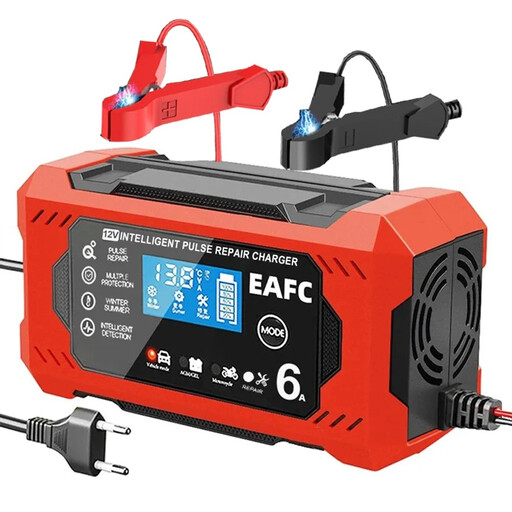
Why it suits this profile: According to the product information, this car battery charger is designed for common 12V lead-acid batteries and has an LCD screen and automatic charging function.
The stated battery capacity range of 4–100Ah makes it easier to check whether this charger is suitable than a charger with no clearly stated range.
12V and 6A output; support for AGM, GEL, EFB and other listed lead-acid battery types; reverse polarity protection according to the product description.
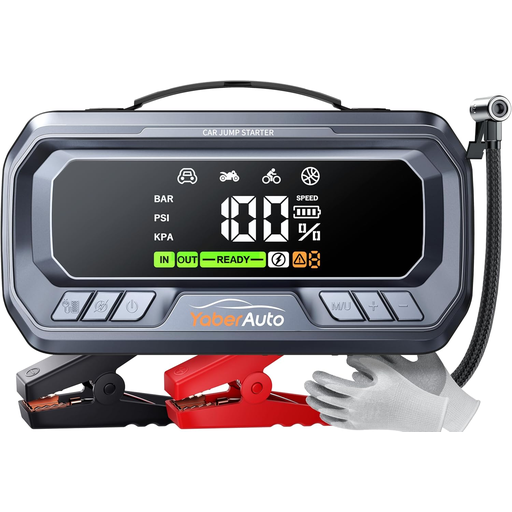
Why it suits this profile: A good choice for drivers who want to combine breakdown assistance, tyre checks and portable power in one device.
The starting current and peak current are listed separately, so you can compare the device’s suitability with your vehicle specifications more easily.
160 PSI air pump; 65W USB-C PD; 3.3-inch LCD; multi-mode emergency lighting.
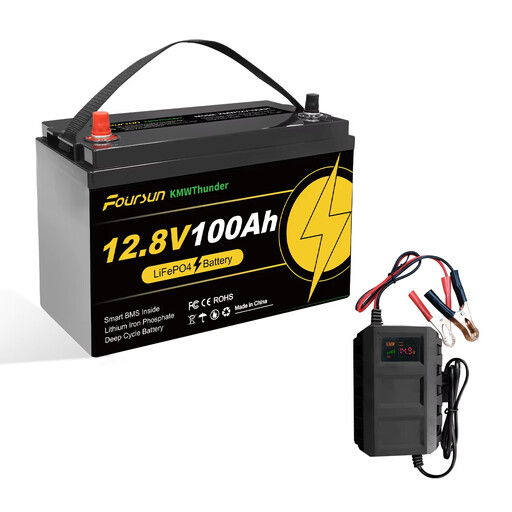
Why it suits this profile: This motorhome battery is designed for motorhomes, boats, camping and off-grid use, where weight and usable capacity matter.
The dimensions, charging voltage and maximum current are listed. Check these figures against your battery compartment, inverter and charging system.
12V and 100Ah; built-in BMS; IP67 rating according to the product information; stated support for series and parallel connections.
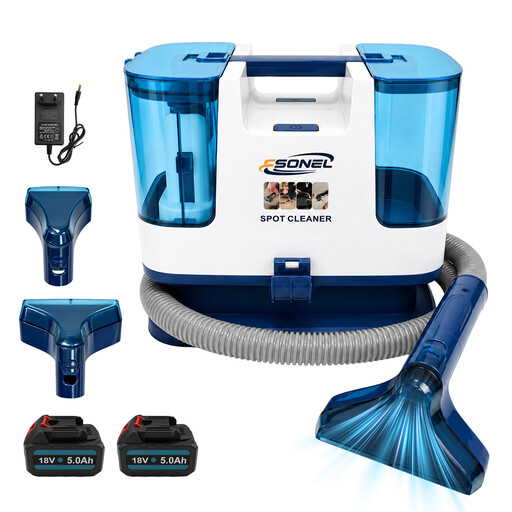
Why it suits this profile: Handy for car owners who want to clean damp upholstery, car seats or fabric surfaces themselves.
The product name lists both 400W power and 17 kPa suction. Compare these figures with the cleaning task you have in mind and the available battery life.
Cordless design; version with two batteries; designed for damp fabrics, sofas, car seats and pet stains.
We’ve put together a complete, up-to-date list of products that meet these strict selection criteria and the applicable European safety regulations.
The terms are often used interchangeably. Both devices are designed to help start a vehicle temporarily when its battery is weak or flat. Always check the starting current, peak current and stated vehicle compatibility. A jump starter is no substitute for a faulty battery.
That depends on the battery type and capacity. For a standard car battery, a charger for lead-acid, AGM or EFB batteries may be suitable. A LiFePO4 battery needs a specific lithium charging profile. Compare the battery’s Ah rating with the charger’s capacity range, and follow the connection sequence in the instructions.
Store the device somewhere dry, charged according to the instructions and protected from prolonged heat. A car can get very hot when parked in direct sunlight. Check the cables, connections and battery level regularly. That way, your accessory will be ready when you need it, without relying on a big number on the packaging.
