
Vandaag of morgen in huis

Kwaliteit gegarandeerd

Welkomstaanbiedingen ontgrendelen: GRATIS bezorging | Tot 80% korting | Gratis 30 dagen JoyPlus-proefperiode
Download de app
If you spend a lot of time driving, you don’t want to be left with a flat phone, a navigation system that won’t work or no power when you need it. There’s a wide range of car accessories available, but a high wattage or a long list of features doesn’t automatically mean a product is right for your car. With a car charger, inverter or wireless CarPlay adapter in particular, the connection, power output and intended use all matter.
An inverter’s peak power is often prominently displayed. This is the short burst of power available when starting something such as a motor or compressor. For everyday use, the rated or continuous power is more important.
For example, an inverter with a peak power of 2,000 watts might deliver 1,000 watts continuously. If you connect devices with a combined power consumption above that continuous rating, the safety cut-out may kick in or the inverter may overheat.
A USB car charger is only practical if its port and charging protocol are compatible with your device. So check:
A fast car charger may charge more slowly if the cable, phone or port doesn’t support the stated charging protocol.
A wireless CarPlay adapter or Android Auto adapter won’t work with every infotainment system. Many adapters only work if your car already supports wired CarPlay or wired Android Auto. Also check whether the system uses an original USB port and whether your phone is compatible.
With a Bluetooth FM transmitter, you’ll also need to find a clear FM frequency. In busy urban areas, interference can occur when several stations are close together.
With a 12V inverter, it’s important to understand the difference between 12V direct current and 220V or 230V alternating current. An inverter converts the power, but some energy is lost in the process. Efficiency is usually shown as a percentage. Higher efficiency can reduce the drain on your battery, but actual run time also depends on battery capacity, cable thickness and the connected load.
A pure sine wave inverter may be a suitable choice for laptops, camera equipment and other sensitive electronics. According to the product description, EAFC models provide a sine-wave output; check whether your individual device actually requires this specification.
Look for features such as:
Safety features won’t prevent you from connecting a device incorrectly. Never use an inverter above its stated continuous power, and leave clear space around the ventilation openings. If the manual recommends it, connect a high-power inverter directly to a suitable battery; a 12V dashboard socket isn’t automatically suitable for heavy loads.
For a 12V battery charger, check the battery type and capacity. According to the product specifications, the EAFC 12V 6A charger is designed for AGM, GEL, SLA, wet and EFB batteries, among others, with a capacity range of 4 to 100 Ah. You should still check the battery label. A charger for a 12V battery isn’t designed for a 24V system.
Use a battery charger in a dry environment, follow the connection sequence in the manual and check the polarity before plugging it into the mains.
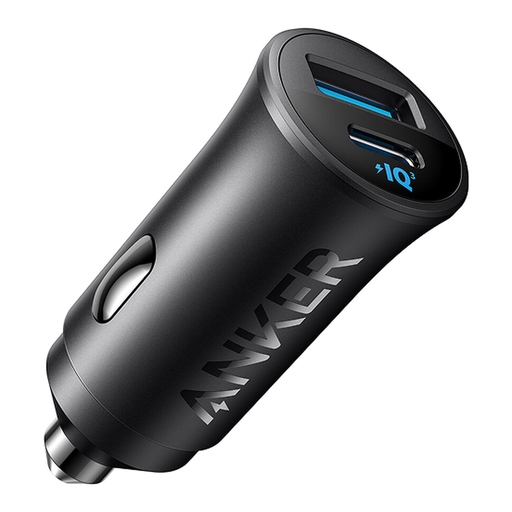
Why it suits this profile: This compact USB car charger is ideal for everyday journeys, with two ports for devices such as a phone and a sat nav.
The total output of up to 30W and the number of ports are clearly stated, so you don’t have to rely on a speed claim alone.
Two USB ports, up to 30W total and, according to the product description, protection against overcharging, overheating and short circuits.
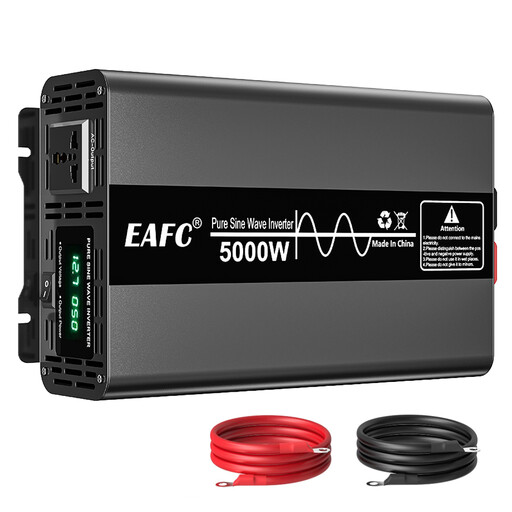
Why it suits this profile: For motorhomes, off-grid use and demanding outdoor applications, an inverter with a clearly stated continuous power rating and detailed status information is a practical choice.
The specifications list 2.500W continuous power and 5.000W peak power separately, making it easy to see the difference between a sustained load and a short starting load.
12V DC to 220V AC, a digital display and multiple safety features. According to the product description, it has a built-in temperature-controlled fan.
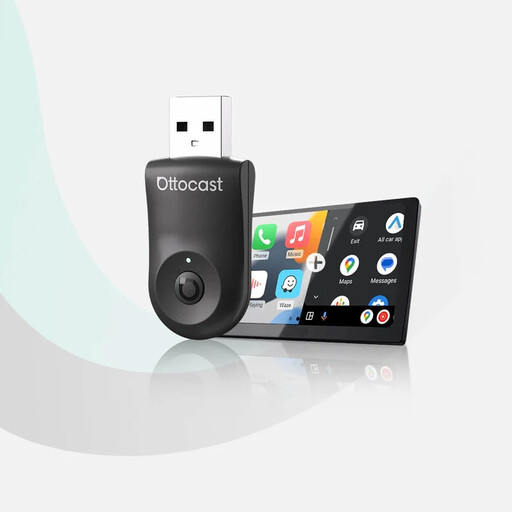
Why it suits this profile: Commuters and frequent travellers who want to use a compatible wired connection wirelessly can save dashboard space with this compact model.
The product information states that your car must already support wired CarPlay or Android Auto. This requirement helps you avoid buying an adapter that isn’t compatible with your vehicle.
Compact design, 5GHz Wi-Fi according to the product description, and support for two paired devices.
We’ve put together a complete, up-to-date list of products that meet these strict selection criteria and the applicable European safety requirements.
First, check your phone’s connection, then choose between USB-A, USB-C or a fixed cable. Also check the charging protocol and power output. A high-wattage USB-C port won’t automatically charge every device at its maximum speed.
Not always. A small inverter may be suitable for a standard 12V connection, but more powerful models often need to be connected directly to a suitable battery. Check the manual, the maximum current of the connection and the inverter’s continuous power rating.
Unplug a car charger, Bluetooth FM transmitter or inverter when you’re parking your car for an extended period. Only use high-power equipment while the engine is running, unless your vehicle and battery system are specifically designed for prolonged use. For a 12V battery charger, check the charging mode, polarity and battery capacity.
