
Vandaag of morgen in huis

Kwaliteit gegarandeerd

Welkomstaanbiedingen ontgrendelen: GRATIS bezorging | Tot 80% korting | Gratis 30 dagen JoyPlus-proefperiode
Download de app
When you buy car accessories, you’re usually looking to solve a practical problem: seeing better in the dark, having power on the go, keeping cool on a long journey or quickly removing dust from your car’s interior. But product pages aren’t always easy to compare. A high wattage, a large lumen figure or an impressive rpm count only tells you so much if the accessory isn’t suitable for your vehicle and the way you plan to use it.
This buying guide helps car owners, motorhome and caravan owners, truck drivers, campers and DIY enthusiasts make a more informed choice.
When buying LED car bulbs, first check which fitting your vehicle uses, such as H4, H7, H11, 9006/HB4 or 9012/HIR2. “Universal” in a product description doesn’t automatically mean the bulb will fit every headlight housing. Check your vehicle handbook, the existing bulb or a vehicle database.
For LED headlights, check the beam pattern too. A bulb may physically fit but still be incorrectly aligned. This could dazzle oncoming drivers and affect road safety. After fitting, check the alignment and whether the bulbs are approved for use on public roads.
A 12V to 230V inverter often prominently displays a high peak power rating. This power is usually only available briefly when starting appliances such as a fridge, pump or power tool. The continuous power rating determines what you can run for an extended period.
For example, a 4000W inverter might deliver 2000W continuously and 4000W at peak. A 3000W model might list 3000W continuous power and 6000W peak power. Make sure the battery, cables and fuse are suitable for the high current a 12V system can draw.
An electric air duster rated at 110,000 or 150,000 rpm sounds powerful, but how useful it is also depends on the nozzles supplied, battery life, noise level and controls. Lighting is similar: a stated lumen figure is a product specification provided by the seller, but it doesn’t tell you on its own how the bulb performs on the road.
According to ENdureLite’s own product descriptions, various LED bulbs deliver up to 20,000 lumens, and the brand claims up to 300% more brightness than standard bulbs. Treat this as a manufacturer’s claim, and compare the fitting, colour temperature, cooling and beam pattern too.
For LED car bulbs, these points are particularly important:
For LED fog lights, such as H8/H9/H11 versions, it’s especially important to make sure the bulb is suitable for the existing reflector and that the beam doesn’t shine upwards.
According to the product description, a pure sine wave inverter produces a smoother AC supply than a modified sine wave inverter. This can matter for sensitive electronics, laptops, televisions and some chargers. Always check the instructions for the device you’re connecting.
Also consider:
Professional installation is advisable for models rated at 1000W or more. Incorrect polarity, cables that are too thin or a missing fuse can cause overheating.
A cordless car fan is handy if you don’t want a cable running across the dashboard. Check whether the battery is removable, how long charging takes and how many speed settings are available. A USB model works with a car charger or power bank, while a 12V/24V model can be connected directly to a suitable vehicle socket.
For a car air duster, the nozzles and battery capacity are often more important than the rpm figure alone. Before using a duster, check for loose parts and keep electronics at a suitable distance while removing dust.

Why it suits this profile: This USB fan is easy to use with a car charger, power bank or USB port, and doesn’t need to be permanently fitted.
The product specifications list three speeds, 360° adjustment and USB power, so you don’t have to rely on a vague claim about airflow.
Five blades, three speeds, 360° adjustment and a suction cup for the dashboard or windscreen.
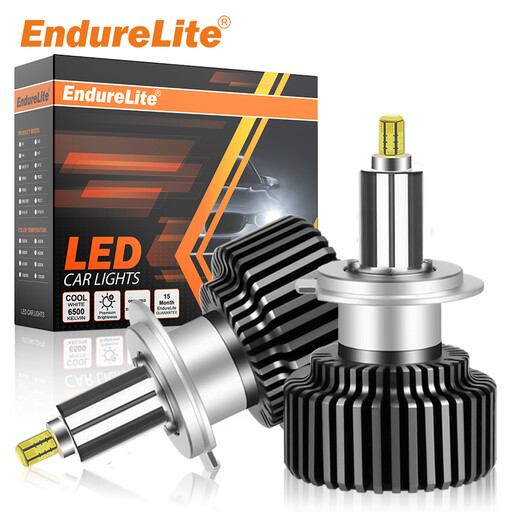
Why it suits this profile: For drivers with a compatible 9012/HIR2 fitting, this model offers an aluminium housing, an IP68 rating according to the product information and a built-in fan.
The fitting and 6000K colour temperature are clearly stated. Check beforehand that this retrofit is permitted for your headlights and vehicle.
9012/HIR2 fitting, 6000K cool white light, a built-in fan and a 50,000-hour lifespan stated by ENdureLite.
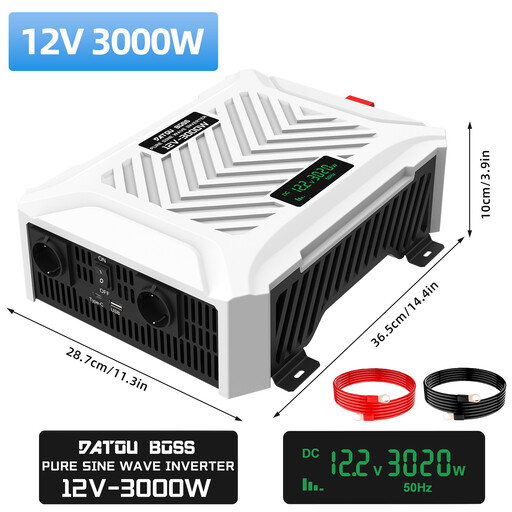
Why it suits this profile: This vehicle inverter is designed for motorhomes, boats and other 12V systems where you need to run several appliances or higher-powered devices.
The distinction between 3000W continuous power and 6000W peak power is clearly stated. The manufacturer also recommends a 300–350A fuse and professional installation.
12V DC to 220/230V AC, pure sine wave, LCD status display, two temperature-controlled fans and several built-in safety features.
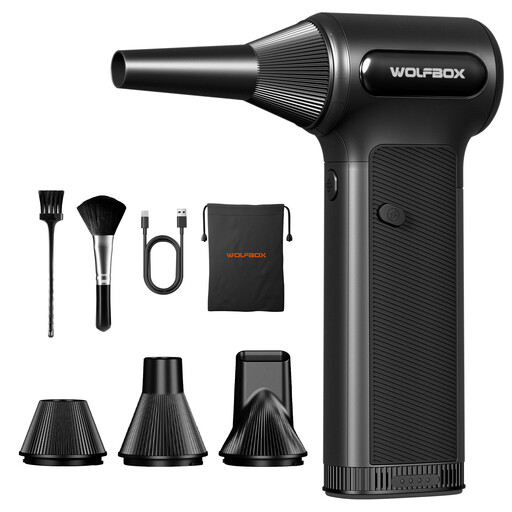
Why it suits this profile: This cordless duster is designed for car interiors, keyboards, electronics and outdoor use, so one device can help with a range of cleaning tasks.
The product description lists three speeds, four nozzles, two brushes and a replaceable battery. This gives you a clearer idea of how it can be used than an rpm claim alone.
Replaceable 22.2Wh battery, USB-C charging, four nozzles and a stated operating time of up to 100 minutes on the low setting.
We’ve put together a complete, up-to-date list of products that meet these strict selection criteria and the applicable European safety requirements.
No. Checking the fitting alone isn’t enough. Check compatibility with your vehicle, the headlight housing and the relevant approval for use on public roads. If you’re unsure, have the beam pattern checked after installation.
Some lower-powered models may be suitable, according to the instructions, but powerful inverters should usually be connected directly to a suitable battery. A 2000W or 3000W model can draw far more current than a standard 12V socket and its wiring can handle.
It depends on battery capacity, charging time and how long you use it. A USB or cordless car fan generally uses less power than a high-powered inverter running household appliances. Check the specifications, and only charge the device with a suitable cable and power supply.
