
Vandaag of morgen in huis

Kwaliteit gegarandeerd

Welkomstaanbiedingen ontgrendelen: GRATIS bezorging | Tot 80% korting | Gratis 30 dagen JoyPlus-proefperiode
Download de app
A flat battery, soft tyre or faulty bulb usually happens at the worst possible time. Yet many motorists only buy a solution once the problem has already occurred. At that point, a high peak current, impressive lumen count or large wattage can seem like the deciding factor. This can lead to buying a product that isn’t right for your car, battery or intended use.
This guide helps motorists, campervan and boat owners, and outdoor enthusiasts compare car accessories based on practical considerations. These include a car jump starter, car battery charger, car tyre inflator, lighting and a 12V to 230V car inverter.
A jump starter with, for example, 2000A or 6000A peak current isn’t automatically suitable for every car. Always check:
Peak current is not the same as continuous charging current. A jump starter can help you start the car, but it won’t replace a car battery charger if the battery is persistently flat or worn out.
The bulb fitting must match your car’s lighting. An H7 halogen bulb won’t fit a W5W socket. LED lighting can also trigger a fault warning in some vehicle systems. So check the fitting, lighting function, voltage and any CANbus requirements.
According to OSRAM’s product information, the NIGHT BREAKER LED W5W is designed for specific 12V applications, such as parking, position, number plate and interior lighting. That doesn’t mean it’s suitable for every headlight.
A 2000W inverter draws a lot of current from a 12V battery when running at high load. The battery capacity, cable thickness, fuse and ventilation are just as important as the output power. An inverter for a laptop or camera is a different purchase from one for a fridge, pump or power tool.
Don’t use a high-powered inverter through a standard 12V cigarette lighter socket. At high power levels, the plug and wiring can overheat.
For a jump starter or car battery charger, the nominal voltage must match. Many models in this category are designed for 12V batteries. A battery charger must also be suitable for:
For example, the EAFC 12V 6A charger states a range of 4 to 100Ah and support for several lead-acid battery types. The EAFC 12A charger states a range of 2 to 150Ah. Check these details against your battery’s label or instruction manual.
A portable car power bank needs to stay charged if you’re keeping it in the boot for months. So check:
A model with a built-in torch, USB output and storage bag can be handy as part of a wider car emergency kit. However, a jump starter won’t fix a faulty alternator, damaged battery or frozen battery. Don’t use the device if the battery is leaking or visibly damaged.
When choosing LED car bulbs or halogen bulbs, check:
The OSRAM NIGHT BREAKER LASER H7 is a set of two 12V H7 bulbs rated at 55W. OSRAM claims that this bulb provides up to 150% more brightness than a standard halogen bulb. Always check claims like these against the official compatibility and approval information. Don’t touch the glass with bare fingers, and only fit the bulb when the lights are switched off and cool.
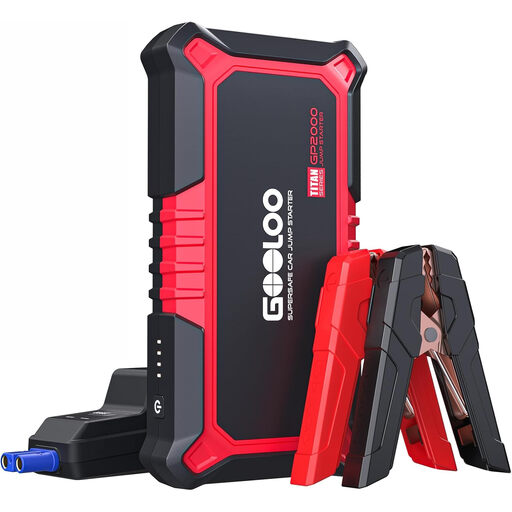
Why it suits this type of user: This compact car jump starter combines jump starting, USB charging and lighting in one device for everyday use in your car.
The product information specifies a 12V system, smart jump leads and several safety features. Do check that your engine falls within the stated limit of 8,0L petrol or 6,0L diesel.
2000A peak current according to the product description, two USB outputs and a 400-lumen light with three modes.
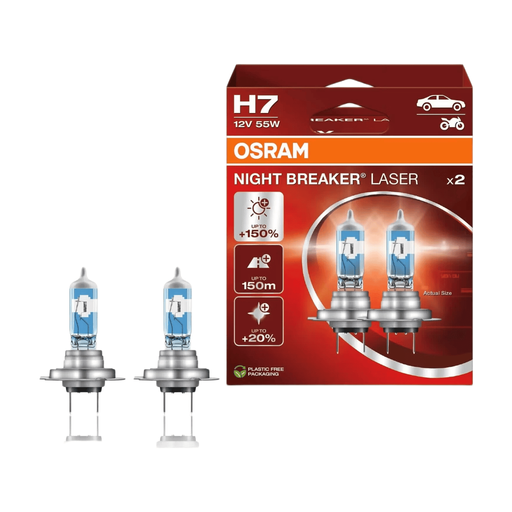
Why it suits this type of user: A good choice for drivers looking for a suitable H7 replacement who want to check compatibility first.
The product information explicitly states that the bulb isn’t universal. So check the vehicle list and legal approval before buying.
H7 fitting, 12V, 55W and supplied as a set of two bulbs. OSRAM states that the bulb has a colour temperature of 4200K.
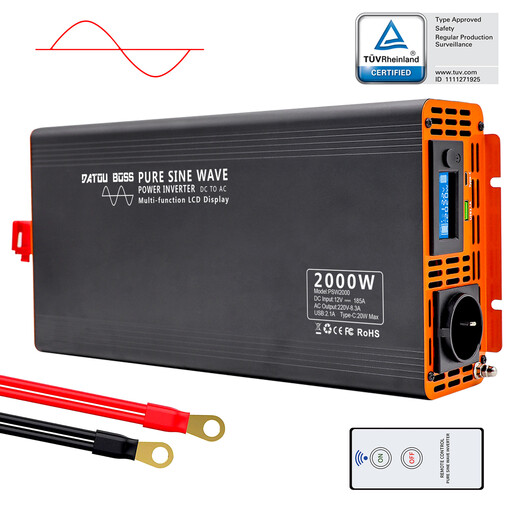
Why it suits this type of user: An option for campervan, boat and off-grid users who want to power 230V equipment from a 12V battery system.
The specifications distinguish between 2000W continuous power and 4000W peak power. Use a suitable fuse and cable set, and install it in a well-ventilated location.
Pure sine wave output, LCD status display, USB and Type-C ports, and protection against under-voltage, over-voltage, overloads and short circuits.
We’ve put together a complete, up-to-date list of products that meet these strict selection criteria and the applicable European safety regulations.
A practical basic kit includes a car jump starter or booster, a reflective hi-vis vest, a warning triangle, a torch, work gloves and a car tyre inflator. Also check the power bank’s charge level regularly, along with the expiry dates of any other emergency supplies.
No. A charger can charge a flat battery if it’s still in working condition. If it’s leaking, swollen, has a damaged casing or keeps going flat again quickly, it’s better to replace it or have a garage check it. Use the charging mode that matches the battery type.
No. Compare the continuous power, peak power and output waveform with your device’s requirements. Sensitive electronics may need a pure sine wave inverter. Also bear in mind the high current draw on the 12V side and make sure there’s enough ventilation.
