
Console player with a laptop
You want to display a separate console in OBS via HDMI and need to check that your source, capture card and laptop will work together. OBS Studio describes a capture device as a way to bring console footage into OBS.


If you’re playing on the same Windows PC that runs OBS, try Game Capture in OBS first. For footage from a separate console or PC, a capture card could be the right option. Choose one based on your source’s HDMI output, the pass-through to your gaming screen and the recording mode. Also check how game audio, party chat and your own microphone will reach the stream: HDMI audio alone doesn’t guarantee a complete co-op mix.
You want to display a separate console in OBS via HDMI and need to check that your source, capture card and laptop will work together. OBS Studio describes a capture device as a way to bring console footage into OBS.
You want to bring game audio, your teammates’ voices and your own commentary together in the stream. For a PS5 setup, Elgato explains that connected headphones can affect game audio over HDMI.
You want to keep your preferred picture mode on a separate screen while streaming. Compare HDMI pass-through and recording separately, as Elgato and AVerMedia list different modes for different models.
First, work out whether OBS runs on the same device as the game. Then compare the HDMI pass-through, recording settings and separate audio setup you need.
| What to consider | What to look for | Who should prioritise it |
|---|---|---|
| Source and computer | Is the game running on the same Windows PC as OBS? If not, check the HDMI output and the exact model’s USB or PCIe connection requirements. | If I want to connect a separate console to my laptop, I first need to know whether the source, card and computer will work together. Around 33% of consumers say compatibility is their top buying priority. |
| Game audio and voices | Work out where the game audio, party chat and microphone audio are coming from; test the recording and listen back. | When I play with others, I want viewers to hear both the game audio and the voices clearly. Around 27% of consumers give a complete co-op audio mix top priority. |
| Gaming screen and recording | Compare HDMI pass-through and recording separately, including resolution, refresh rate, HDR and any VRR support. | When I play on a separate screen, I want to keep my preferred picture mode without assuming the recording will support the same mode. Around 20% of consumers put their gaming screen first. |
| Connections and accessories | Check the available ports, required cables and whether your setup needs an HDMI output to a separate screen. | In a small room, I want to keep my setup simple and know in advance which connections and cables I’ll need. Around 20% of consumers say a straightforward setup matters most. |
Pass-through and recording can have different limits. For example, Elgato lists up to 4K60 pass-through and 1080p60 recording for Game Capture Neo. NZXT says Signal HD60 can pass through 4K, but can’t record or stream in 4K to a computer.
Compare HDMI input, monitor pass-through and recording as separate specifications for the exact model.
The audio route depends on your console, headset and OBS settings. In the PS5 setup described by Elgato, connecting headphones can stop game audio from coming through HDMI.
Check where each sound is coming from and make a test recording before your stream so you can listen back.
Depending on the audio setup, you may need additional compatible connections or cables.
Sandberg 134-19 is listed with HDMI-in and USB-A-out; the manufacturer doesn’t list an HDMI output for monitor pass-through.
Before buying, check whether you need to pass the signal through the same card to a separate gaming screen.
Elgato doesn’t list an HDMI cable as included with Game Capture Neo. For connecting to a USB-C port, the manufacturer recommends a suitable USB 3.0 cable or adapter.
Compare the included accessories with the connections on your console, laptop and monitor.
Elgato offers external models with different combinations of HDMI pass-through and recording. These specifications come from the manufacturer and aren’t an independent performance test.
The range includes external capture cards and an internal PCIe card; connection types and features vary by model.
HDMI Capture Link to USB-A 134-19 is an HDMI-to-USB capture device for setups that don’t need HDMI pass-through to a separate screen.
Signal HD60 is an external option for an HDMI source, provided its connections and recording capabilities suit your setup.
These product picks are external HDMI capture cards for connecting a separate source to a computer. If you use a separate gaming screen, check the exact model’s HDMI pass-through and recording settings.
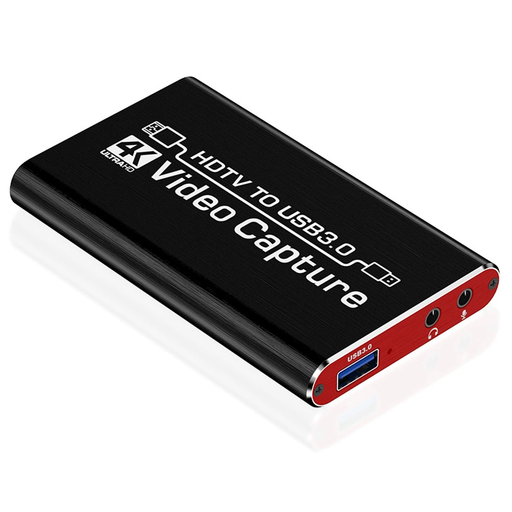 Image unavailable
For a separate HDMI source; the product description mentions HDMI loop-out for a second screen, so check that it supports your preferred picture mode.
The title lists HDMI input up to 4K 30Hz and recording up to 1080p60. The 4K figure doesn’t refer to recording.
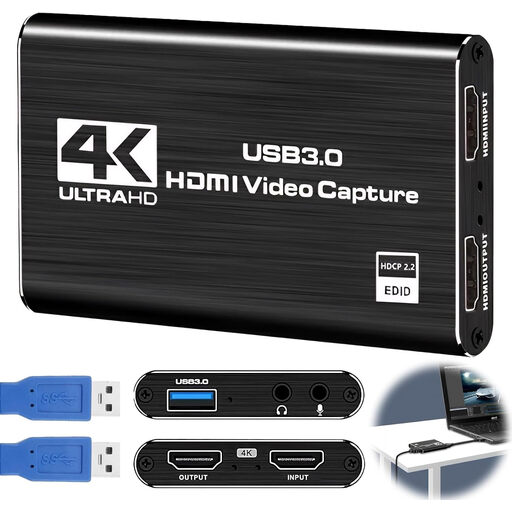 Image unavailable
For anyone who wants to capture an HDMI source and use a separate screen; check that the pass-through supports your preferred picture mode.
The title lists capture up to 1080p, 4K HDMI pass-through, UVC/UAC, a microphone input and a headphone output. Here, 4K refers to pass-through, not recording.
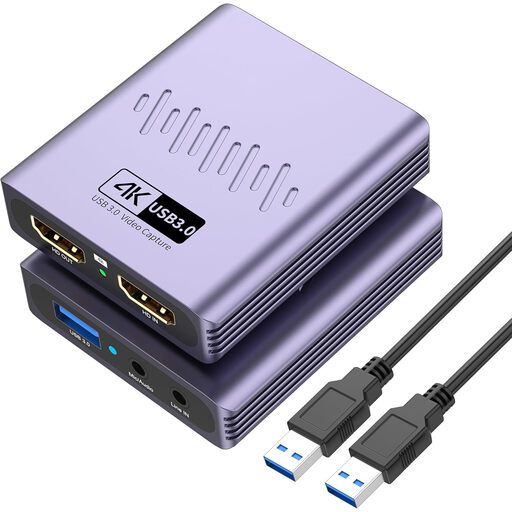 Image unavailable
For a separate HDMI source; if you use a second screen while gaming, check the pass-through required for your setup.
The title lists capture up to 1080p, 4K pass-through, a microphone input and a headphone output. The 4K figure isn’t a recording specification.
Not necessarily: if the game and OBS are running on the same Windows PC, OBS Studio recommends trying Game Capture first. For console footage in OBS, OBS Studio describes using a capture device or an alternative method that depends on your network.
Not necessarily; game audio, party chat and microphone audio can come from different sources. For a PS5 setup with Game Capture Neo, Elgato says that connecting headphones to the console or controller can stop game audio from coming through HDMI. Test each audio source before going live.
In OBS, add a Video Capture Device source and select the device. Choose a resolution and frame rate supported by the capture card, then set up audio and monitoring separately.
Not using the usual dock and HDMI setup: Nintendo Netherlands says the Switch Lite doesn’t support TV mode. So check the capabilities of your exact console before choosing a capture card for your setup.
No, pass-through and recording are separate features. For the exact model, compare the HDMI pass-through to your screen with the listed recording settings. For example, Elgato lists up to 4K60 pass-through and 1080p60 recording for Game Capture Neo.