
Console streamers with a separate PC
You want to use a console’s HDMI output as a source in OBS. Check that your console, capture card and computer are compatible; OBS describes a capture device as one way to use console footage in OBS.


If you play on a console and want to use its video output in OBS on a computer, choose a capture card that’s compatible with the HDMI signal, your computer and the passthrough you need. For co-op, also plan separately how game audio, microphones and group chat will be connected: 4K passthrough doesn’t automatically mean 4K recording. If you play and stream on the same Windows PC, try OBS Game Capture first; OBS describes this as a way to capture a game directly.
You want to use a console’s HDMI output as a source in OBS. Check that your console, capture card and computer are compatible; OBS describes a capture device as one way to use console footage in OBS.
You want your commentary or group chat to be heard alongside the game. Map out where each audio source comes in and how you’ll monitor the sound; OBS warns that selecting the same audio source twice can cause an echo.
You want to keep playing at your preferred resolution and refresh rate while streaming, even if the recording uses a lower mode. Compare the card’s passthrough separately with the recording modes supported by the exact model.
First, check the connection between your console, capture card and computer. Then map out the audio chain and compare the screen passthrough with your preferred recording mode.
| What to consider | What should you check? | Who is this important for? |
|---|---|---|
| Compatibility | Check the HDMI output, USB version or PCIe slot, and support for your operating system and software. | If I want to connect a separate console to OBS, the entire HDMI and computer connection needs to work. Around 33% of consumers say compatibility is their main buying concern. |
| Game audio and voices | Map out the route for HDMI audio, microphones and group chat; check the connections and test the sources in OBS. | I want the game and the intended voices to come through clearly during a co-op stream, without duplicate audio. Around 27% of consumers prioritise clear co-op audio. |
| Picture on your gaming screen | Compare the supported resolution, refresh rate, HDR and, where applicable, VRR for your console, card and screen. | If I want to keep my preferred screen settings while streaming, the passthrough needs to suit my setup. Around 20% of consumers name screen settings as their main buying concern. |
| Recording quality | Check the maximum recording resolution and frame rate separately from passthrough; also look for any HDR and computer requirements. | I want the recording mode to match my planned broadcast, even if it differs from the gameplay display. Around 20% of consumers prioritise recording quality. |
Passthrough and recording are different specifications. For example, AVerMedia lists a maximum of 2160p60 HDR passthrough for the GC551G2, but a maximum recording resolution of 2160p30. For the GC311, AVerMedia lists a maximum of 1080p60 for both recording and passthrough.
Compare the passthrough and recording specifications separately for your screen and stream.
A video signal alone doesn’t guarantee that the microphone, game audio and group chat will be heard where you want them. OBS treats audio as configurable sources, and the connections available vary between cards.
Map out the audio chain and test the game audio, voices and monitoring before you go live.
Depending on the audio setup you choose, you may need suitable audio cables or other audio connections.
The Elgato 4K60 Pro MK.2 requires a suitable PCIe slot. AVerMedia states that the GC551G2 doesn’t support USB 2.0.
Compare the interface requirements of the exact model with the connections on your streaming computer.
Elgato states that its capture devices can’t capture HDCP-protected HDMI signals. AVerMedia lists the same limitation for the GC311 and GC551G2.
Check the supported signal mode and the official guidance for legitimate gameplay capture; don’t try to bypass protection on films or streaming services.
The external Game Capture 4K S and internal 4K60 Pro MK.2 are options for different types of computer connection.
The Live Gamer MINI GC311 and Live Gamer EXTREME 3 GC551G2 offer different recording, passthrough and audio connection options.
The XR1 Lite is an external option to consider if you’re comparing 1080p60 recording with 4K60 passthrough.
The Ripsaw HD is an external HDMI and USB 3.0 card with audio connections for streaming with commentary.
These product options are external HDMI capture cards that connect to a computer via USB. Check that the passthrough and recording modes listed for each model suit your console and screen.
 No image available
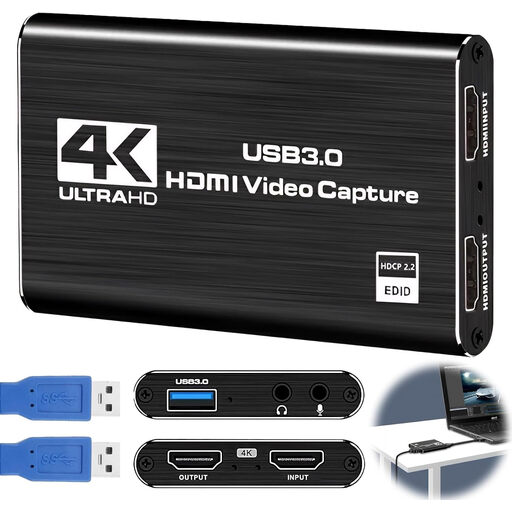
Suitable if you want to capture an HDMI source on a computer via USB and connect a microphone.
The product title lists capture up to 1080p, 4K HDMI passthrough, UVC and UAC, a microphone input and a headphone output. Recording is specified up to 1080p; 4K refers to HDMI passthrough, not 4K recording.
 No image available
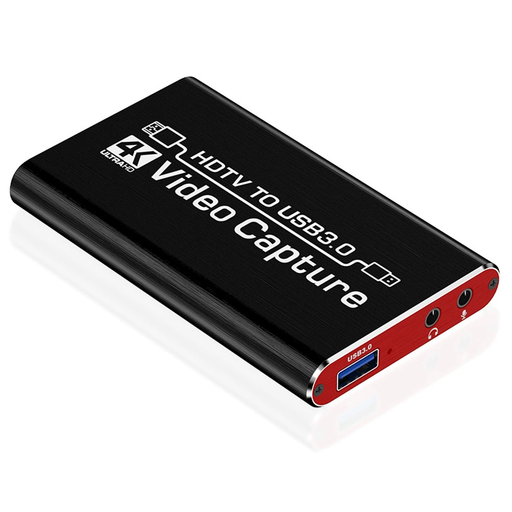
Suitable if you want to capture a separate HDMI source on a PC or laptop via USB.
The product title lists HDMI input up to 4K 30Hz and recording at 1080p 60Hz. Recording is specified at 1080p 60Hz; the input mode is a separate specification.
Not necessarily. OBS describes Game Capture as a way to capture a game directly on Windows. To use a separate console as a source in OBS, OBS describes using a capture device or a network connection via the console app.
Check the game and microphone audio sources separately in OBS. Test monitoring too, and make a short recording; OBS warns that selecting the same audio source twice can cause an echo.
First, check the supported signal mode and HDCP. Elgato states that its capture devices can’t capture HDCP-protected HDMI signals; AVerMedia lists the same limitation for the GC311 and GC551G2. Don’t assume that protected content from films or streaming services can be recorded.
For a qualifying distance purchase, the Dutch government says you’ll often have a 14-day cooling-off period. You’re also entitled to a product that meets the required standard; if there’s a fault, contact the seller about your statutory guarantee. The Dutch government doesn’t specify a fixed statutory guarantee period.
Not without considering the rules. The Dutch Data Protection Authority states that identifiable people in footage count as personal data. Sharing it publicly requires a lawful basis under the GDPR and, in many cases, consent. Before publishing, decide which participants will be identifiable on screen.