If you’re recording games on the same PC, OBS can capture the game directly; according to Elgato, you don’t need a capture card for this. A capture card is mainly useful if you want to send a console or another HDMI source to a separate recording computer. Then choose your preferred recording quality and HDMI pass-through separately, and check the USB, system and audio requirements for the exact model: 4K pass-through doesn’t automatically mean 4K recording.
Who is this choice relevant to?
Console gamer with a laptop
You want to send console footage over HDMI to recording software on your laptop. Check that the HDMI output, USB connection, computer and software all work together. OBS Project describes capture cards as potential video capture sources.
Gamer with a high-refresh-rate monitor
You want to keep your preferred resolution or refresh rate while you play. AVerMedia and Elgato publish separate specifications for recording and HDMI pass-through; compare both with your source and monitor.
Comparison video creator
You want the differences in picture and sound that you discuss to come through in the recording too. OBS Project describes video capture sources and provides guidance on recording formats; also check which audio sources your software can record.
What should you look for in a capture card?
When using an external game source, the connection to the recording computer needs to work, and the card must suit your preferred recording and monitor settings. So compare the recording limit separately from HDMI pass-through.
| What to consider |
What should you check? |
Who is this for? |
| Connection |
Check the game source’s HDMI output, the computer’s USB port, the supported operating system and whether the card appears as a source in your recording software. |
If I want to record my console on my laptop, HDMI, USB and software all need to work together. Around 40% of consumers make a working connection their top priority. |
| Gaming monitor |
Compare the resolution, Hz, HDR and, where applicable, VRR supported by HDMI pass-through with the capabilities of your source and monitor. Check the recording specification separately. |
If I want to keep my usual screen settings while recording, I look at pass-through. Around 30% of consumers make the gaming display their top priority. |
| Recorded picture |
Choose your preferred recording resolution and frame rate, then compare them with the maximum capture specification and system requirements for the exact model. |
If I want to show visual differences in the finished comparison, the recording needs to capture those details. Around 20% of consumers make recorded picture detail their top priority. |
| Setup and sound |
Plan the routes for HDMI, USB, the monitor, game audio and any microphone. Check which cables are included and make a test recording with sound. |
If space is limited in a small room and I want to record the intended sound, I check the connections and audio sources. Around 10% of consumers make setup and sound their top priority. |
Common pitfalls when buying a capture card
-
Confusing ‘4K pass-through’ with ‘4K recording’
A card may pass a 4K signal through to a monitor without recording it in 4K. NZXT states that the Signal HD60 can pass through 4K but cannot record in 4K; AVerMedia lists a maximum of 1080p60 for both recording and pass-through on the GC311.
For the exact model, compare the maximum capture specification with the maximum HDMI pass-through specification.
If the recording limit turns out to be too low for your comparison, you may need to replace the card.
-
Checking only the capture card and forgetting about your laptop
Your computer, USB connection, operating system and recording software must also meet the requirements of your chosen model. Elgato lists model-specific system requirements for the 4K S.
Before buying, check the requirements for the exact model and the software you want to use.
Depending on the requirements, you may also need a different connection or recording computer.
-
Assuming every HDMI signal can be recorded
Not every HDMI source can be recorded without restrictions. AVerMedia states that the GC311 doesn’t record HDCP-protected content; Elgato outlines requirements for unencrypted HDMI sources on the models mentioned.
Check what your game source is allowed to output, and don’t try to bypass copy protection.
Capture card brands to consider
AVerMedia
The Live Gamer MINI GC311 is an external option for recording and pass-through up to 1080p60. The Live Gamer ULTRA 2.1 GC553G2 is a separate model with higher HDMI specifications.
- AVerMedia lists a built-in H.264 encoder for the GC311, with recording and pass-through up to 1080p60.
- According to AVerMedia, the GC311 doesn’t support 4K, HDR or high refresh rates. The GC553G2’s specifications don’t apply to the GC311.
Elgato
The HD60 X and 4K S are external cards for which recording and gaming monitor performance can be assessed separately.
- Elgato lists a maximum recording resolution of 2160p30 and maximum pass-through of 2160p60 for the HD60 X. For the 4K S, Elgato lists a maximum recording resolution of 2160p60 and maximum pass-through of 2160p60.
- According to Elgato, HDR recording on the HD60 X and 4K S is currently available on Windows only. Check the system requirements for your chosen model and the software you use.
NZXT
The Signal HD60 is an option if 1080p recording is enough, but you want to pass a 4K signal through to your gaming display.
- NZXT states that the Signal HD60 can receive and pass through a 4K signal.
- According to NZXT, this model doesn’t record in 4K or support HDR. This limitation applies to the Signal HD60 and not necessarily to other models.
Razer
The Ripsaw HD is another option for 1080p60 recording with 4K60 pass-through.
- Razer lists 1080p60 recording alongside 4K60 pass-through for the Ripsaw HD.
- These specifications apply to the Ripsaw HD and aren’t an independent performance test.
Capture cards at Joybuy
These Joybuy products are external HDMI capture cards for recording via USB. Check the recording quality and HDMI pass-through separately for your chosen model.
 No image available
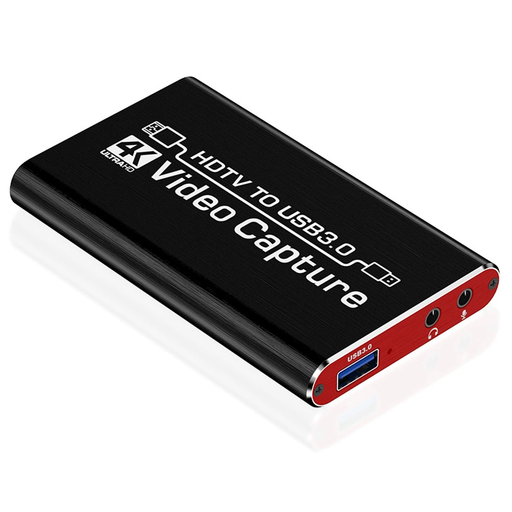
4K HDMI Capture Card, USB 3.0, 1080p60
An option for recording an external HDMI game source via USB.
HDMI input up to 4K 30Hz; recording up to 1080p60; 4K HDMI loop-out. USB 3.0, with microphone input and headphone output.
Shop at Joybuy
 No image available
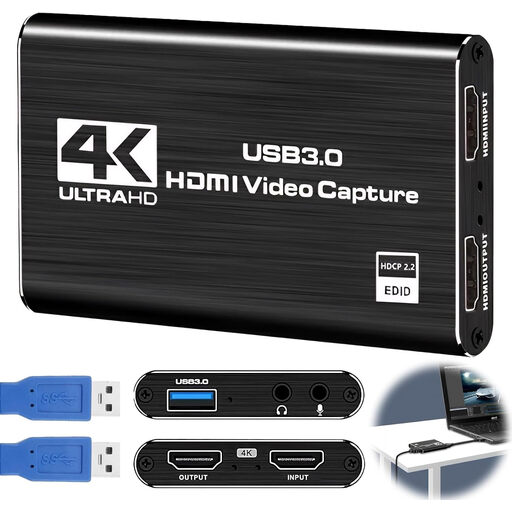
VIELLAN HDMI Video Capture Card
An option for recording an external HDMI source on a computer with OBS Studio.
USB 3.0; video recording up to 1080p; 4K HDMI pass-through; UVC and UAC support. With microphone input and headphone output.
Shop at Joybuy
Frequently asked questions about capture cards
Do you need a capture card to compare two PC games on the same computer?
Not if you’re recording games running on that same PC: according to Elgato, OBS can capture a game directly from the computer. A capture card is mainly for sending a separate HDMI source, such as a console, to the recording computer.
How do you connect a console, capture card and separate monitor?
Connect the game source’s HDMI output to the card’s HDMI input, the card’s HDMI output to the gaming monitor, and the USB connection to the recording computer. Then add the card as a video capture device in OBS and make a test recording with picture and sound. Check the instructions for the exact model.
Which file format can you use for a long recording?
OBS Project names MKV as the default format and recommends it for most situations. Check that your editing software can open the file; OBS Project says MKV can easily be converted to a more compatible format.
What can you expect in the Netherlands if a capture card bought online doesn’t work properly?
For a qualifying consumer purchase, the seller is responsible for providing an appropriate solution if the product doesn’t meet what you could reasonably expect under normal use; ACM ConsuWijzer explains the legal guarantee. Online purchases also generally come with a statutory 14-day cooling-off period after delivery, although conditions and exceptions may apply. Check ACM ConsuWijzer for guidance on your specific purchase.
Can you publish a recorded game comparison with music or protected footage without permission?
Not automatically. The Dutch government distinguishes between making a copy for personal use and making it available to the public; you may need permission to use protected music or footage belonging to others. Check the rights to the specific game footage, music and other elements before publishing, and don’t bypass copy protection.


